Why SaaS renewals are often missed
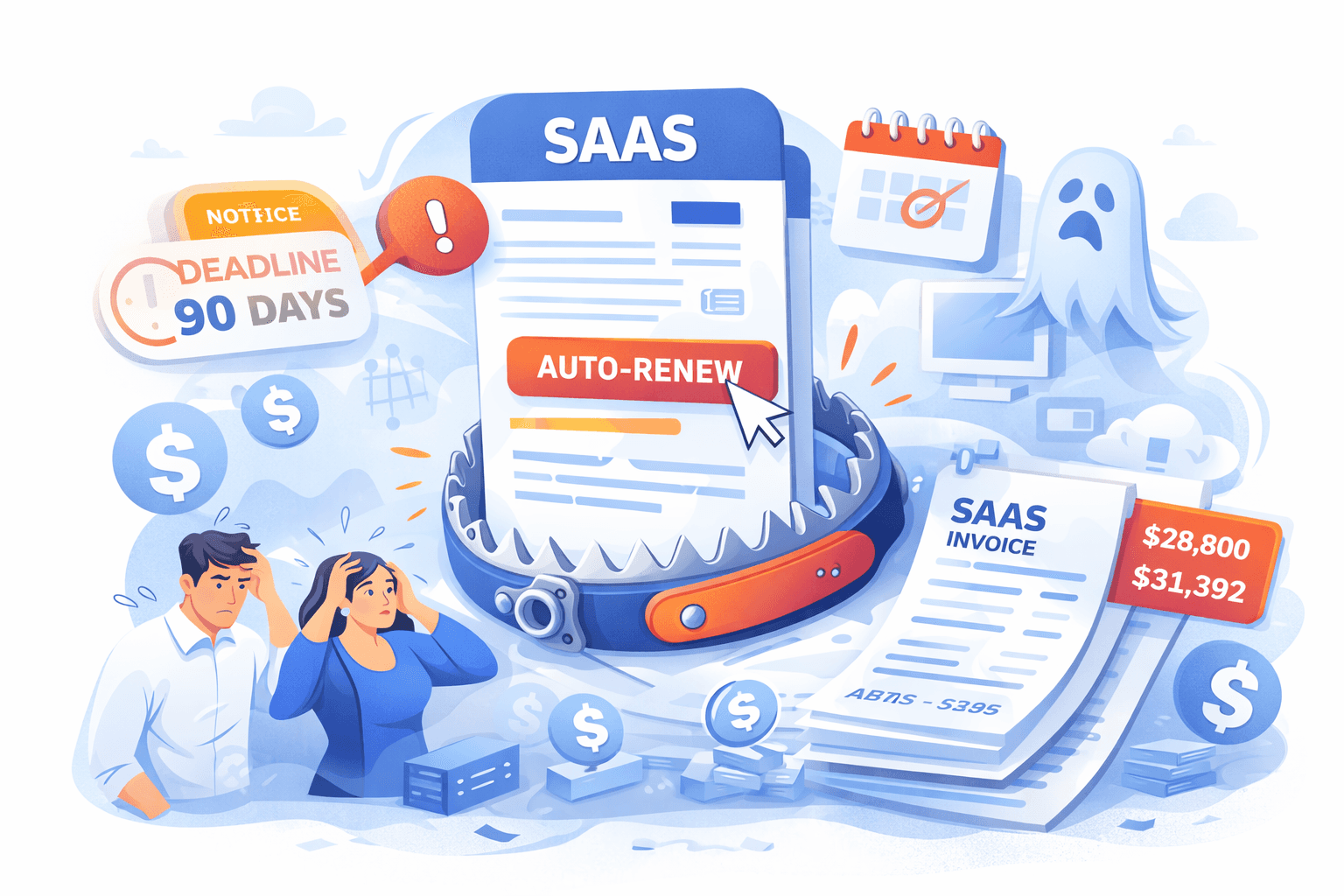
Many SaaS contracts include an auto-renew clause that extends the contract automatically unless cancellation is submitted within a predefined notice period.
These clauses are rarely problematic when contracts are carefully managed. The issue is that most companies do not have a centralized view of renewal dates.
As a result, notice windows quietly close before anyone realizes a decision needs to be made.
What an auto-renew clause typically looks like
A common clause might read:
“This Agreement will automatically renew for successive one-year terms unless either party provides written notice of non-renewal at least 90 days prior to the end of the current term.”
This means:
• If your renewal date is December 31
• Your cancellation deadline might be October 2
If the deadline is missed, the contract renews automatically.
Why companies miss notice windows
In many organizations, SaaS contracts are scattered across multiple teams:
• Finance tracks invoices
• IT manages licenses
• Procurement negotiates contracts
• Legal stores documents
Because information is fragmented, no one owns the renewal timeline.
Typical consequences include:
contracts renewing before a budget review happens
price increases going unnoticed
unused licenses continuing to be billed
The financial impact
Auto-renewals rarely attract attention individually, but they accumulate quickly.
For example:
A $30,000 SaaS contract renewing unnoticed for another year
50 unused licenses continuing to be billed
a 9% price increase hidden inside a renewal notice
Multiply that across dozens of vendors and the impact becomes significant.
The negotiation window most companies overlook
The most effective time to renegotiate a SaaS contract is 90–120 days before renewal.
At that stage:
• vendors still want to secure the renewal
• alternative solutions can still be evaluated
• pricing adjustments are easier to negotiate
Once the notice period closes, leverage drops dramatically.
Best practices to avoid unwanted renewals
Companies that successfully control SaaS spend typically implement three practices:
1. Centralize contract visibility
All SaaS contracts should be stored in one place with key metadata extracted:
renewal date
notice period
contract owner
annual contract value
2. Set renewal alerts early
Alerts should trigger 120–180 days before renewal, not just when the notice window opens.
This ensures teams have time to:
review usage
reassess vendor fit
prepare negotiation strategies
3. Assign ownership
Each contract should have a clearly defined internal owner responsible for renewal decisions.
Without ownership, deadlines are easily missed.
How Venduris helps
Venduris was designed to solve this exact problem.
By centralizing IT and SaaS contracts, teams can:
automatically track renewal timelines
detect auto-renew traps before notice windows close
prepare negotiations months in advance
Instead of discovering commitments after they renew, organizations gain forward visibility into upcoming SaaS obligations.
Final thought
Auto-renew clauses are not inherently harmful, but they become expensive when organizations lack visibility.
A simple shift toward proactive contract management can prevent thousands in unnecessary spend and strengthen negotiation leverage.