Introduction
Most SaaS vendors do not suddenly double their prices.
Instead, increases happen gradually.
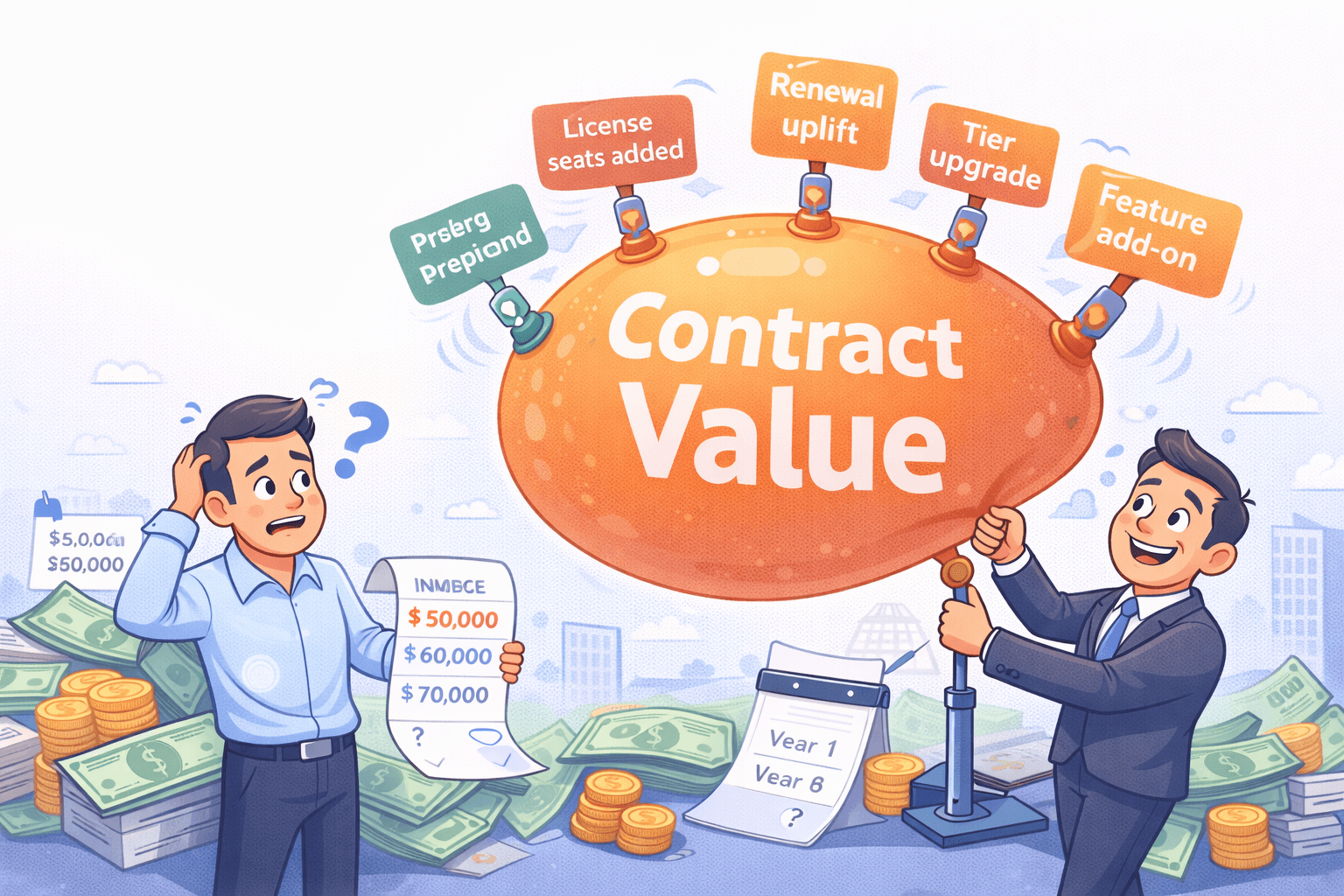
A contract renews with a small uplift. Additional users are added during the year. A pricing tier changes as adoption grows.
Individually these changes seem minor.
But over time they create a steady increase in software spending that many companies only notice when reviewing their annual budgets.
Understanding how these increases happen is the first step toward managing them effectively.
A familiar situation
A company signs a SaaS contract for fifty thousand dollars per year.
The tool is useful and adoption grows inside the organization.
Two years later the contract is closer to eighty thousand dollars.
Nobody remembers negotiating a major price increase.
Instead the growth happened gradually.
A few more licenses were added. A renewal uplift applied each year. The team upgraded to a higher tier to unlock new features.
Each change seemed reasonable at the time.
Together they transformed the contract.
Annual renewal uplifts
Many SaaS contracts include annual price increases built directly into the agreement.
These increases are often between five and ten percent.
Because the clause is embedded in the contract, vendors can apply the increase automatically at renewal.
Customers rarely challenge it unless they actively review the terms before the notice deadline.
Over several years these increases compound significantly.
License growth without review
Another common pricing mechanism is simple license expansion.
As teams grow or new employees join the company, additional licenses are added throughout the year.
These additions usually happen quickly because teams need access immediately.
But when renewal arrives, the contract reflects the higher license count.
Without reviewing actual usage, companies may continue paying for seats that are no longer needed.
Pricing tier upgrades
Many SaaS platforms offer multiple pricing tiers.
At first companies adopt the basic plan.
Later they upgrade to unlock additional features or higher usage limits.
Sometimes the upgrade is temporary. A team needs advanced functionality for a project or a short period.
But when renewal occurs, the contract often remains at the higher tier.
Over time these tier upgrades quietly increase contract value.
Feature packaging changes
SaaS vendors frequently evolve how features are packaged.
Capabilities that were once included in the standard plan may move to premium tiers.
New functionality may only be available at higher price points.
When companies want to access these features, they may need to upgrade the contract even if their overall usage has not changed dramatically.
Why companies rarely challenge these increases
The main reason is timing.
By the time many companies review SaaS contracts, renewal deadlines are already approaching.
Teams focus on keeping the tool running rather than re-evaluating pricing structure.
Without enough preparation time, challenging license counts, pricing tiers, or contract terms becomes difficult.
The role of preparation in SaaS pricing control
Companies that control SaaS spending usually start preparing for renewals months in advance.
They review usage data. They verify how many licenses are actually needed. They examine alternative vendors when appropriate.
With enough preparation time, these pricing mechanisms can be addressed before renewal deadlines arrive.
Without preparation, price increases often continue unnoticed.
How Venduris helps companies review SaaS pricing
Venduris helps organizations surface SaaS contracts, renewal timelines, and vendor commitments in a shared workspace.
Instead of discovering renewals after invoices arrive, teams gain visibility into upcoming renewal windows months in advance.
This allows finance and procurement teams to review license counts, pricing tiers, and contract terms before the vendor negotiation begins.
With the right information and enough time, companies can approach renewals with much stronger leverage.
Final thoughts
SaaS vendors are not necessarily trying to surprise customers with large price increases.
Their pricing models simply encourage gradual expansion over time.
For companies managing dozens of software vendors, these incremental increases can accumulate quickly.
The organizations that control SaaS spending best are those that review contracts early, understand usage patterns, and prepare renewal decisions before deadlines approach.