Introduction
Unused SaaS licenses rarely appear in budget discussions.
Yet they quietly accumulate inside most organizations.
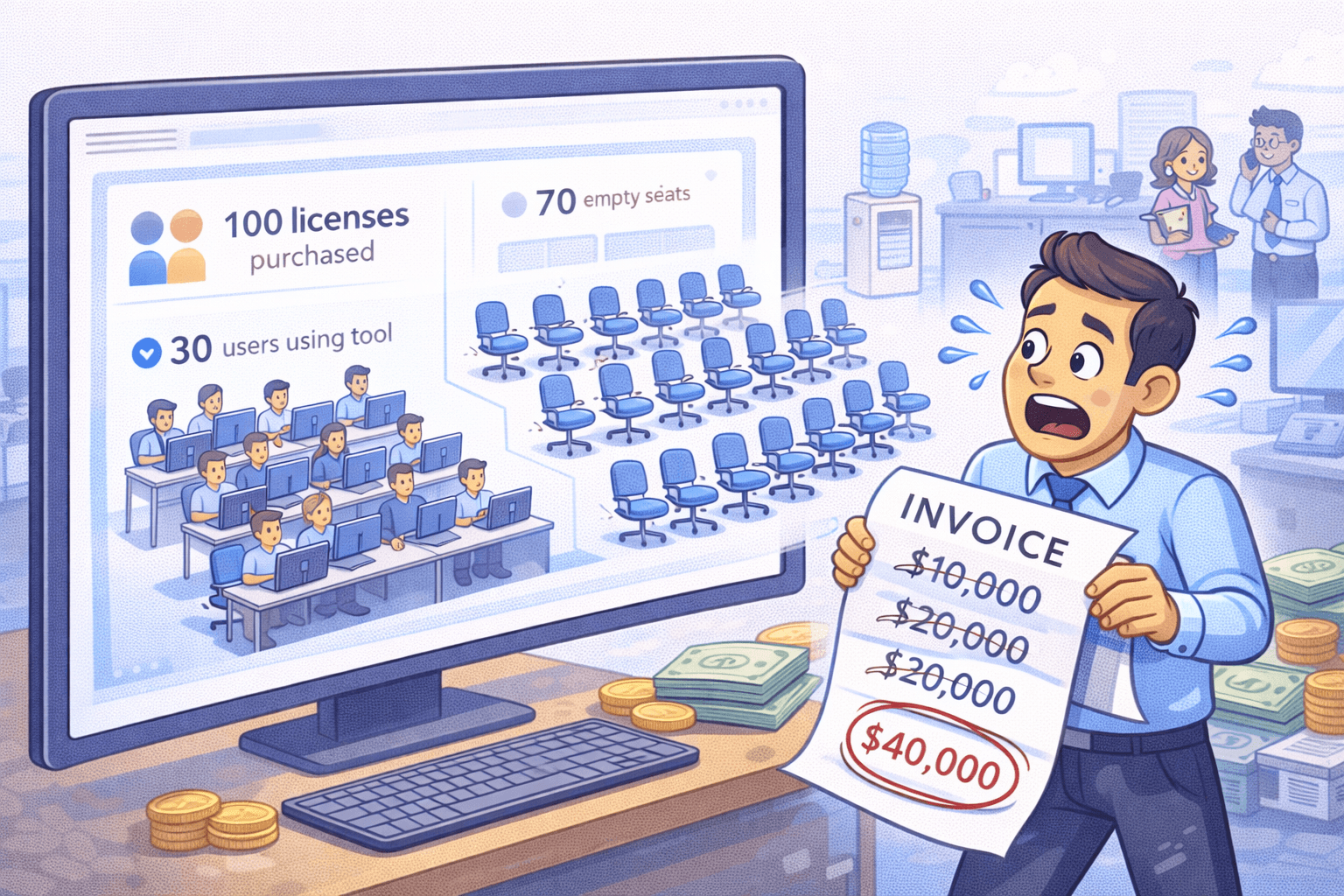
A company signs a contract for one hundred users. Over time, teams change, projects end, employees leave, and new tools appear.
But the contract remains exactly the same.
When renewal arrives, the organization often discovers it has been paying for far more software seats than it actually needed.
A familiar situation
A company signs a collaboration tool contract for 120 employees.
At the time the number made sense.
The company expected growth and preferred negotiating a larger bundle to obtain a better price per user.
A year later the organization has ninety active users.
Thirty licenses remain unused.
Nobody noticed.
At renewal, the company automatically pays for the same 120 seats again.
The unused licenses continue for another year.
Why license waste happens
Unused licenses rarely result from poor financial discipline.
They usually appear because software usage evolves faster than contracts.
Employees change teams. New tools replace older ones. Some departments adopt the software heavily while others stop using it.
Without regular visibility into actual usage, contracts drift away from reality.
The illusion of seat counts
Many companies assume their license count reflects active usage.
In practice, the two numbers can differ significantly.
A user may have access to the software but rarely log in. Another user may rely heavily on it every day.
Contracts rarely capture this nuance.
Without tracking real usage patterns, organizations struggle to right size their agreements.
The compounding effect
Unused licenses might seem harmless at first.
But over time they compound across the SaaS portfolio.
One contract wastes twenty seats. Another wastes fifteen. A third wastes fifty.
Across dozens of tools, these small inefficiencies become meaningful spend leakage.
Finance teams often notice the cost, but they rarely have the visibility needed to correct it before renewal.
Why renewal is the moment to fix it
Renewal is one of the few moments where companies can reset license counts.
Vendors expect the contract to be reviewed. Teams can analyze usage trends and adjust seat allocations.
When preparation happens early enough, organizations can enter negotiations with clear data.
Instead of guessing how many licenses they need, they negotiate based on real adoption.
How Venduris helps teams right size contracts
Venduris collects usage insights directly from business users before renewals.
Each team confirms how the software is actually used and whether license levels still match operational needs.
This creates accountability across departments while giving procurement and finance accurate information for negotiations.
Instead of renewing the same seat count automatically, companies can align contracts with real usage.
Final thoughts
Unused licenses rarely appear as a dramatic problem.
They accumulate slowly and quietly.
But across a SaaS portfolio, these small inefficiencies add up.
Companies that regularly review usage before renewal gain a simple advantage.
They pay only for the software they actually use.