Introduction
In many companies, SaaS vendors serve multiple teams at once.
A collaboration platform might involve IT for integration, operations for workflow management, and several departments that rely on it every day.
This shared usage often creates a simple but important problem.
Nobody clearly owns the vendor relationship.
When renewal decisions appear, teams suddenly realize that everyone assumed someone else was responsible.
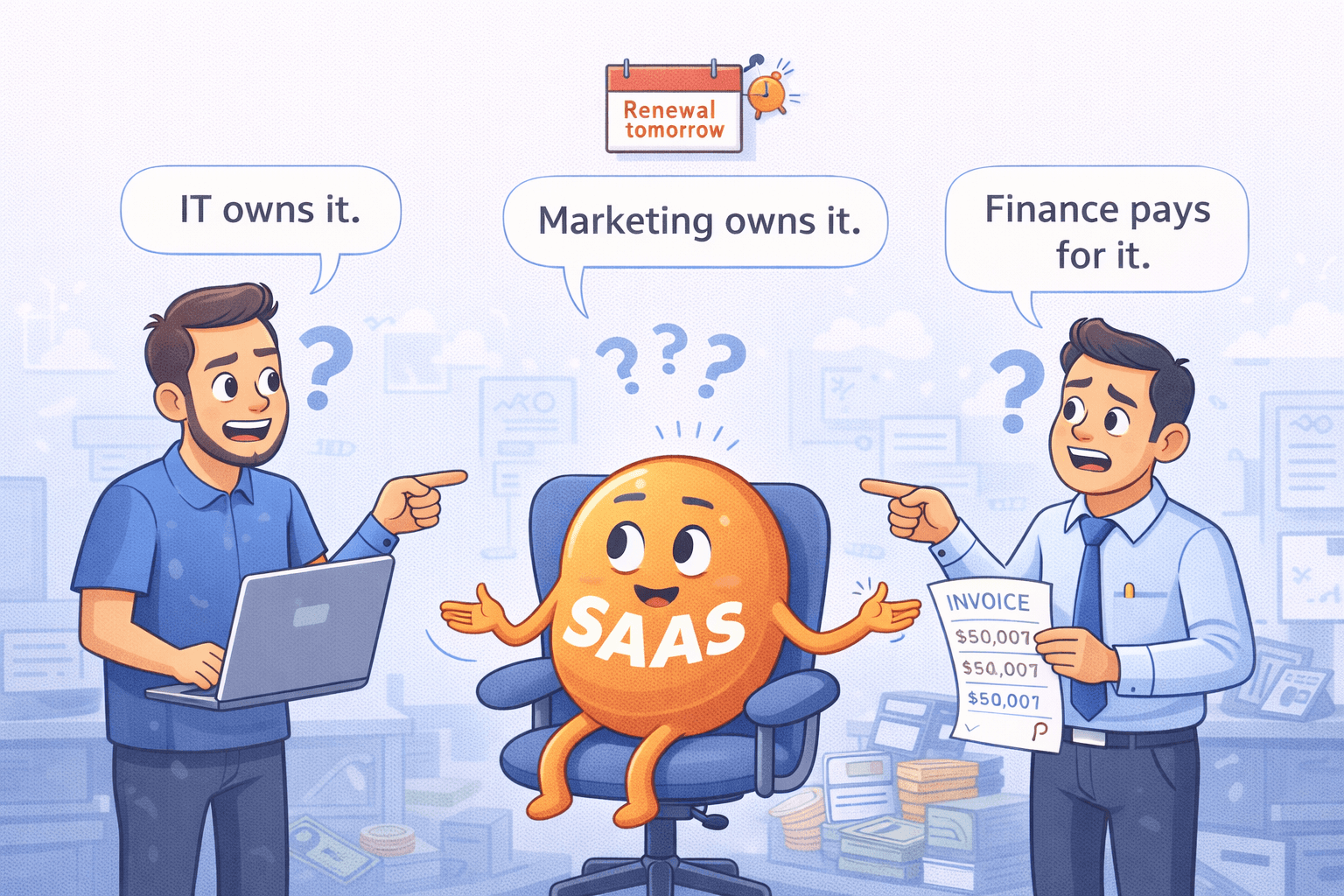
A situation many companies recognize
A renewal notification arrives for a major SaaS platform.
Procurement asks who owns the vendor relationship.
IT says the platform was originally introduced by the marketing team.
Marketing says the tool is now used by several departments and assumes IT manages the contract.
Finance only sees the invoices.
Suddenly everyone is involved, but nobody feels responsible for making the decision.
SaaS adoption spreads naturally
SaaS tools rarely start as company-wide platforms.
Most begin with a small team solving a specific problem.
A marketing team introduces a new analytics tool. A product team adopts a feedback platform. Customer support adds a ticketing system.
Over time these tools expand across the organization.
But the ownership structure rarely evolves alongside the adoption.
The vendor relationship remains tied to the original team even when usage becomes company-wide.
Why vendor ownership matters
Clear ownership plays a critical role in SaaS management.
The owner becomes responsible for understanding how the tool is used, coordinating feedback from business teams, and preparing renewal decisions.
Without this role, important questions remain unanswered.
Is the software still essential
Are all licenses used
Are alternative vendors worth evaluating
When no one owns the vendor relationship, these questions often appear only weeks before renewal deadlines.
The impact on renewals
Unclear ownership creates several operational problems.
First, renewal preparation starts too late because nobody is actively monitoring the timeline.
Second, usage insight is difficult to collect because teams are unsure who should coordinate feedback.
Finally, vendor negotiations happen under time pressure because internal alignment takes longer than expected.
The result is a renewal process driven by urgency rather than strategy.
What strong SaaS ownership looks like
Companies that manage SaaS vendors effectively usually define a simple ownership structure.
Each vendor has an internal owner responsible for reviewing the contract and coordinating renewal preparation.
This owner does not need to be the only decision maker.
Instead, the role ensures someone is responsible for gathering information and preparing the organization before renewal deadlines arrive.
Finance, IT, and procurement can then support the decision with the right data.
How Venduris helps clarify ownership
Venduris helps organizations assign and track internal owners for each SaaS vendor.
Renewal timelines, contract terms, and vendor commitments become visible in a shared workspace.
When a renewal approaches, the platform automatically notifies the responsible owner so preparation can begin early.
This simple structure ensures that every SaaS vendor has someone accountable for reviewing the relationship before renewal decisions must be made.
Final thoughts
SaaS vendors rarely cause operational chaos by themselves.
The complexity usually comes from unclear internal ownership.
When nobody owns the vendor relationship, decisions happen reactively.
But when ownership is clear and renewal timelines are visible, SaaS management becomes significantly easier.