Introduction
Most SaaS renewals follow the same pattern.
A reminder appears a few weeks before renewal. Someone realizes the contract needs to be reviewed. Procurement schedules a negotiation call with the vendor.
At that moment the organization begins preparing.
Unfortunately, that preparation usually starts far too late.
In most cases, the real decision window already closed weeks earlier.
A familiar situation
A company receives a reminder that a major SaaS platform renews next month.
The team wants to renegotiate pricing.
During the conversation the vendor points to a clause in the contract.
Cancellation required sixty days before renewal.
The deadline passed two weeks ago.
Negotiation still happens, but the conversation has changed.
Instead of evaluating alternatives, the company is now negotiating inside a contract that already renewed.
SaaS timelines are deceptive
Many SaaS agreements appear to renew once per year.
But the actual decision window occurs much earlier.
Contracts often contain notice periods ranging from thirty to ninety days.
If companies want to reduce scope, renegotiate terms, or explore alternatives, they must act before those deadlines.
Once the notice period passes, the renewal is effectively locked.
Why renewal preparation takes longer than expected
Even when teams want to prepare earlier, several steps take time.
First, someone needs to locate the contract and review the renewal terms.
Then teams must understand how the software is actually used across the organization.
Business teams may need to provide feedback on adoption, alternatives, and future needs.
Procurement might evaluate competing vendors to understand market pricing.
Each step requires coordination.
Starting this process only weeks before renewal rarely leaves enough time.
The six month preparation window
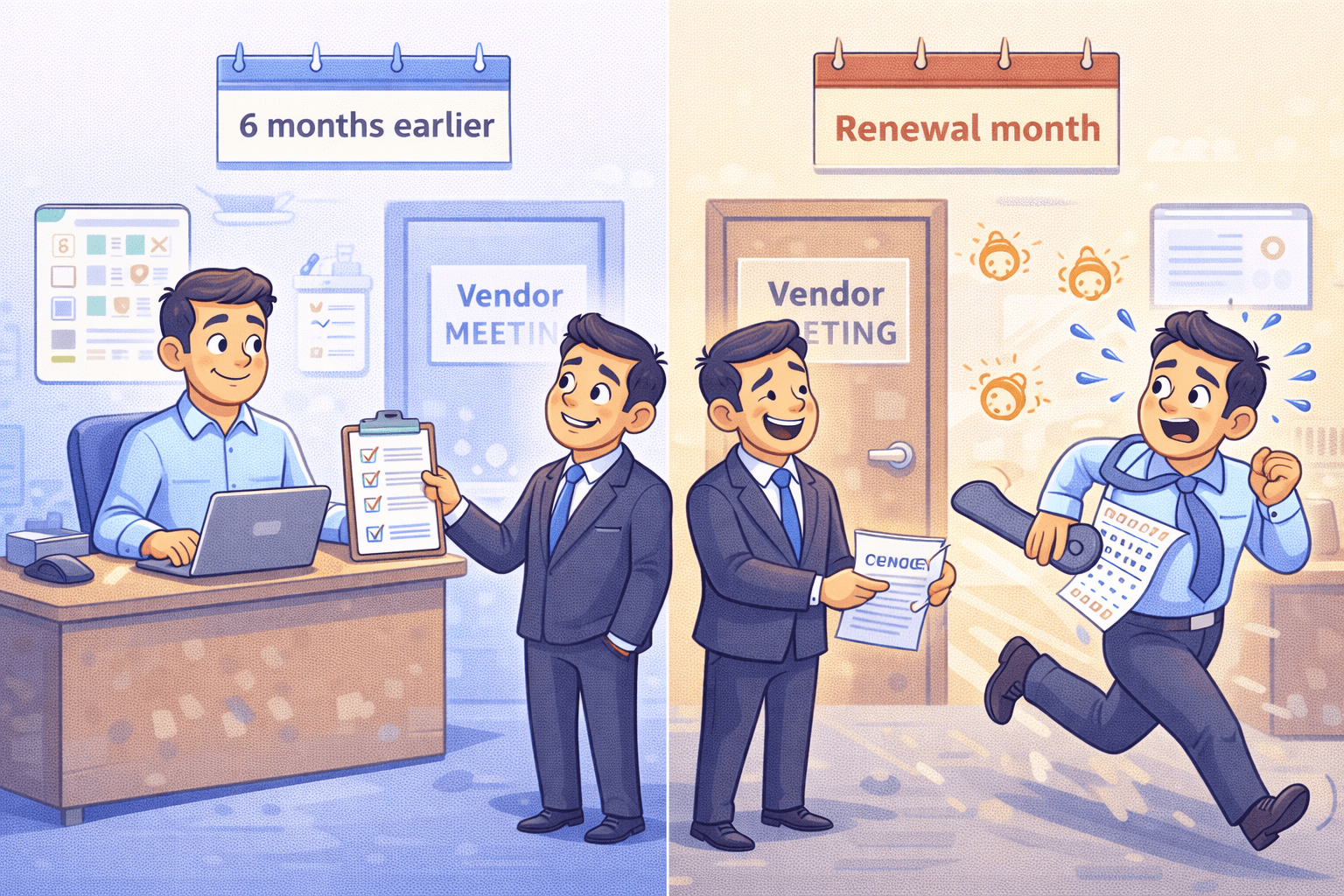
Organizations that negotiate SaaS contracts effectively typically begin preparing six months before renewal.
This timeline allows teams to review contracts calmly, gather usage insight, and evaluate alternative vendors if necessary.
With enough preparation time, companies regain control of the negotiation process.
Instead of reacting to deadlines, they shape the conversation.
The leverage advantage
Time is one of the most powerful forms of negotiation leverage.
When vendors know that customers are reviewing alternatives months before renewal, conversations change.
Pricing becomes more flexible. Contract structures can evolve. License counts can be adjusted.
When vendors realize the customer has no time to switch, the incentive to offer concessions becomes much smaller.
Why most companies miss this window
The reason is simple.
Renewal deadlines remain hidden.
Contracts are stored in folders, notice periods are buried inside legal documents, and ownership of vendors is often unclear.
Without a system designed to surface these timelines early, companies naturally begin reviewing contracts too late.
How Venduris changes the renewal timeline
Venduris automatically creates renewal instances 6 months before notice deadlines.
Instead of discovering renewals at the last minute, teams receive visibility well in advance.
Finance, IT, and procurement can review contracts, collect usage insight, and prepare negotiation strategies before the decision window closes.
The renewal process becomes proactive rather than reactive.
Final thoughts
SaaS negotiations rarely fail because companies lack negotiating skills.
They fail because preparation begins too late.
The organizations that achieve better outcomes are not necessarily more aggressive negotiators.
They simply start preparing earlier.
And in SaaS contracts, timing often determines the entire negotiation.