Commitment Carryforward Constraints (roll-over)
When unused contract capacity cannot be applied to future renewal terms.
Author: Venduris team
What this signal means
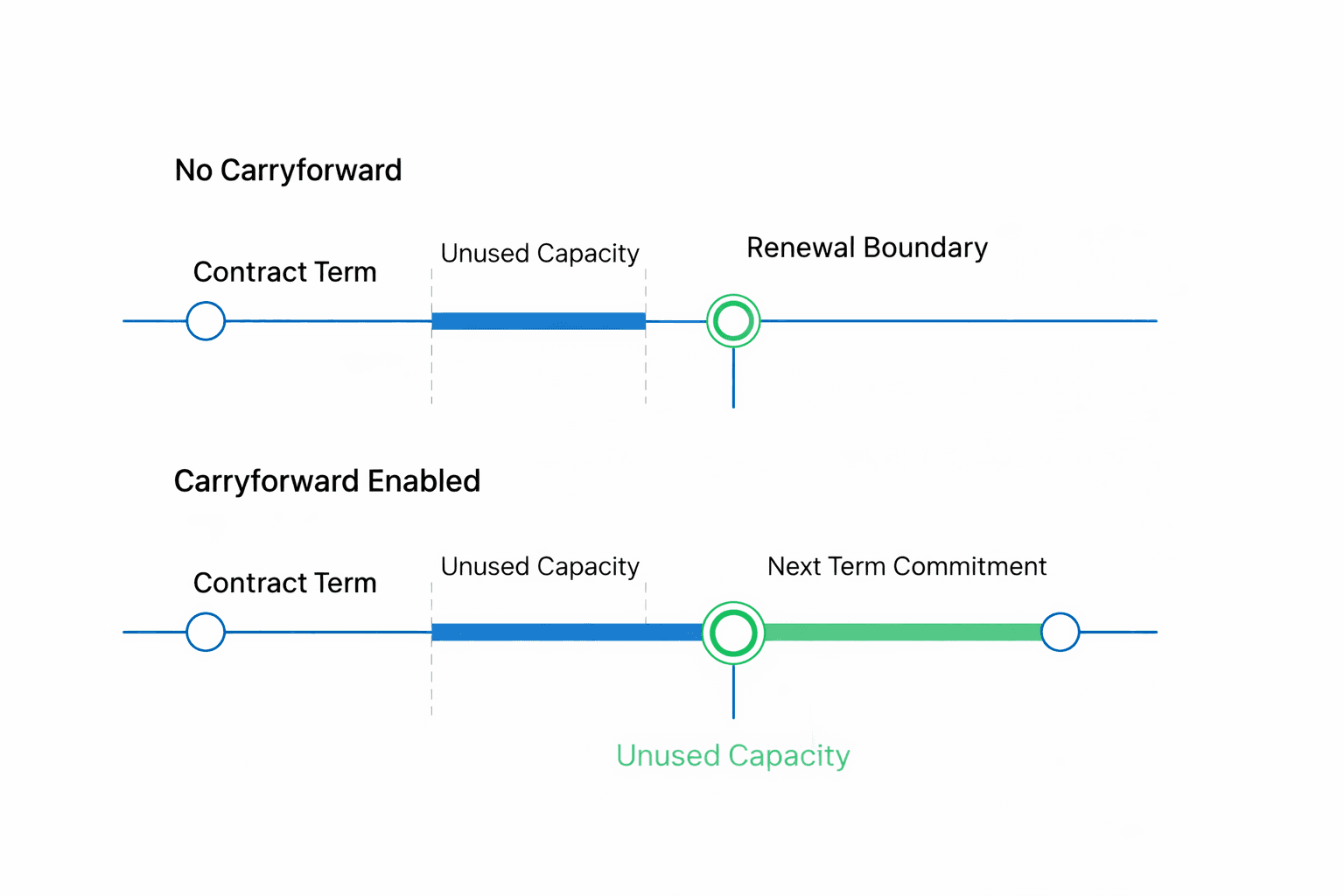
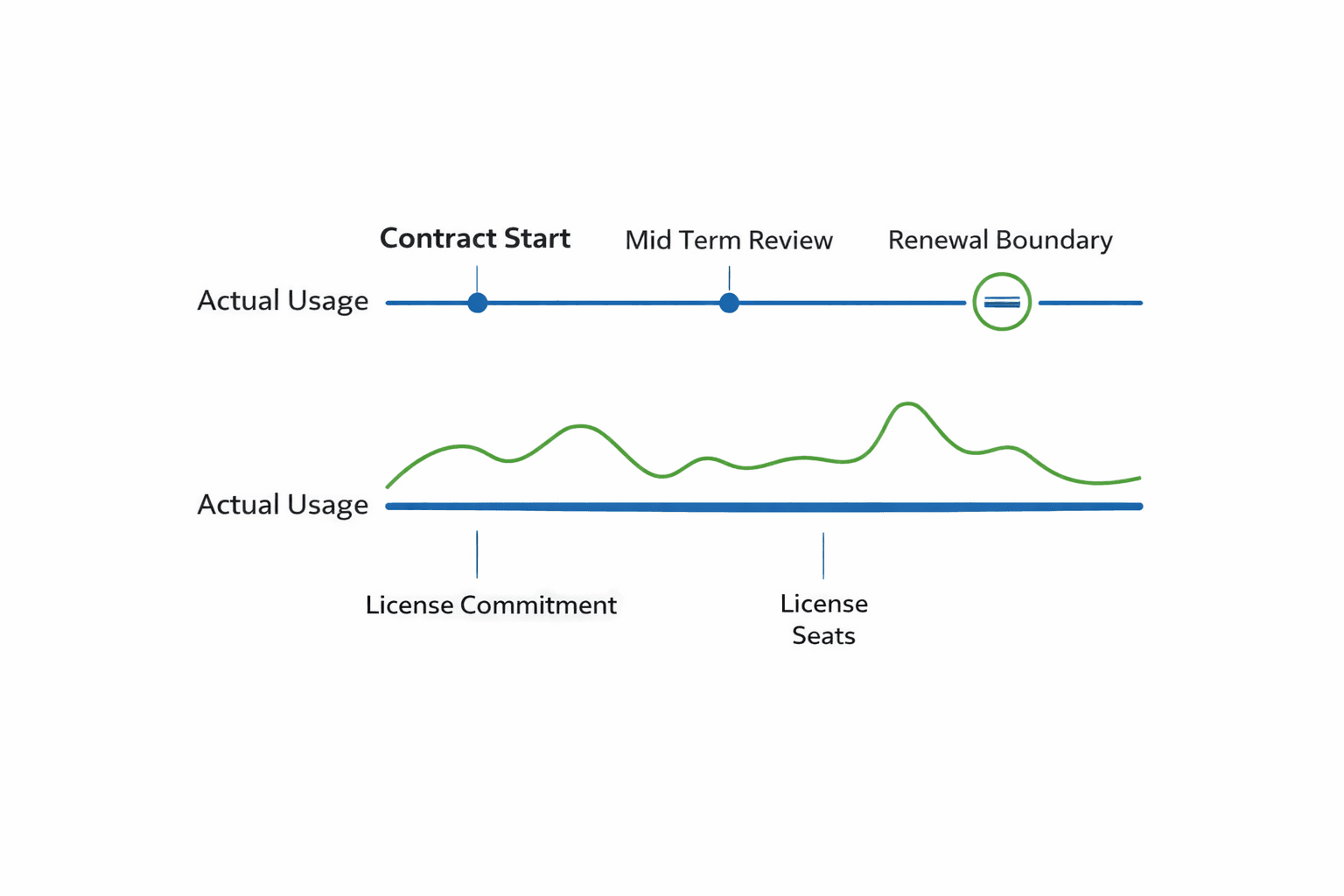
Commitment carryforward constraints occur when unused licenses, credits, or contracted volume expire at the end of a contract term instead of transferring into the next renewal cycle.
Without carryforward flexibility, unused capacity becomes sunk cost rather than negotiation leverage during renewal preparation.
This reduces the organization’s ability to adjust commitments between contract terms.
Why it matters
Many SaaS contracts assume that unused entitlements expire at renewal boundaries.
When carryforward rights are absent:
unused licenses cannot offset future commitments
prepaid credits lose negotiation value
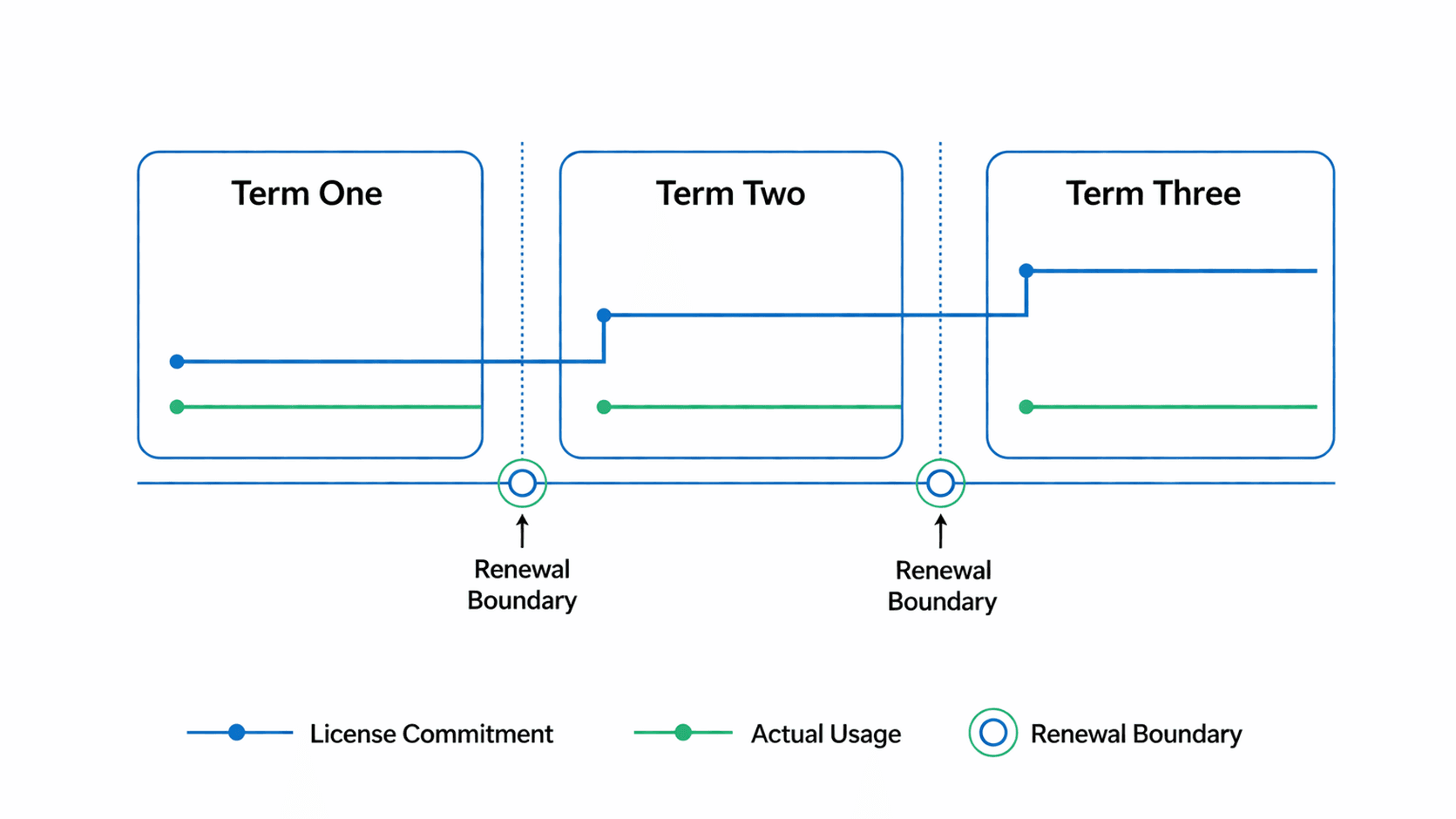
expansion assumptions persist into the next term
renewal baselines remain artificially elevated
contract flexibility decreases across cycles
Over time, these constraints increase structural spend even when usage stabilizes or declines.
Where it typically appears
Commitment carryforward constraints are common when:
prepaid credits expire at contract boundaries
unused licenses cannot transfer across terms
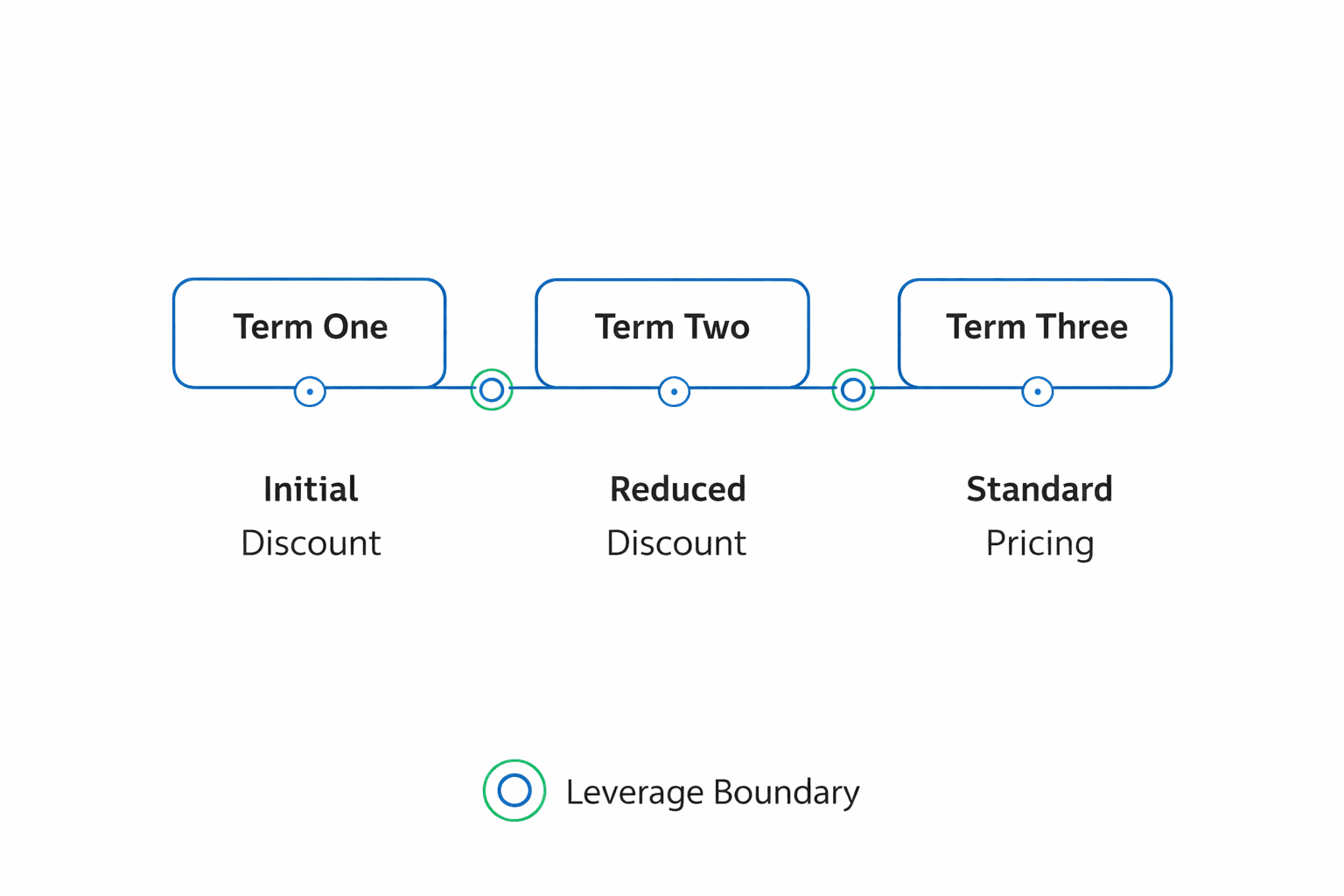
ramp commitments reset at renewal
vendors anchor renewals to prior peak commitments
contract structures prioritize predictability over flexibility
These conditions reduce the ability to adjust commitments before renewal execution.
What strong teams do differently
Organizations that preserve renewal flexibility treat unused capacity as a negotiation variable rather than a sunk cost.
They typically:
review unused entitlements before renewal preparation begins
negotiate credit carryforward rights explicitly
separate expansion assumptions from renewal baselines
challenge renewal anchors based on historical commitments
align future commitments with verified usage trends
Carryforward flexibility improves control across contract cycles.
How Venduris detects this signal
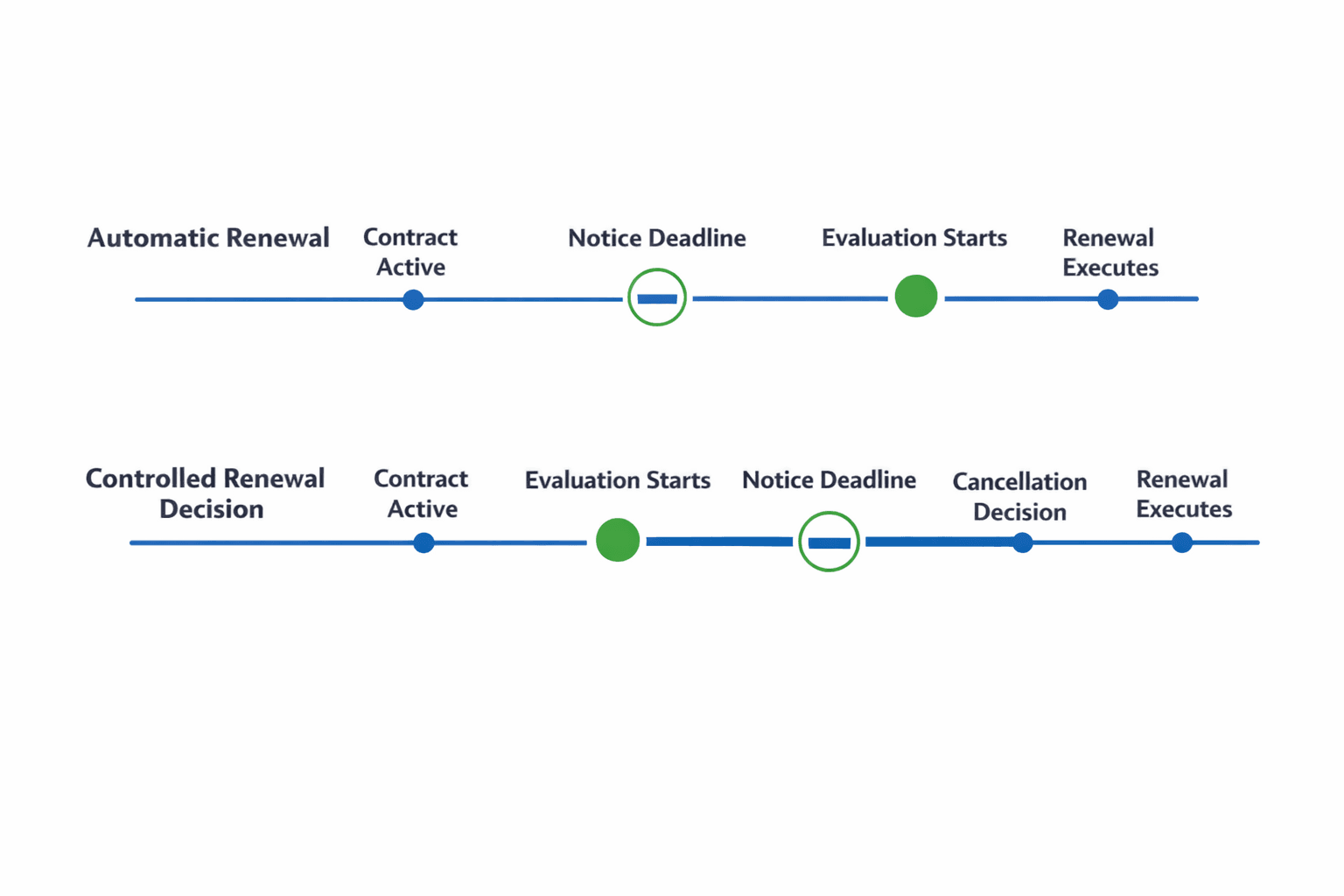
Venduris highlights unused contractual capacity before renewal decision windows close and surfaces contracts where expiring entitlements may influence future commitments.
This allows teams to adjust renewal scope before carryforward flexibility disappears.
Explore related renewal signals
Renewal Uplift Exposure
Commitment Carryforward Constraints (roll-over)
Key SaaS Contract Terms That Influence Renewal Outcomes
Stakeholder Fragmentation
Usage Drift
Auto-Renew Exposure
License Baseline Ratchet
Pricing Memory Reset
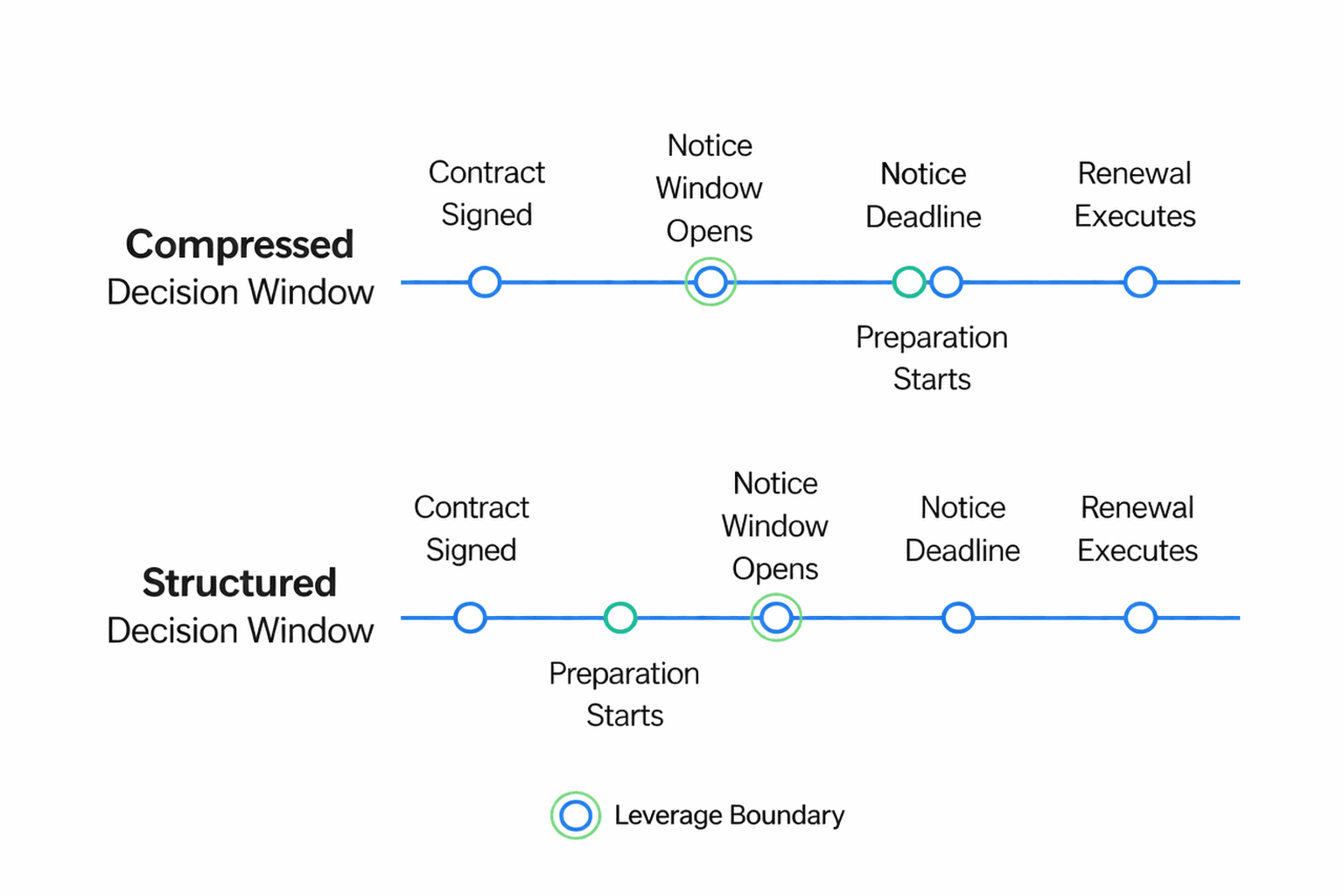
Notice Window Compression
Renew on your terms, not the vendor’s
Watch how it works