Key SaaS Contract Terms That Influence Renewal Outcomes
Definitions of common contract clauses that shape renewal timing, pricing, and negotiation leverage.
Author: Venduris team
Why these terms matter
Many software renewal outcomes are determined long before negotiation begins.
Contract structure — including notice periods, pricing clauses, license commitments, and renewal defaults — defines how much flexibility exists when a decision window opens.
Understanding these terms makes it easier to detect renewal signals early and prepare strategically before contracts renew automatically.
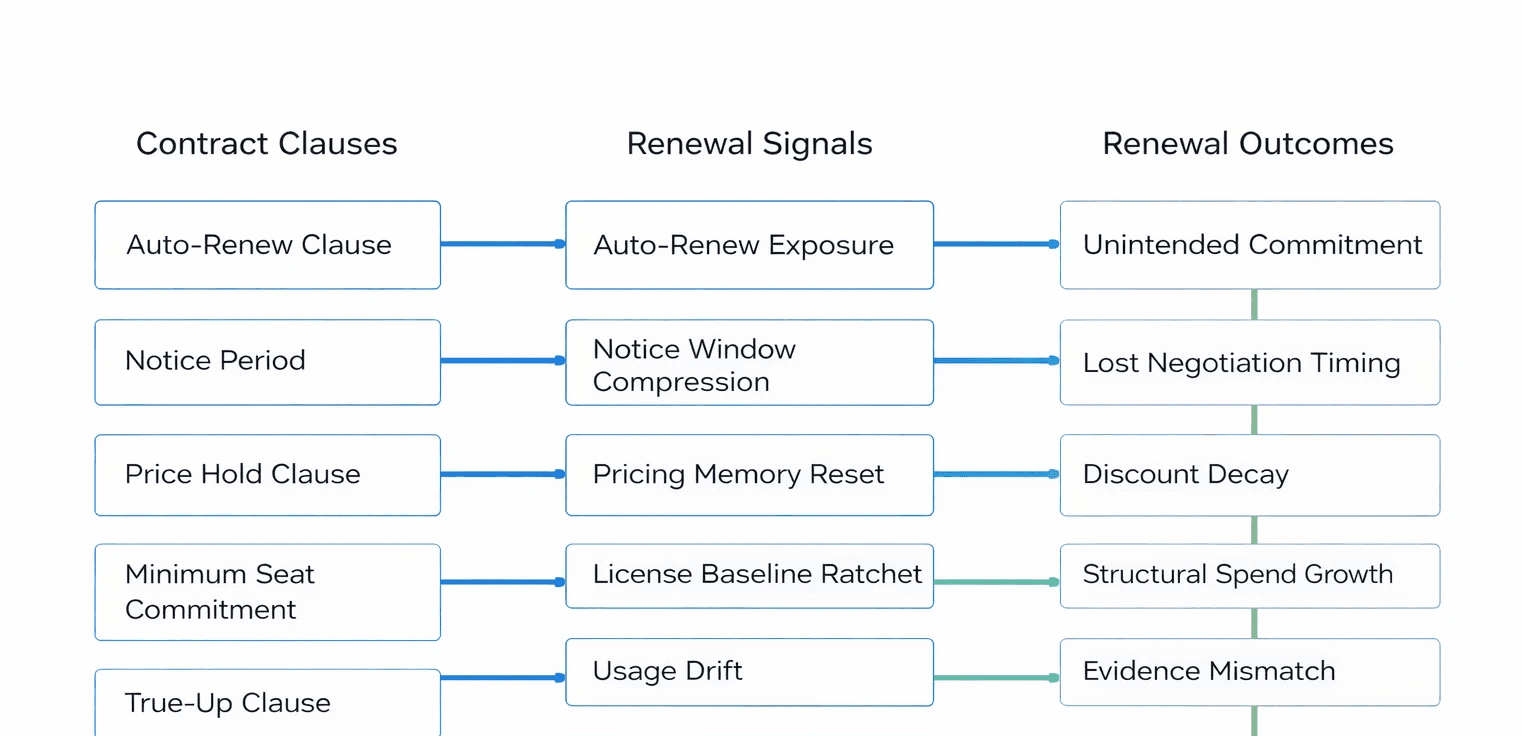
Each definition below connects to a Renewal Signal explaining how the clause affects real-world outcomes.
Auto-Renew Clause
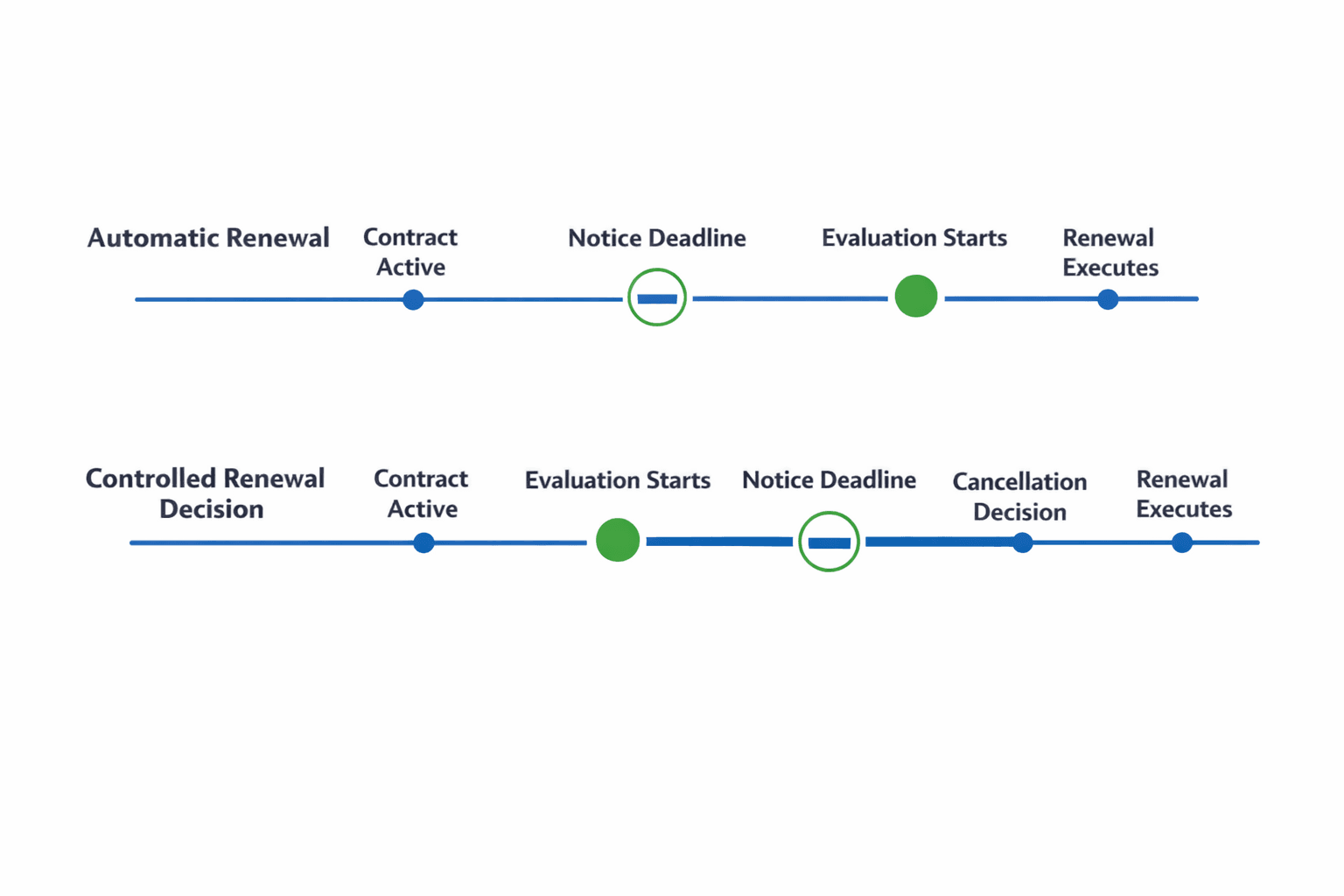
An auto-renew clause extends a contract automatically unless cancellation occurs before a specified notice deadline.
Vendors use this structure to stabilize revenue and reduce churn risk between contract cycles.
For customers, auto-renew clauses create decision deadlines that must be managed proactively to avoid unintended commitments.
Related renewal signal: Auto-Renew Exposure
Notice Period
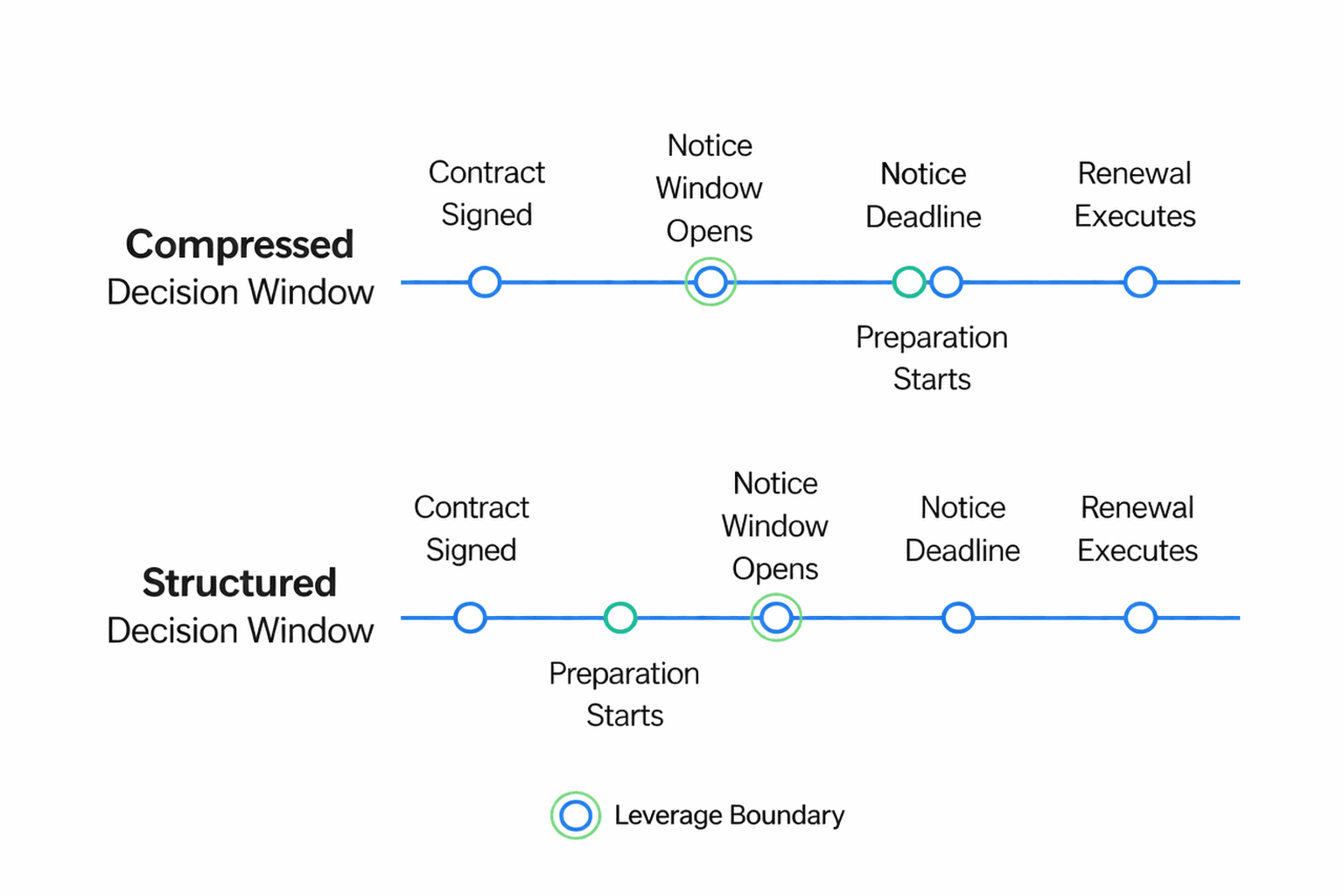
A notice period defines how far in advance a customer must communicate cancellation or modification before renewal takes effect.
Missing this deadline typically results in automatic continuation under existing contract terms.
Organizations that track renewal dates without tracking notice periods often lose negotiation leverage before preparation begins.
Related renewal signal: Notice Window Compression
Price Hold Clause
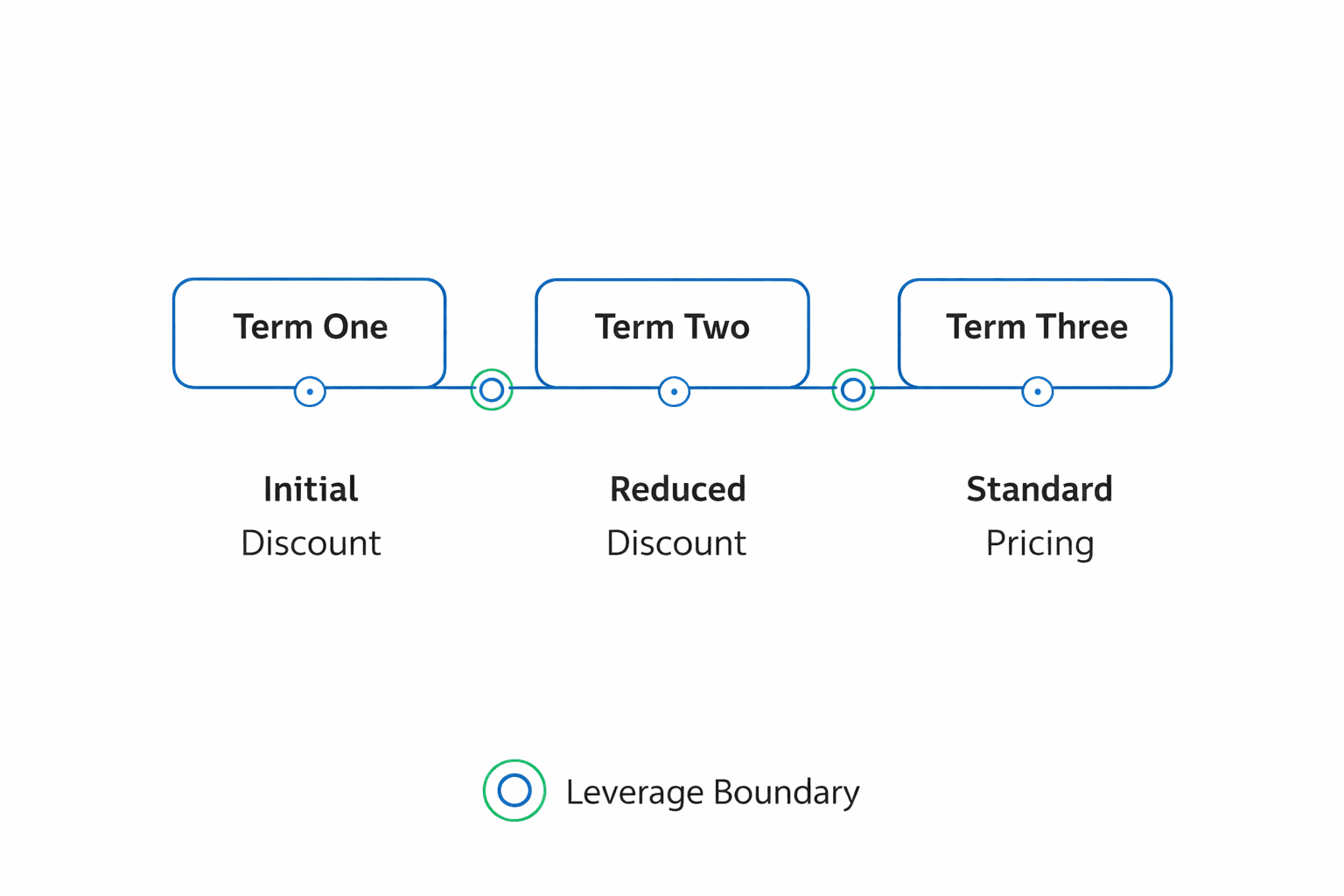
A price hold clause guarantees that negotiated pricing remains valid for a defined contract duration.
When these protections expire at renewal boundaries, vendors often re-anchor discussions around updated list pricing.
Maintaining visibility into price hold expiration helps preserve continuity between contract terms.
Related renewal signal: Pricing Memory Reset
Minimum Seat Commitment
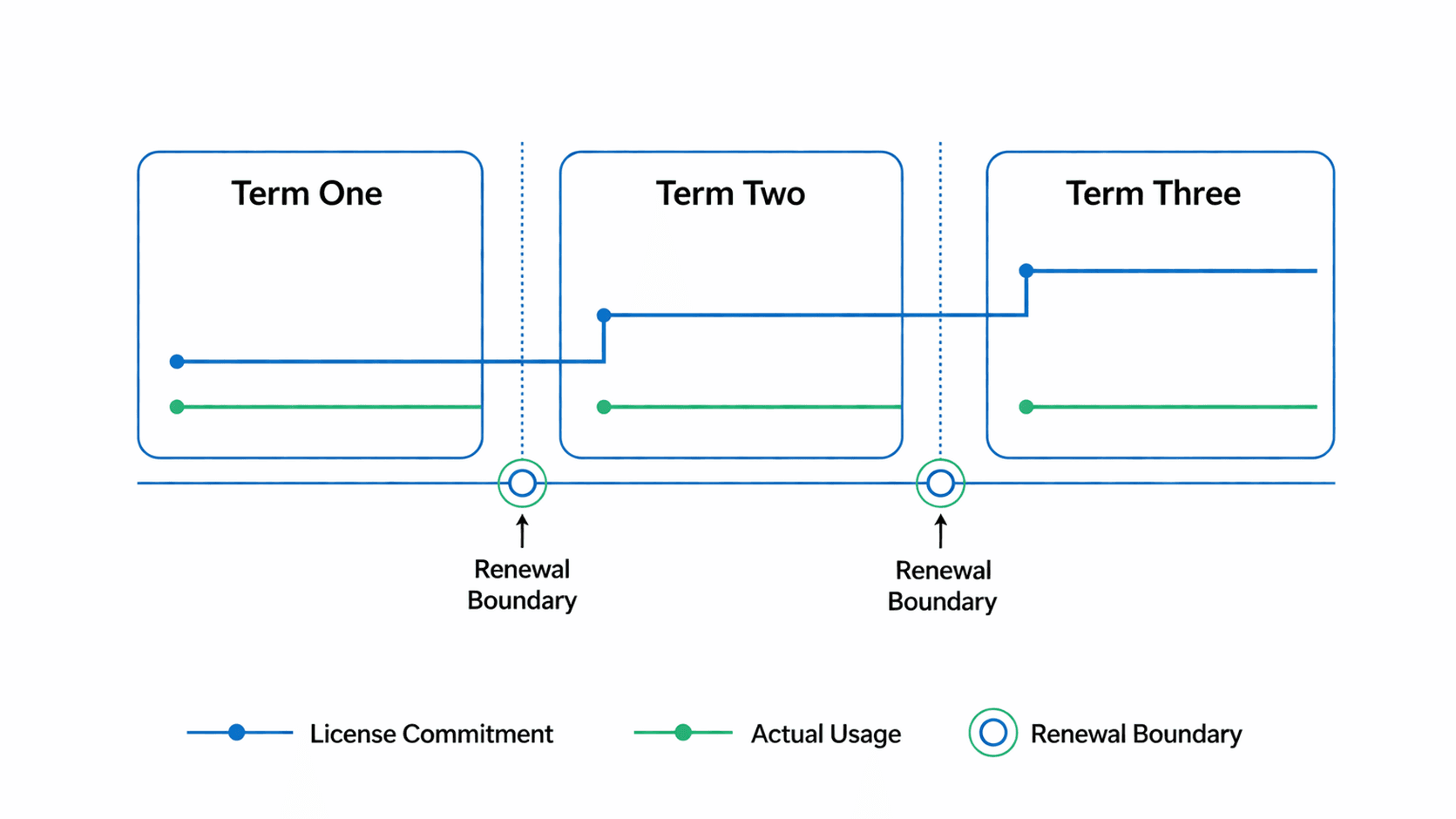
Minimum seat commitments define the baseline number of licenses billed regardless of actual usage levels.
Over time, these commitments can increase across renewals even when adoption stabilizes or declines.
Monitoring baseline changes helps prevent structural spend expansion across contract cycles.
Related renewal signal: License Baseline Ratchet
True-Up Clause
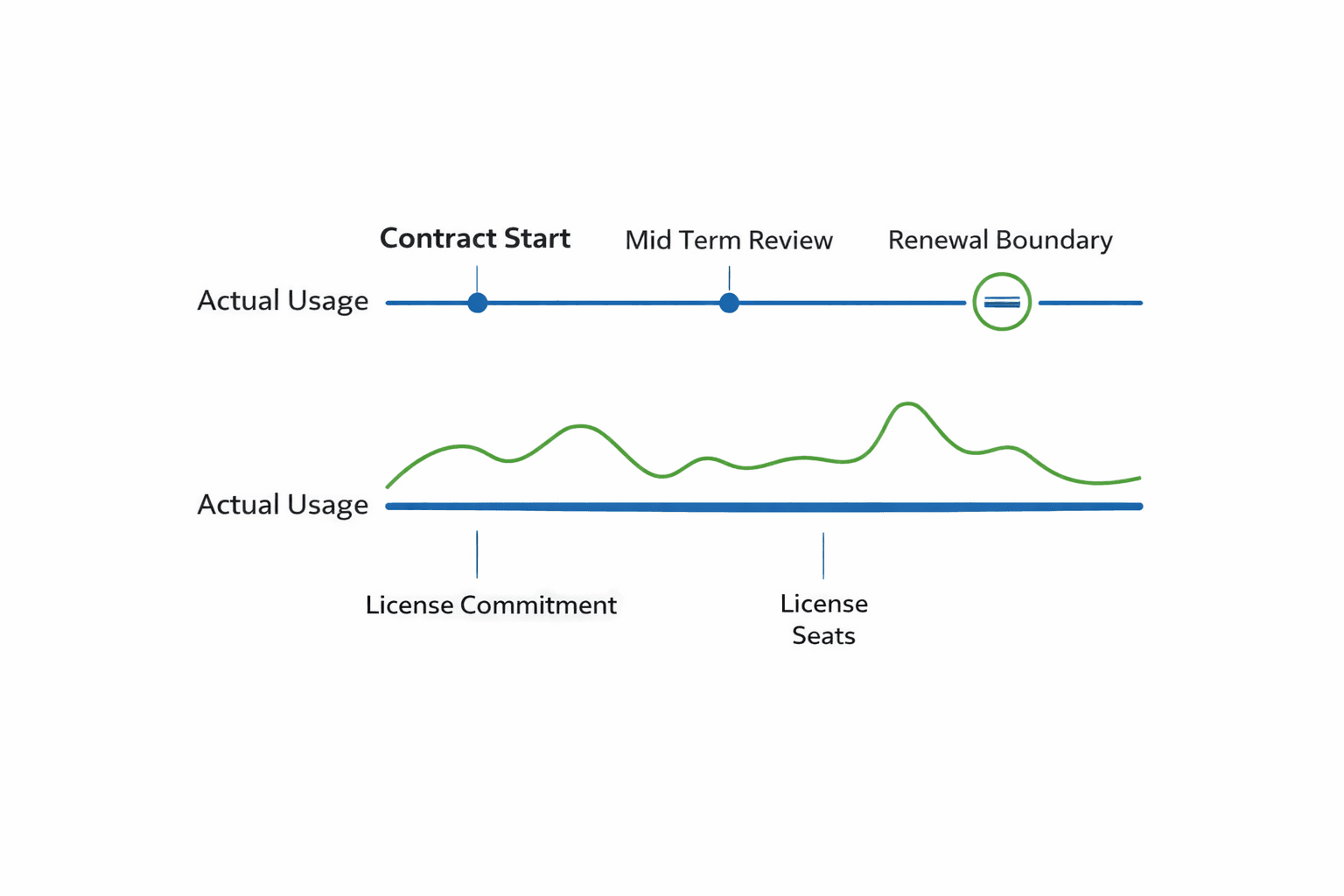
A true-up clause adjusts pricing when usage exceeds contracted limits during the agreement period.
While designed to accommodate growth, these adjustments can also influence renewal baselines if peak usage becomes the reference point for future commitments.
Comparing actual utilization with contractual entitlements helps preserve flexibility before renewal negotiations begin.
Related renewal signal: Usage Drift
Ramp Pricing
Ramp pricing introduces staged increases in license commitments or costs across the contract term.
Vendors use ramp structures to align pricing with expected adoption growth.
Without structured review before renewal, ramp assumptions can become permanent baseline commitments.
Related renewal signal: License Baseline Ratchet
Renewal Uplift Cap
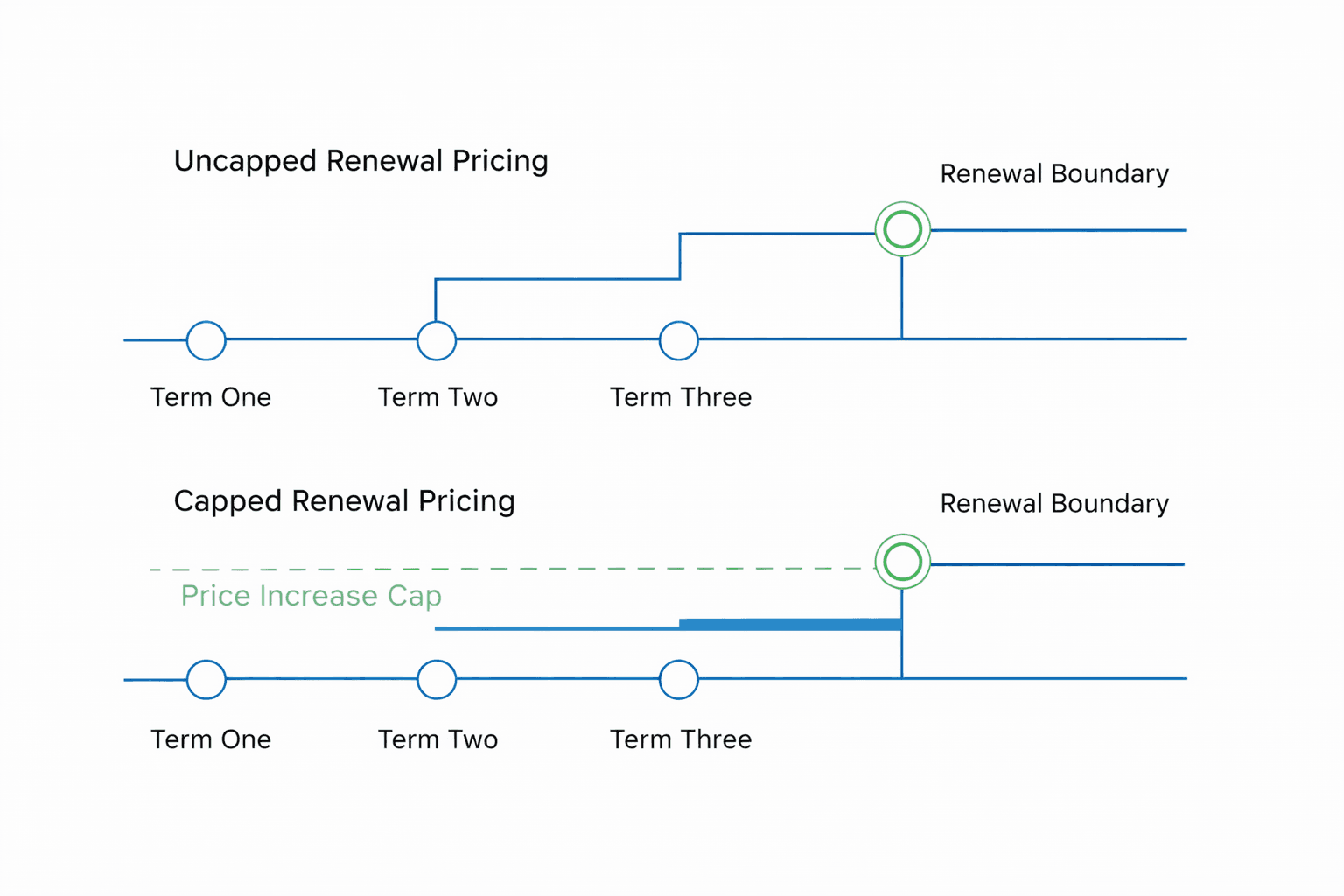
A renewal uplift cap limits how much pricing can increase between contract terms.
When uplift protections are absent, vendors may reset pricing anchors at renewal boundaries.
Tracking these provisions improves predictability across multi-year contract relationships.
Related renewal signal: Pricing Memory Reset
Evergreen Clause
An evergreen clause renews a contract indefinitely unless terminated with advance notice.
Unlike fixed-term renewals, evergreen structures remove natural decision checkpoints unless timelines are actively managed.
Organizations relying on evergreen contracts benefit from structured renewal monitoring.
Related renewal signal: Auto-Renew Exposure
Bundled SKU Pricing
Bundled SKU pricing combines multiple products or modules into a single renewal package.
While bundling can simplify procurement, it may also reduce pricing transparency and limit flexibility during negotiations.
Evaluating bundled renewals carefully helps maintain comparability across contract terms.
Related renewal signal: Pricing Memory Reset
How these terms connect to renewal signals
Contract clauses define structure.
Renewal signals reveal when that structure begins affecting outcomes.
Together, they determine whether renewals remain administrative events or become strategic decision windows.
Explore the full Renewal Signals library to understand how these mechanisms influence negotiation timing, pricing continuity, and contract flexibility across your vendor portfolio.
Explore related renewal signals
Renewal Uplift Exposure
Commitment Carryforward Constraints (roll-over)
Key SaaS Contract Terms That Influence Renewal Outcomes
Stakeholder Fragmentation
Usage Drift
Auto-Renew Exposure
License Baseline Ratchet
Pricing Memory Reset
Notice Window Compression
Renew on your terms, not the vendor’s
Watch how it works