License Baseline Ratchet
When minimum license commitments increase across contract terms.
Author: Venduris team
What this signal means
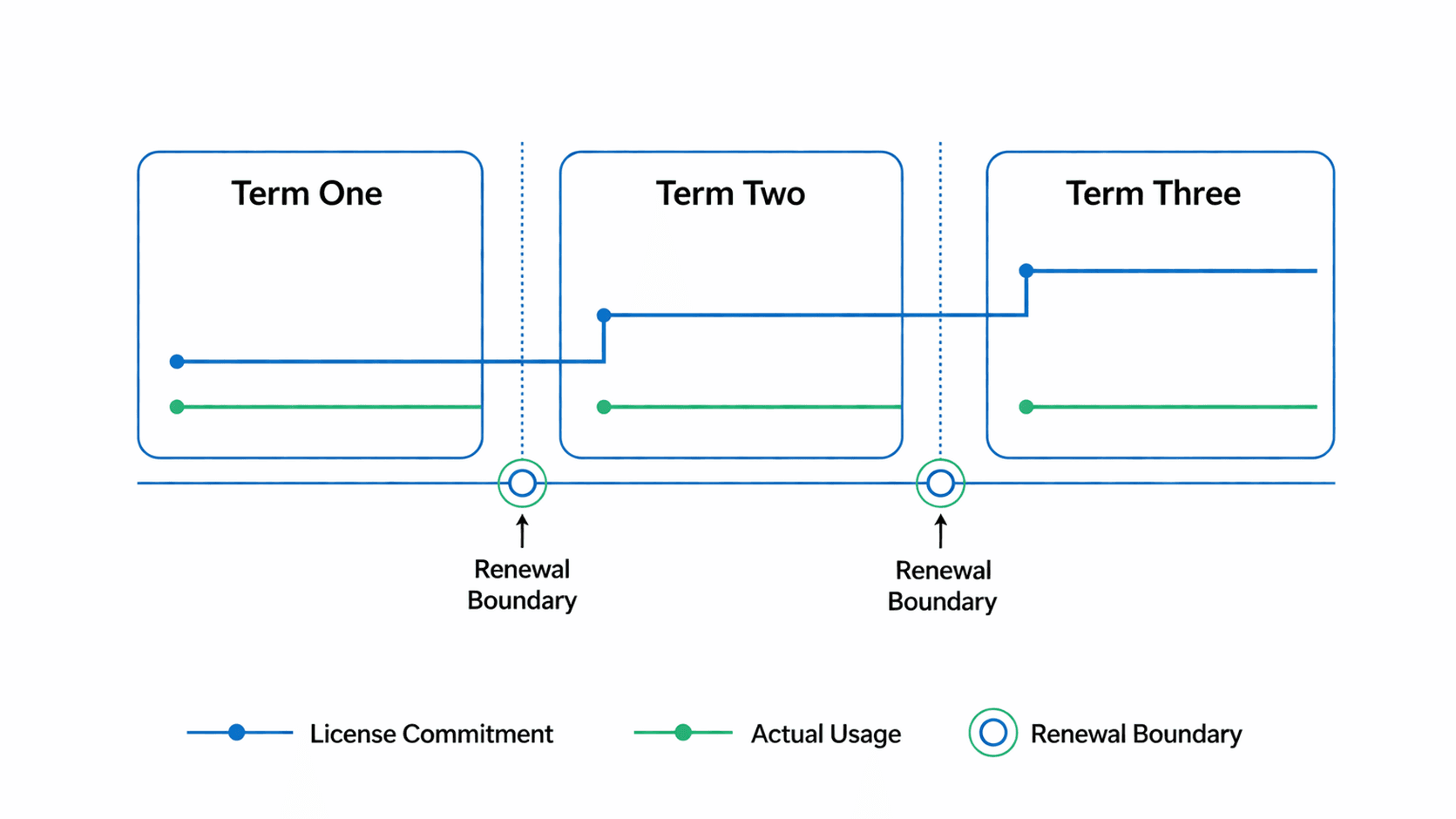
License baseline ratchet occurs when the minimum number of committed seats increases between contract terms.
Instead of renewing at actual usage levels, the next contract anchors pricing to a higher baseline aligned with projected growth or prior peak usage.
Over time, this gradually reduces flexibility and increases recurring spend without a visible price change per license.
Why it matters
Software spend often increases because license baselines move upward across renewals — not because vendors raise prices.
Once baseline commitments increase:
unused licenses remain billable
downgrade flexibility disappears
renewal negotiations start from higher volume assumptions
future reductions become contractually difficult
vendor leverage increases over time
Across multiple renewal cycles, these baseline shifts compound into structural cost expansion across the software portfolio.
Where it typically appears
License baseline ratchets are common when:
peak usage becomes the reference point for renewals
growth projections replace actual utilization in pricing discussions
license reductions are not negotiated before renewal deadlines
contract comparisons between terms are not performed
stakeholders assume seat counts can be adjusted later
These conditions allow commitment levels to increase silently across contract generations.
What strong teams do differently
Organizations that control baseline growth treat seat commitments as negotiation variables rather than operational defaults.
They typically:
compare committed licenses to actual utilization before renewal
challenge vendor assumptions about expected growth
renegotiate minimum seat levels explicitly
separate expansion planning from renewal commitments
preserve downgrade flexibility in contract structure
Managing baseline commitments is one of the most effective ways to stabilize long-term SaaS spend.
How Venduris detects this signal
Venduris compares license commitments across contract generations and highlights increases relative to observed usage levels.
This allows teams to identify baseline ratchet effects early and restore flexibility before renewal commitments become fixed.
Explore related renewal signals
Renewal Uplift Exposure
Commitment Carryforward Constraints (roll-over)
Key SaaS Contract Terms That Influence Renewal Outcomes
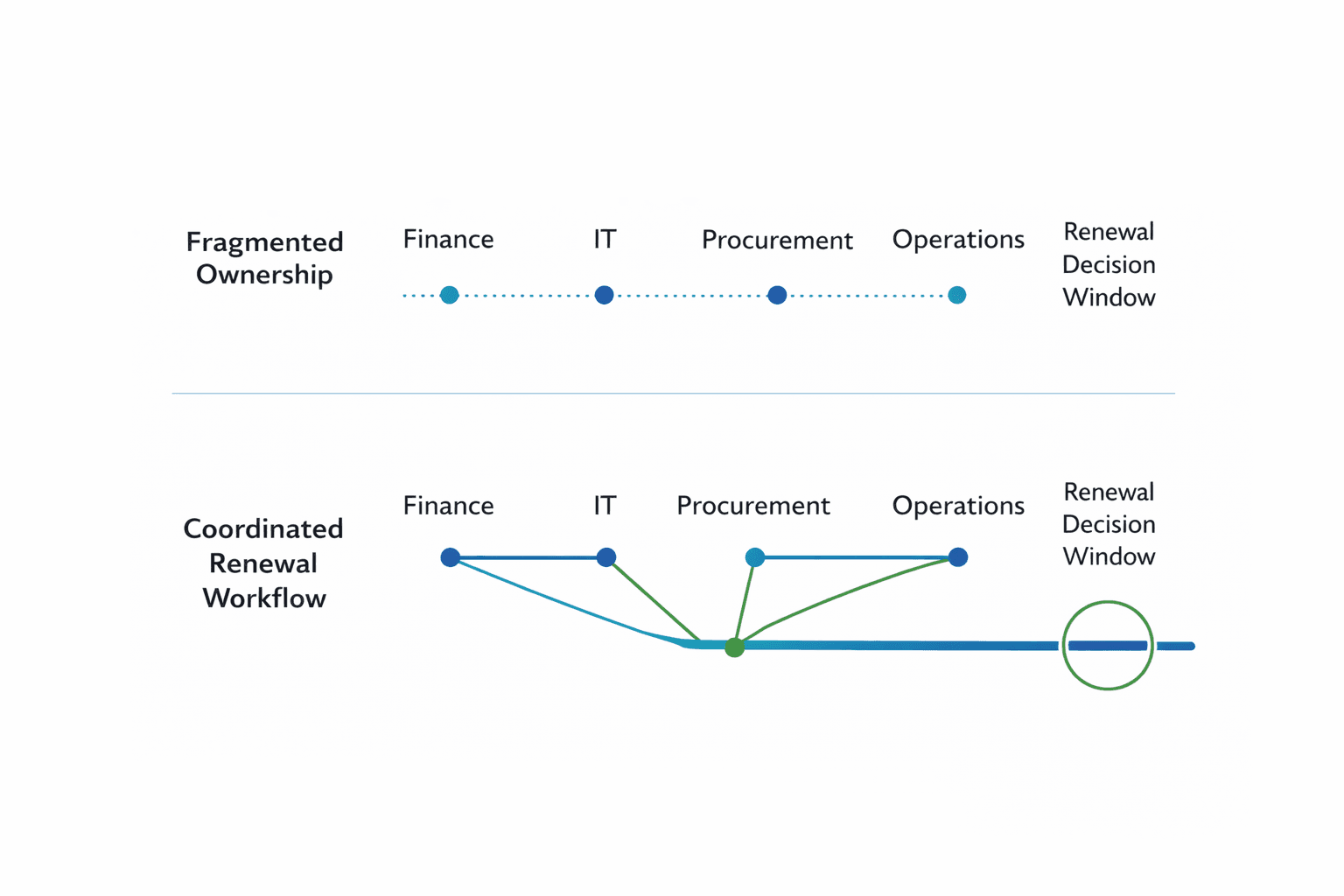
Stakeholder Fragmentation
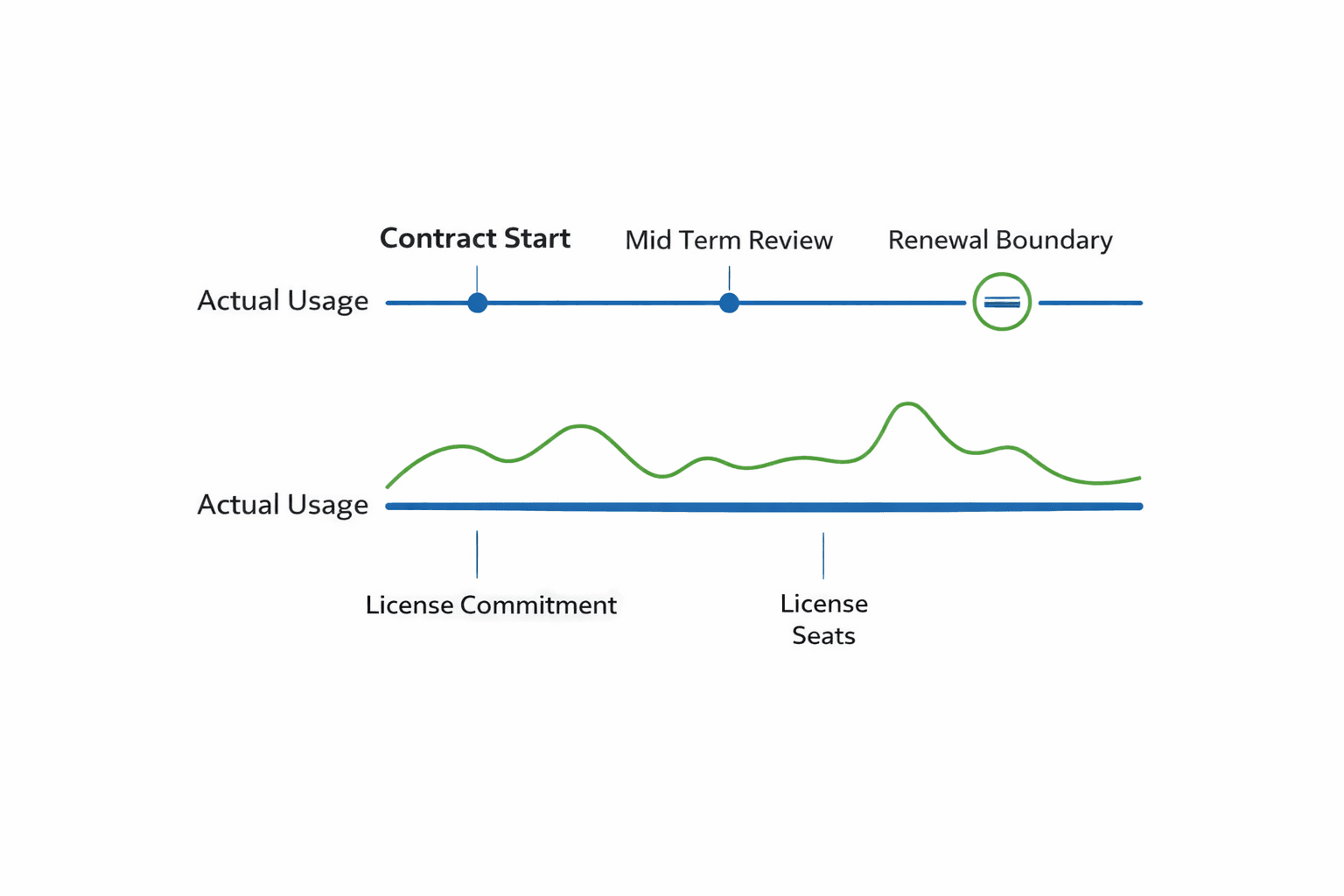
Usage Drift
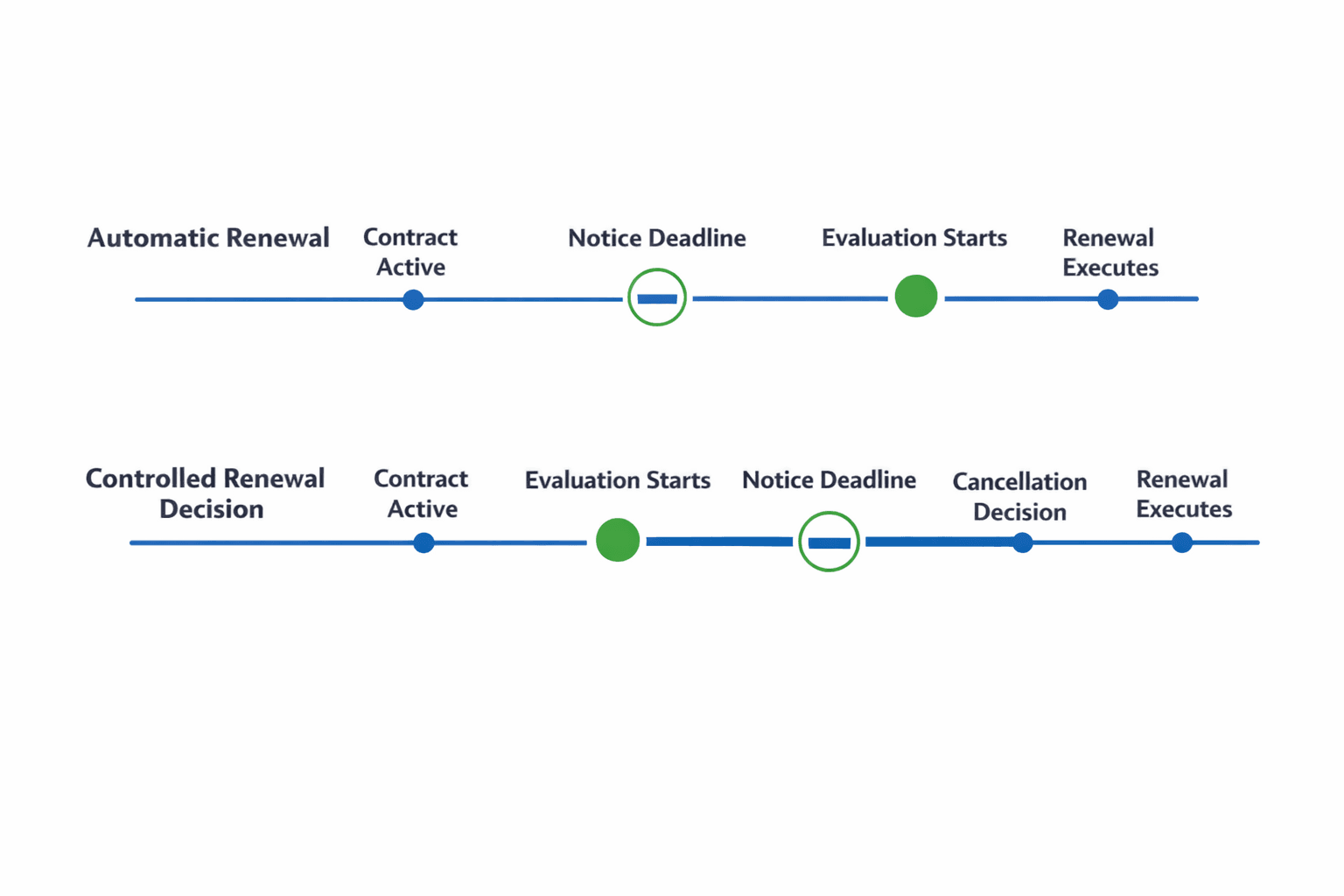
Auto-Renew Exposure
License Baseline Ratchet
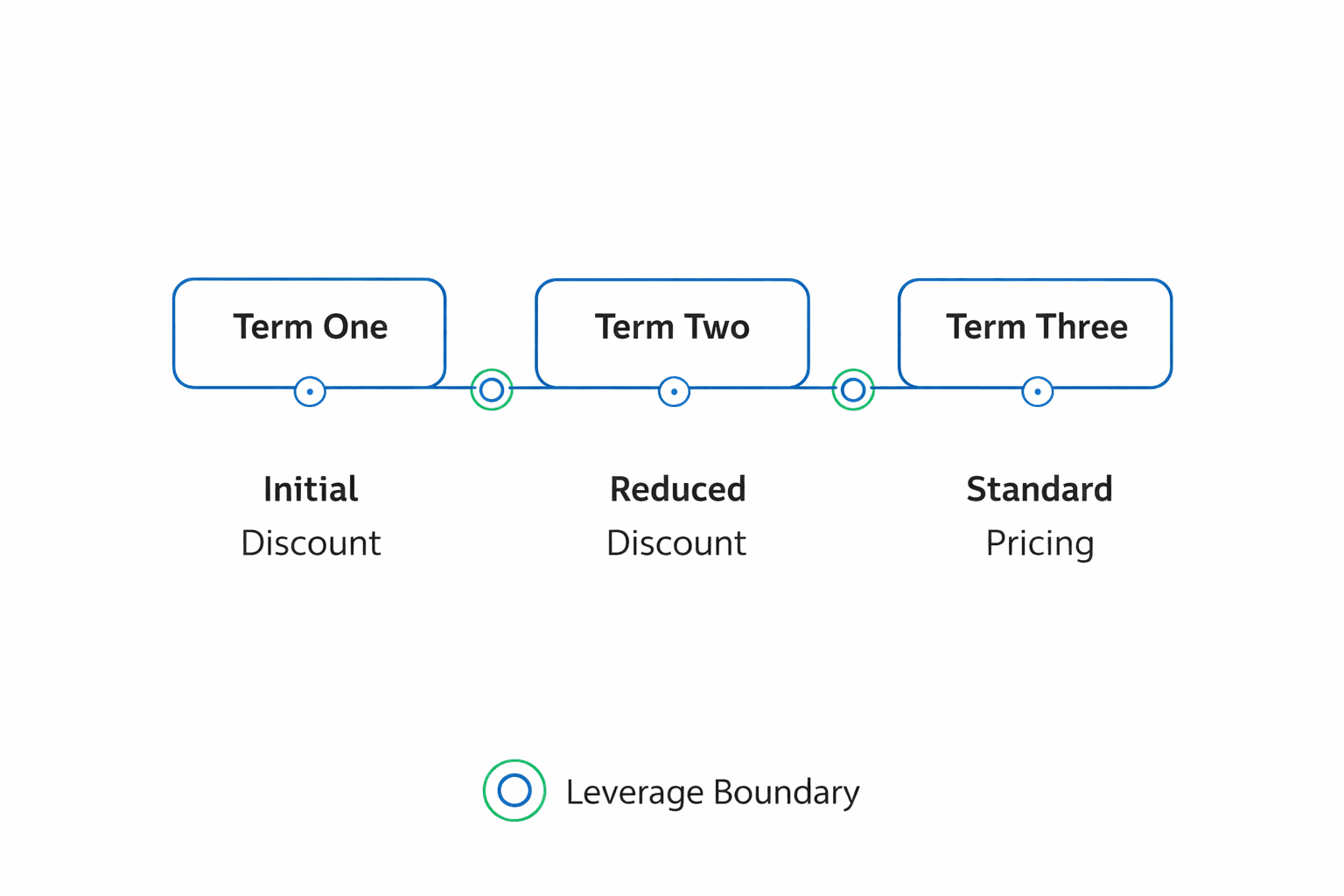
Pricing Memory Reset
Notice Window Compression
Renew on your terms, not the vendor’s
Watch how it works