How SaaS Auto-Renew Clauses Trap Companies
How SaaS Auto-Renew Clauses Trap Companies
Updated: 2026
7 min
Auto renew clauses are one of the most common sources of hidden SaaS spend. This guide explains how they work, why companies miss cancellation deadlines, and how finance, IT, and procurement teams can avoid unwanted renewals.
Introduction
Auto renew clauses are one of the quietest ways SaaS spend increases over time.
At first glance they look harmless. The contract simply continues unless the customer cancels before a specific notice deadline. Vendors present it as a convenience so customers do not lose access to a tool they rely on.
In practice these clauses often work in the vendor’s favor.
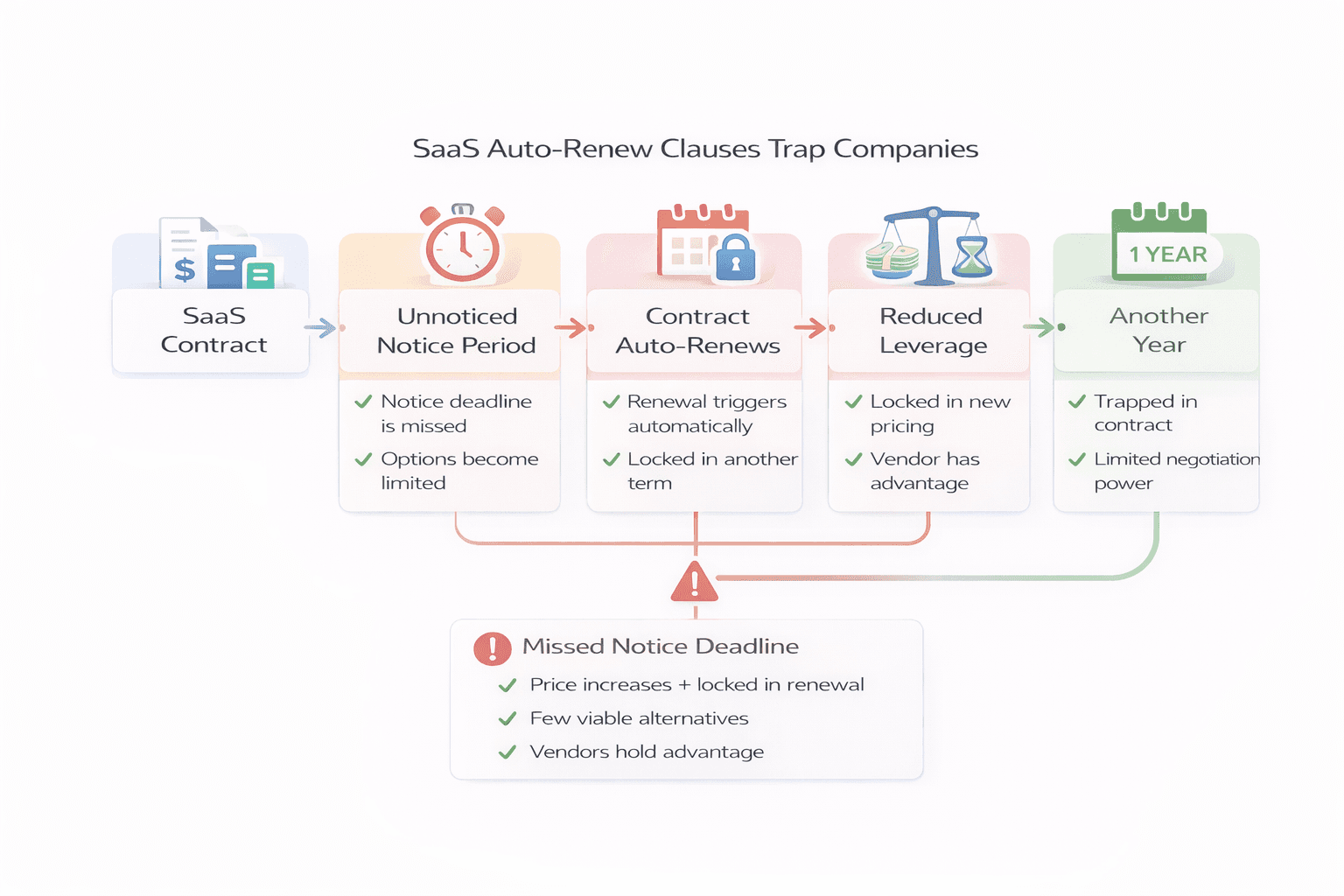
Teams discover renewal dates too late. Notice periods have already passed. The contract renews automatically for another year, sometimes with a price increase.
After working with SaaS contracts for a while, you start seeing the same situation again and again. It rarely comes from bad decisions. Most of the time it comes from missing information at the wrong moment.
Understanding how auto renew clauses work is the first step toward avoiding them.
A situation many teams recognize
A finance team receives a vendor invoice that looks higher than usual.
After a quick review they realize the SaaS contract renewed a few weeks earlier. The price increased by eight percent. The contract is now locked in for another twelve months.
Someone checks the agreement and finds the explanation. The contract required sixty days notice before renewal. The deadline passed before anyone realized the renewal was approaching.
IT confirms the tool is widely used across several teams. Cancelling it now would create disruption.
At this point the company has very little leverage. The vendor already knows the contract has renewed.
Situations like this happen surprisingly often.
Why auto renew clauses exist
From the vendor’s perspective auto renew clauses provide revenue stability.
SaaS companies invest heavily in acquiring customers. Renewals are a critical part of their business model. Auto renew provisions reduce the risk of contracts expiring unexpectedly.
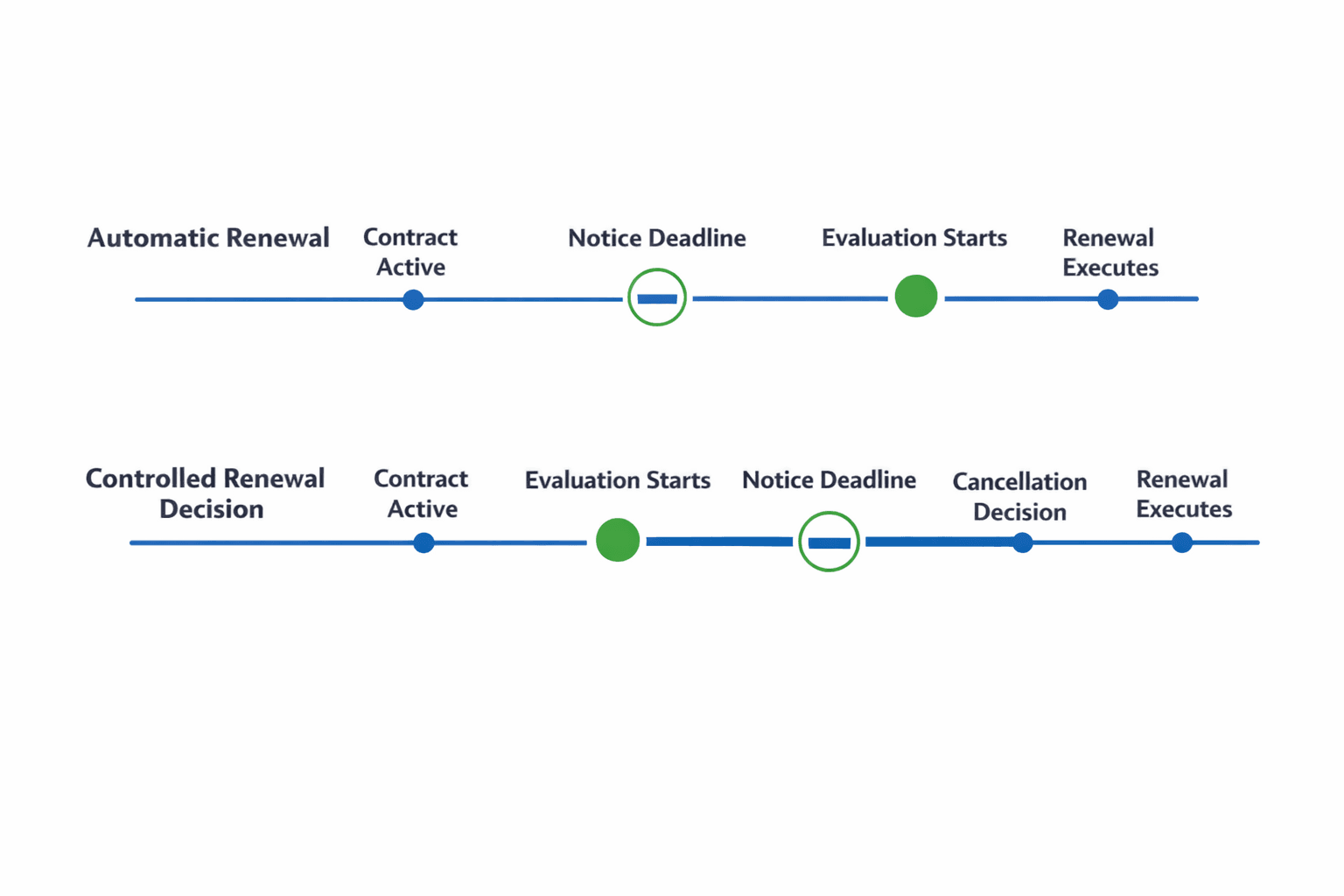
Most SaaS agreements therefore include language stating that the contract will renew automatically unless the customer sends written notice before a specific deadline.
Notice periods typically range between thirty and ninety days.
If the customer does nothing, the contract continues for another term.
Why companies miss renewal deadlines
In theory avoiding auto renew clauses should be simple. In reality many companies miss these deadlines.
One reason is that contract information is rarely centralized. Agreements may live in shared folders, email threads, or legal archives that operational teams rarely access.
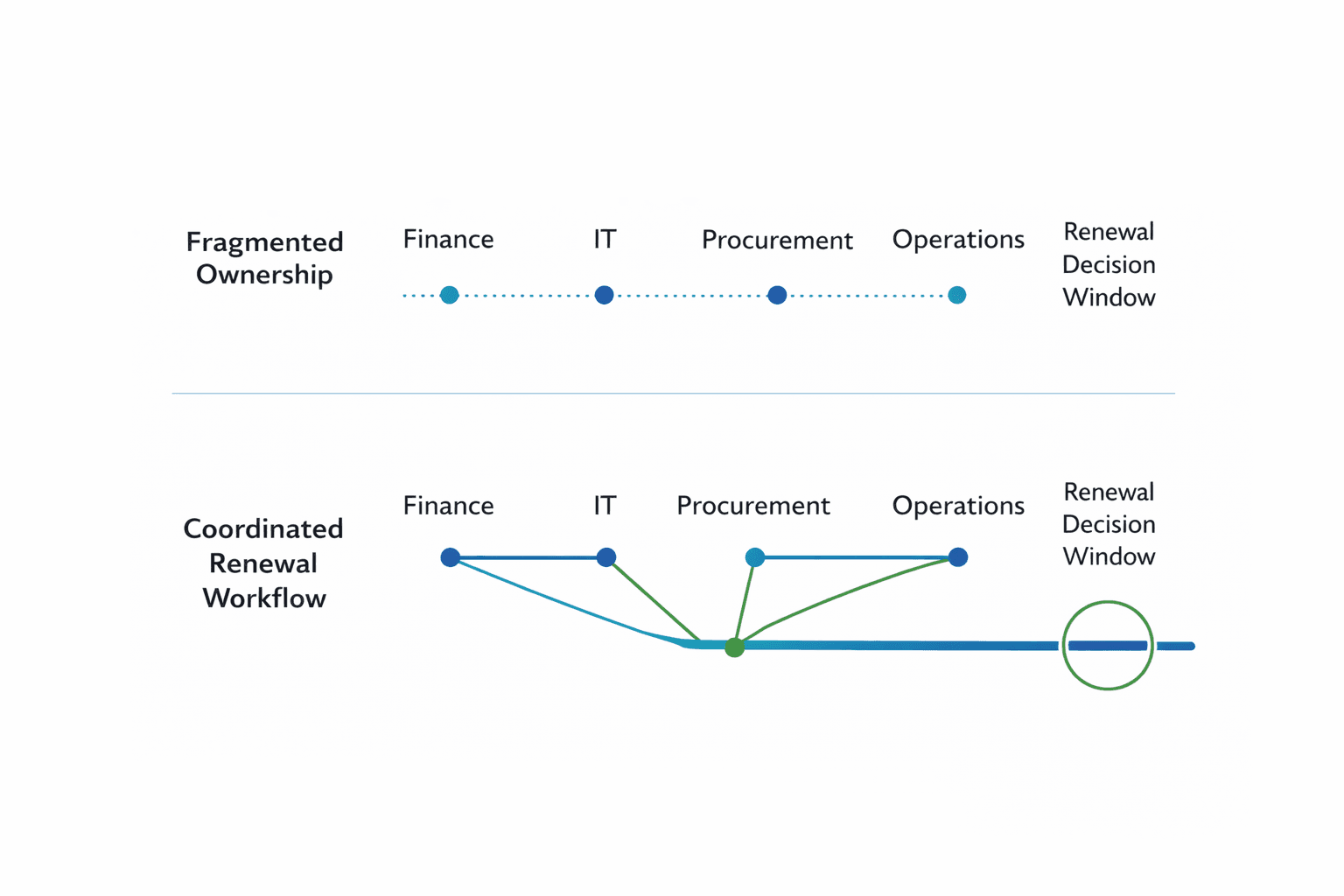
Another reason is that different teams see different parts of the picture.
Finance sees invoices. IT manages the tools. Procurement negotiates contracts. When these perspectives are not connected, renewal timelines become easy to overlook.
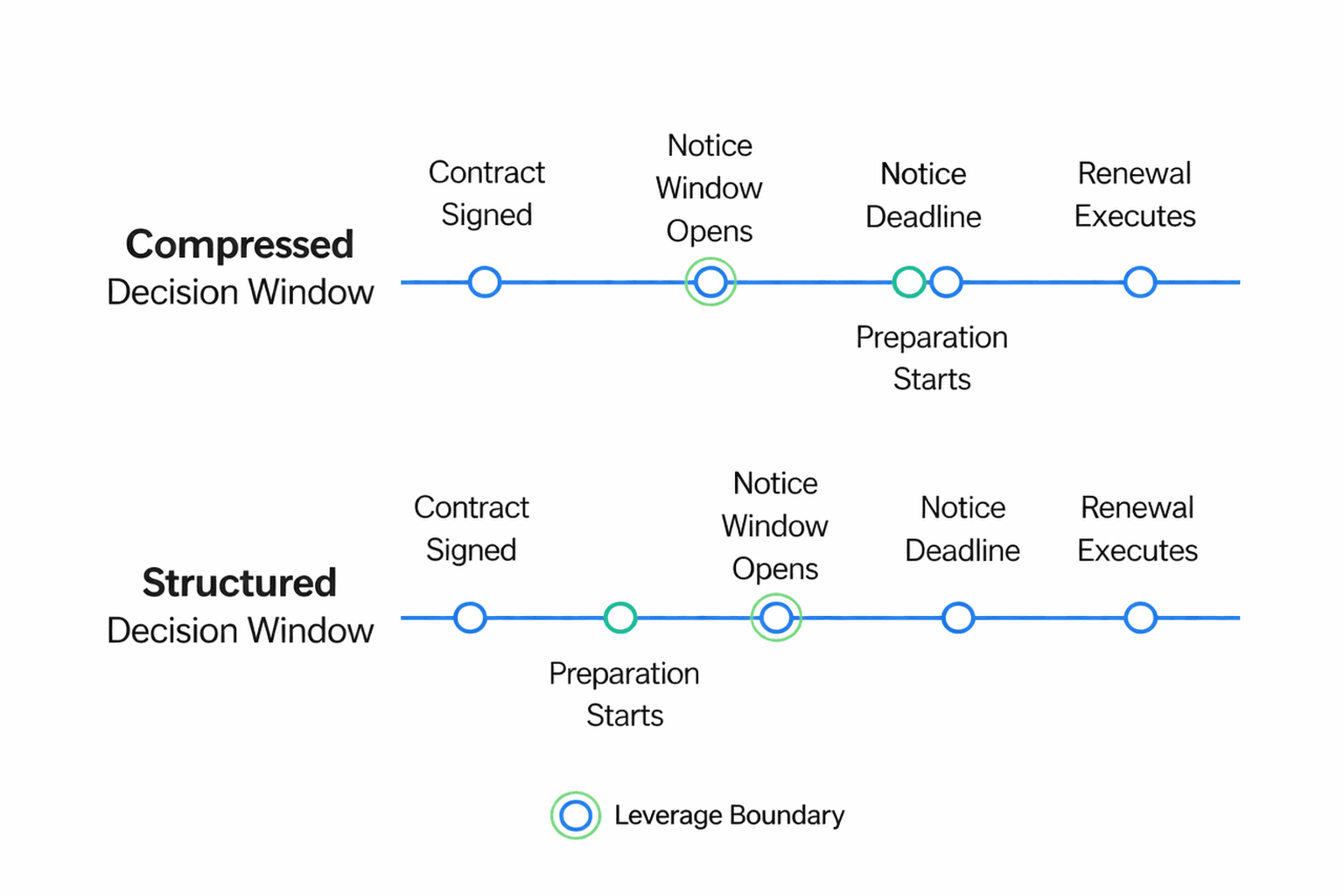
Finally, notice periods often occur months before the renewal date itself. By the time a renewal invoice appears, the cancellation window may already be closed.
What auto renew clauses typically look like
Although wording varies slightly across vendors, the structure is usually similar.
A typical clause states that the contract renews automatically for another term unless the customer provides written notice before a specified deadline.
For example, a contract renewing on December 31 may require cancellation notice by October 31. Missing that deadline means the contract continues automatically.
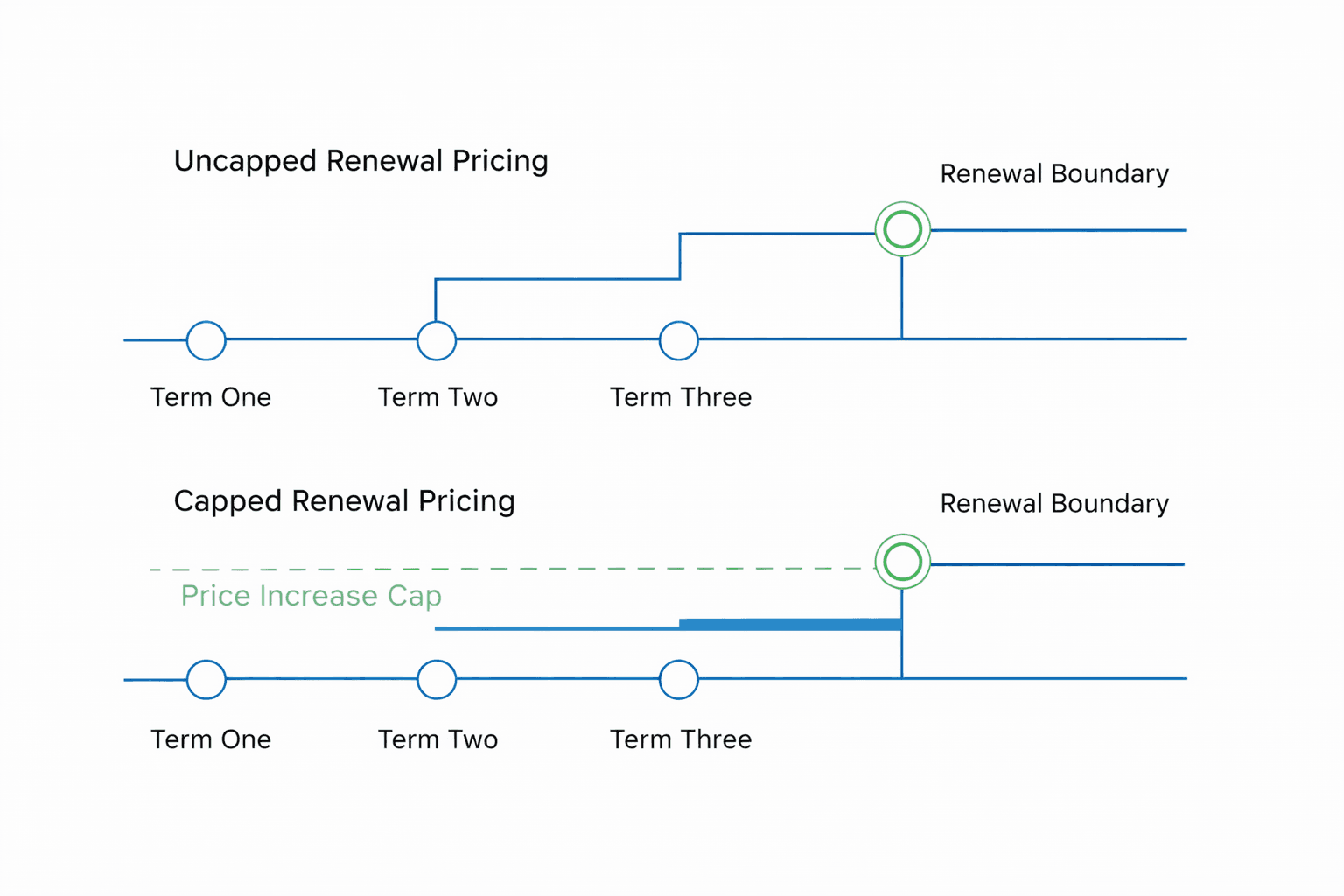
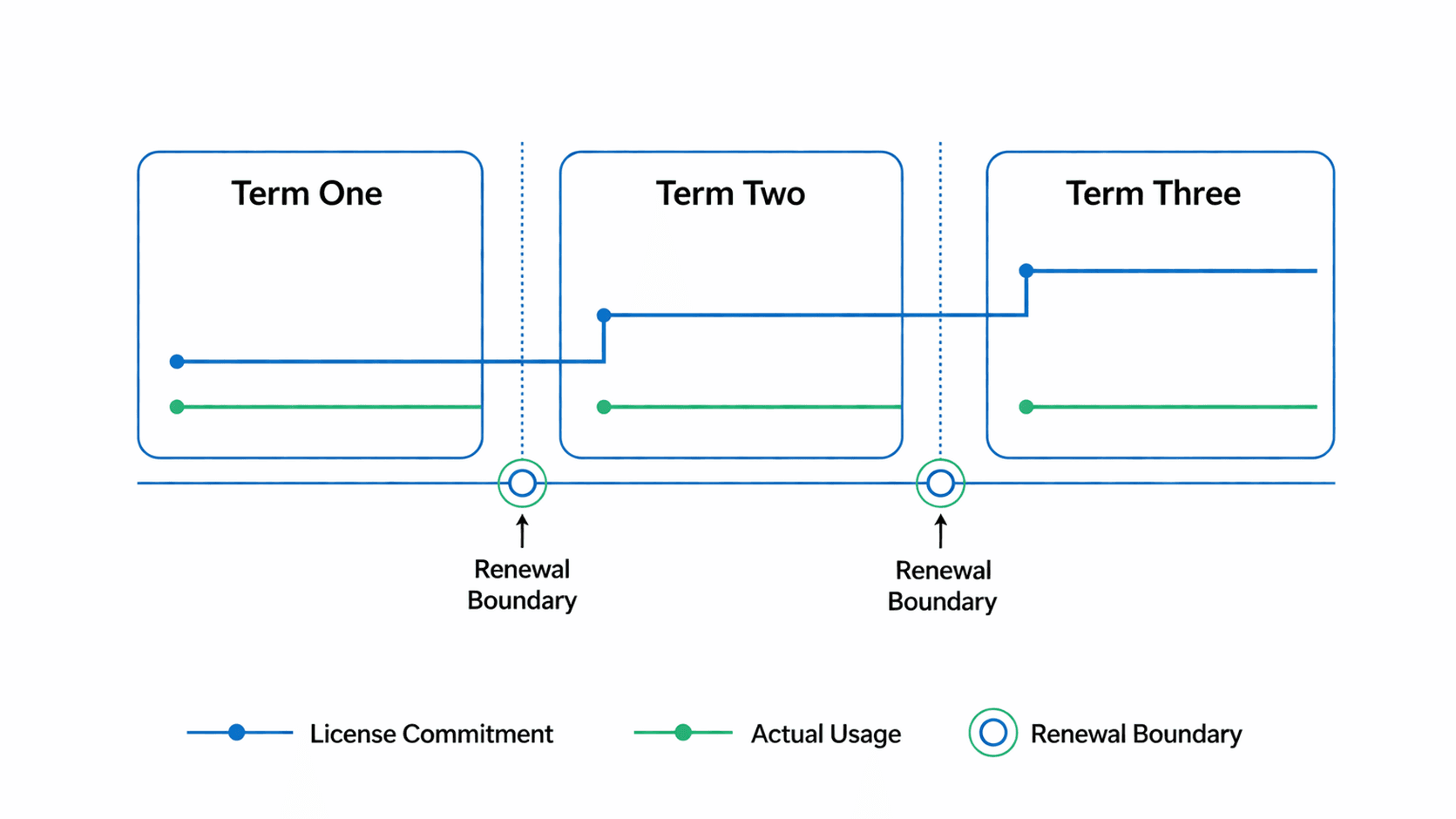
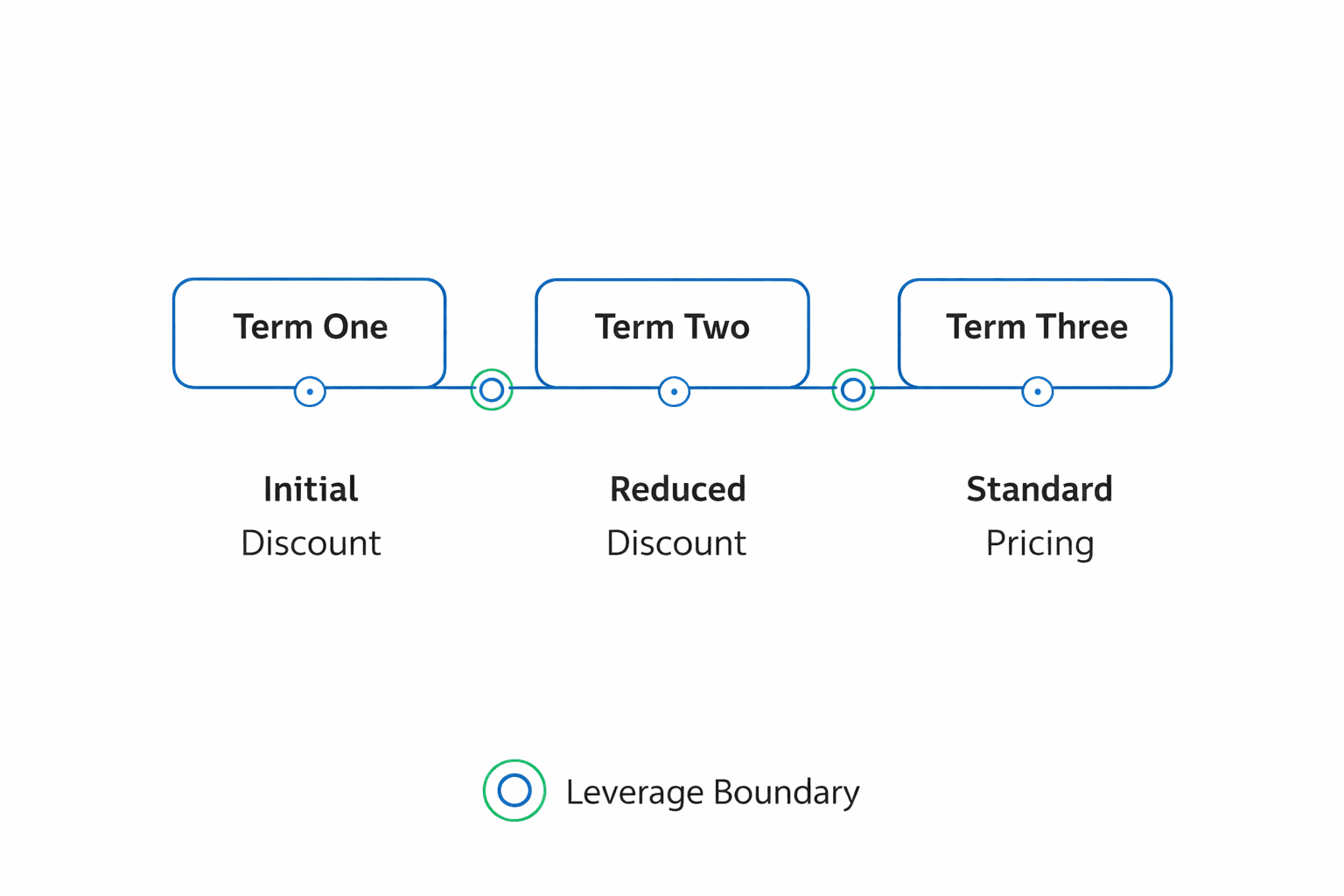
Many agreements also allow vendors to increase pricing at renewal. These increases are sometimes capped but not always.
Understanding these terms early is essential for managing renewals effectively.
A better way to approach renewals
Companies that manage SaaS contracts well do not wait for vendors to reach out.
Instead they maintain visibility on upcoming renewal dates months in advance. This allows teams to review contracts before notice deadlines pass.
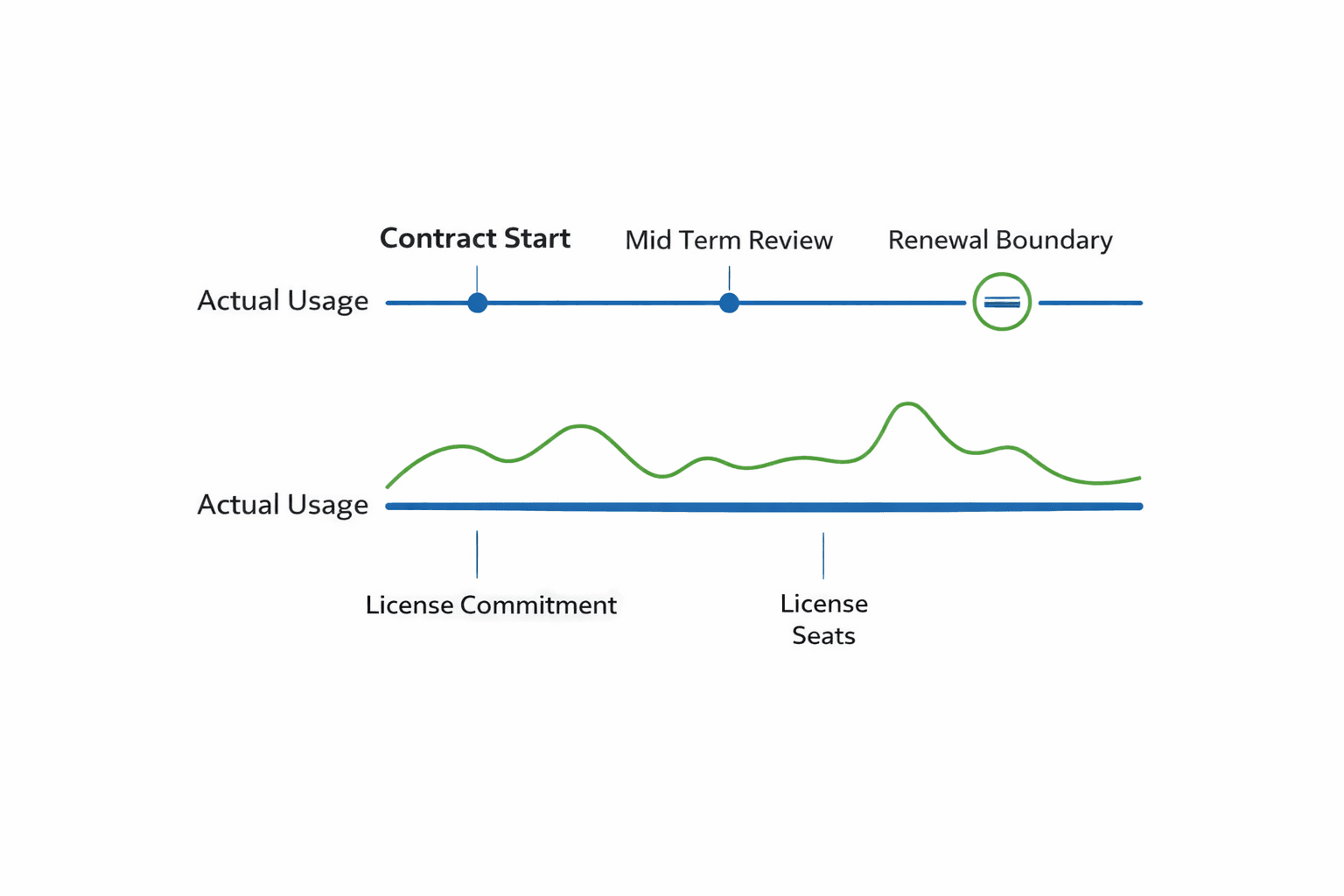
Early visibility changes the conversation. Teams have time to evaluate usage, compare vendors, and decide whether they want to renegotiate, renew, or replace a tool.
Once vendors know the customer is actively reviewing alternatives, negotiations often become far more balanced.
Practical steps to avoid auto renew traps
A few simple practices can dramatically reduce the risk of unwanted renewals.
First, maintain a clear inventory of SaaS contracts and their renewal dates. Knowing what will renew in the next six months already eliminates many surprises.
Second, track notice periods separately from renewal dates. These deadlines often arrive earlier than expected.
Third, assign clear ownership for each contract. Someone inside the organization should be responsible for reviewing the renewal decision before the notice window closes.
Finally, start reviewing contracts months in advance. Waiting until the last few weeks almost always reduces negotiating leverage.
How Venduris helps
Venduris was built to prevent exactly these situations.
The platform extracts renewal dates, notice periods, and contract terms from SaaS agreements. Renewal workflows are created months before deadlines so teams can review contracts early.
Automatic alerts notify finance, IT, and procurement when notice windows approach. Instead of discovering renewals after the fact, teams can prepare decisions well in advance.
This visibility allows organizations to renegotiate contracts, evaluate alternatives, and avoid unwanted auto renew extensions.
Final thoughts
Auto renew clauses are not inherently problematic. They simply reward vendors when customers are not paying attention.
When renewal timelines are tracked early and ownership is clear, these clauses lose much of their power.
For companies managing dozens or hundreds of SaaS contracts, visibility is the difference between reactive renewals and strategic ones.
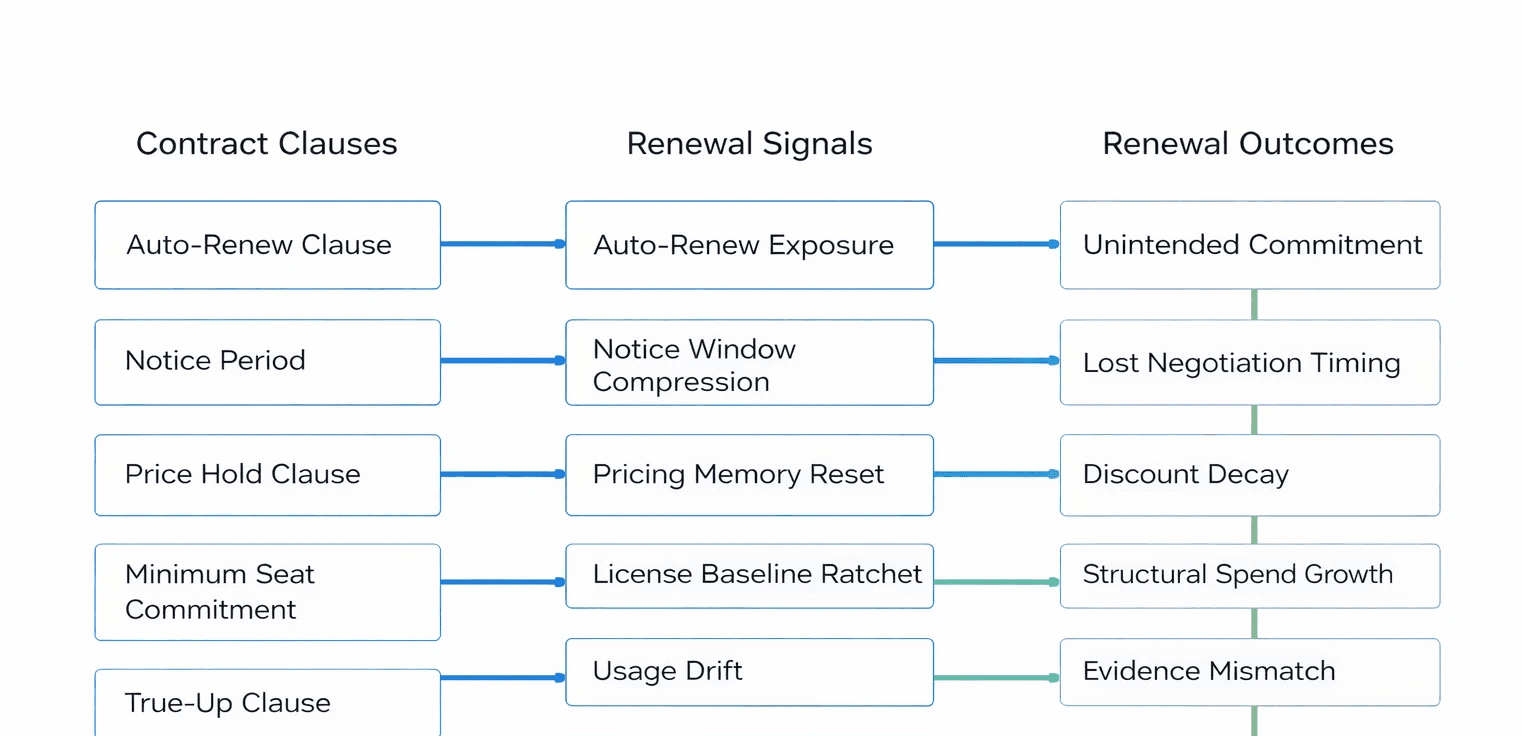
Explore related renewal signals
Renew on your terms, not the vendor’s
Watch how it works