Right Sizing SaaS Contracts With Real Usage Data
Why finance and procurement cannot measure SaaS usage alone and how involving business users unlocks real savings.
Updated: 2026
5 min read
Most companies renew SaaS contracts without understanding actual usage. This guide explains how organizations track software adoption, collect usage insights from business teams, and right size contracts before renewal.
Introduction
One of the most common mistakes companies make during SaaS renewals is negotiating without usage data.
The finance team knows the invoice amount.
Procurement knows the contract terms.
IT may know the system exists.
But very often, nobody actually knows how much the software is being used.
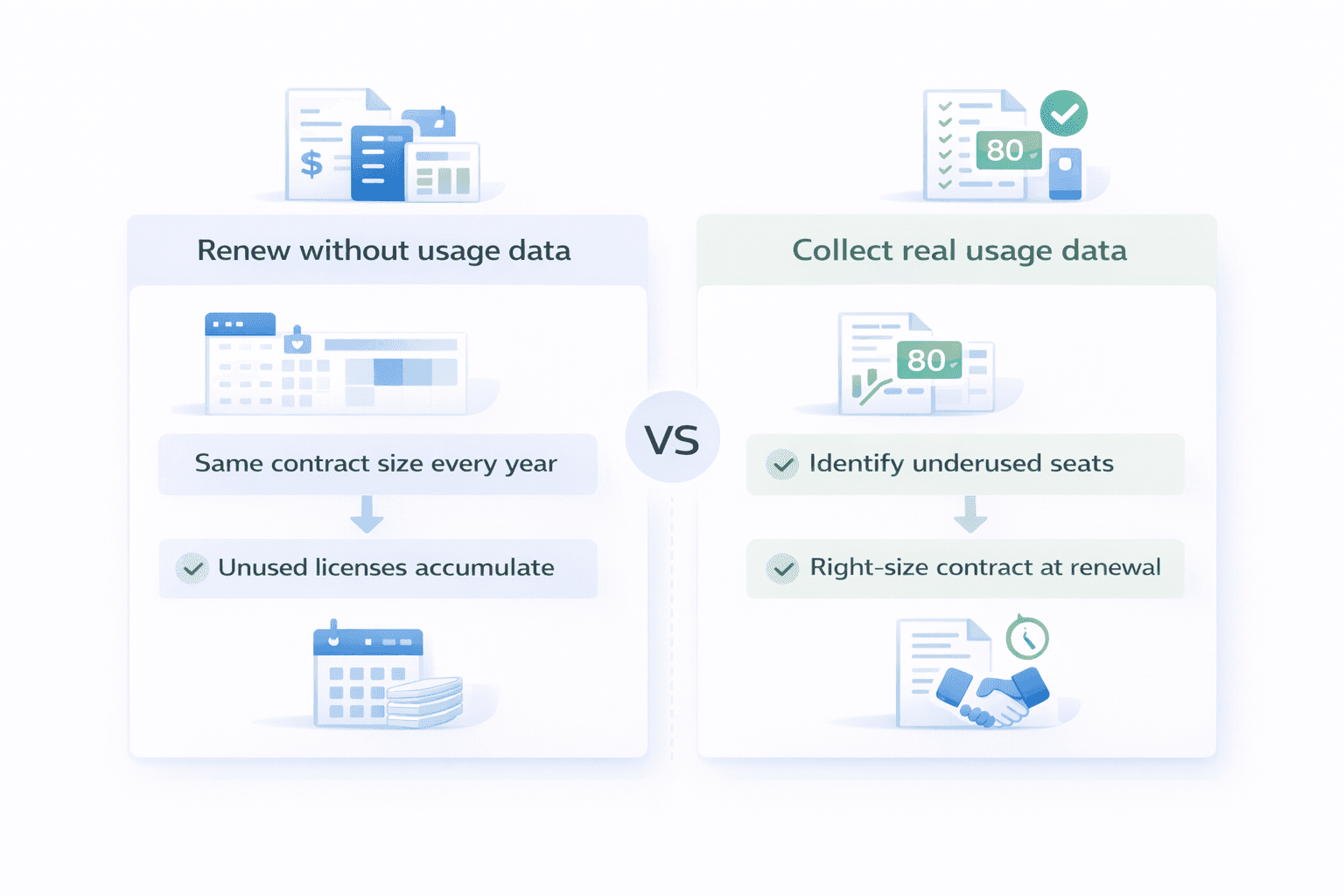
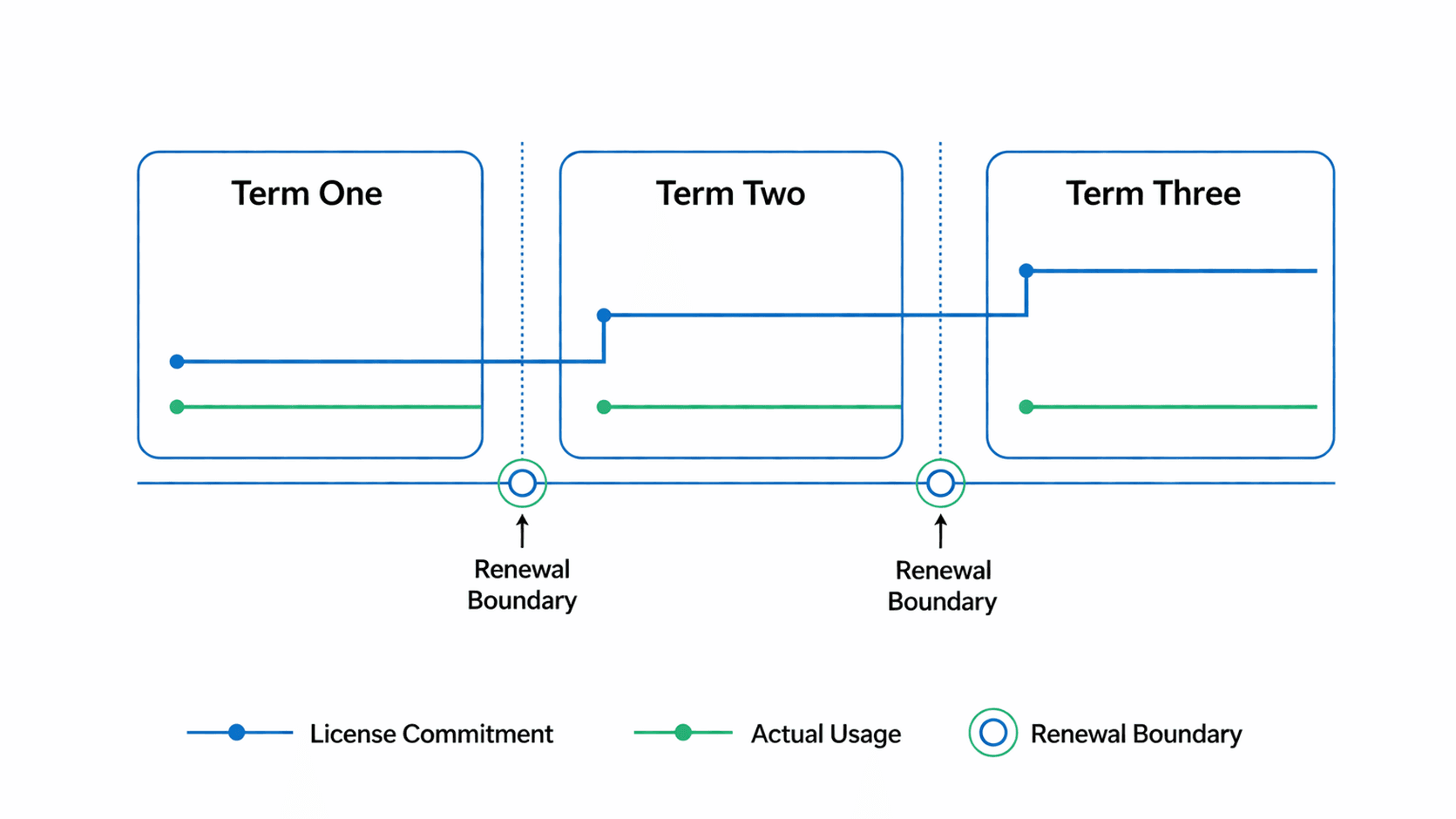
This leads to a familiar situation. Contracts renew at the same size every year because nobody feels confident reducing licenses.
In practice many companies are paying for significantly more capacity than they need.
Understanding usage changes the conversation completely.
A situation many teams recognize
A company renews a collaboration platform every year for two hundred licenses.
The contract has existed for several years and the price is negotiated reasonably well.
During a renewal review someone asks a simple question.
How many people actually use the platform regularly.
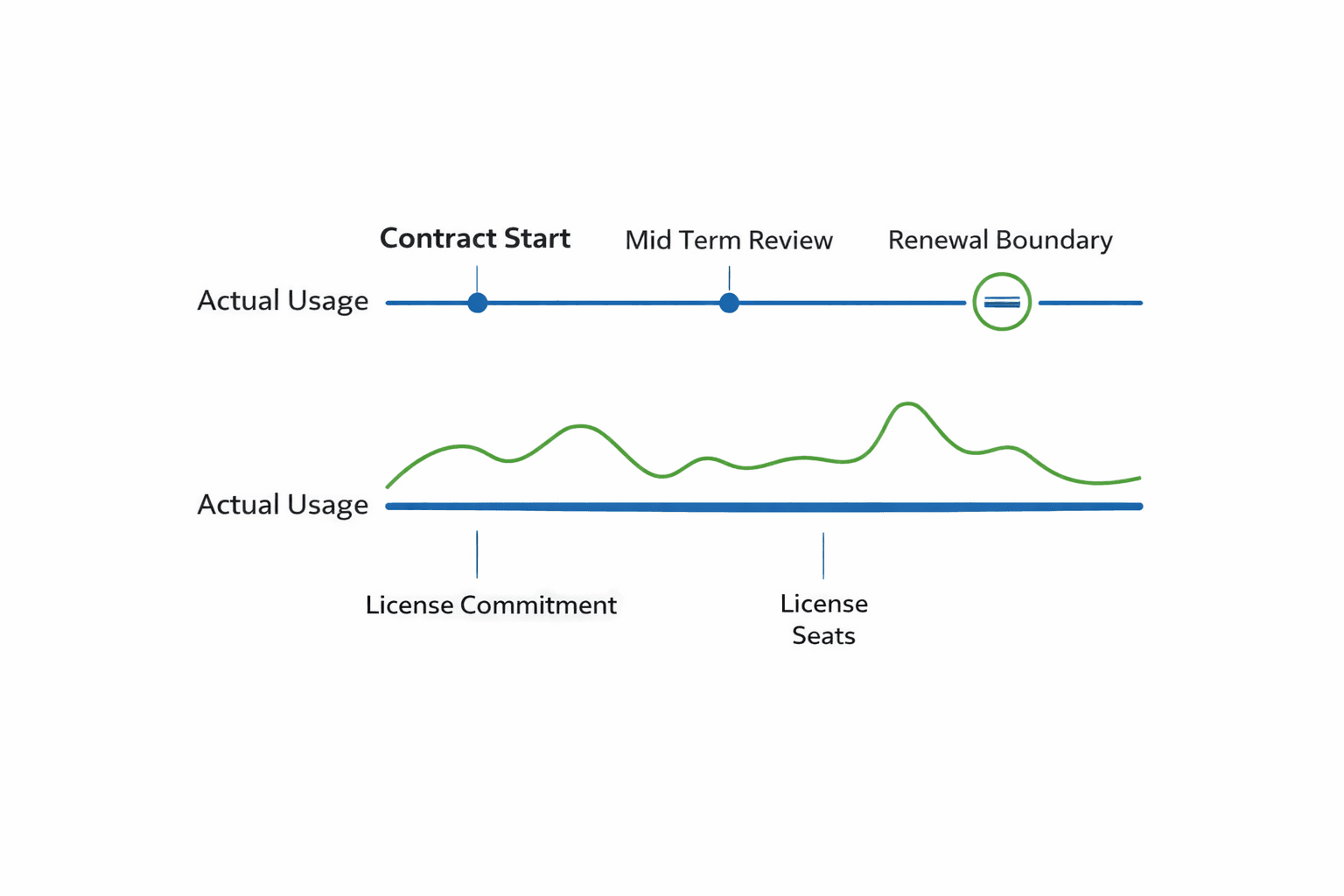
After a quick check the answer appears. Around one hundred and twenty employees log in consistently. The remaining licenses exist mostly because nobody revisited the original estimate.
Nothing was wrong with the vendor and nothing was mismanaged intentionally.
The contract simply stayed the same while the organization evolved.
Why usage visibility is difficult
Tracking SaaS usage sounds simple but in reality it is often complicated.
Each vendor measures usage differently. Some tools count active users. Others count seats. Some measure API activity, data consumption, or feature usage.
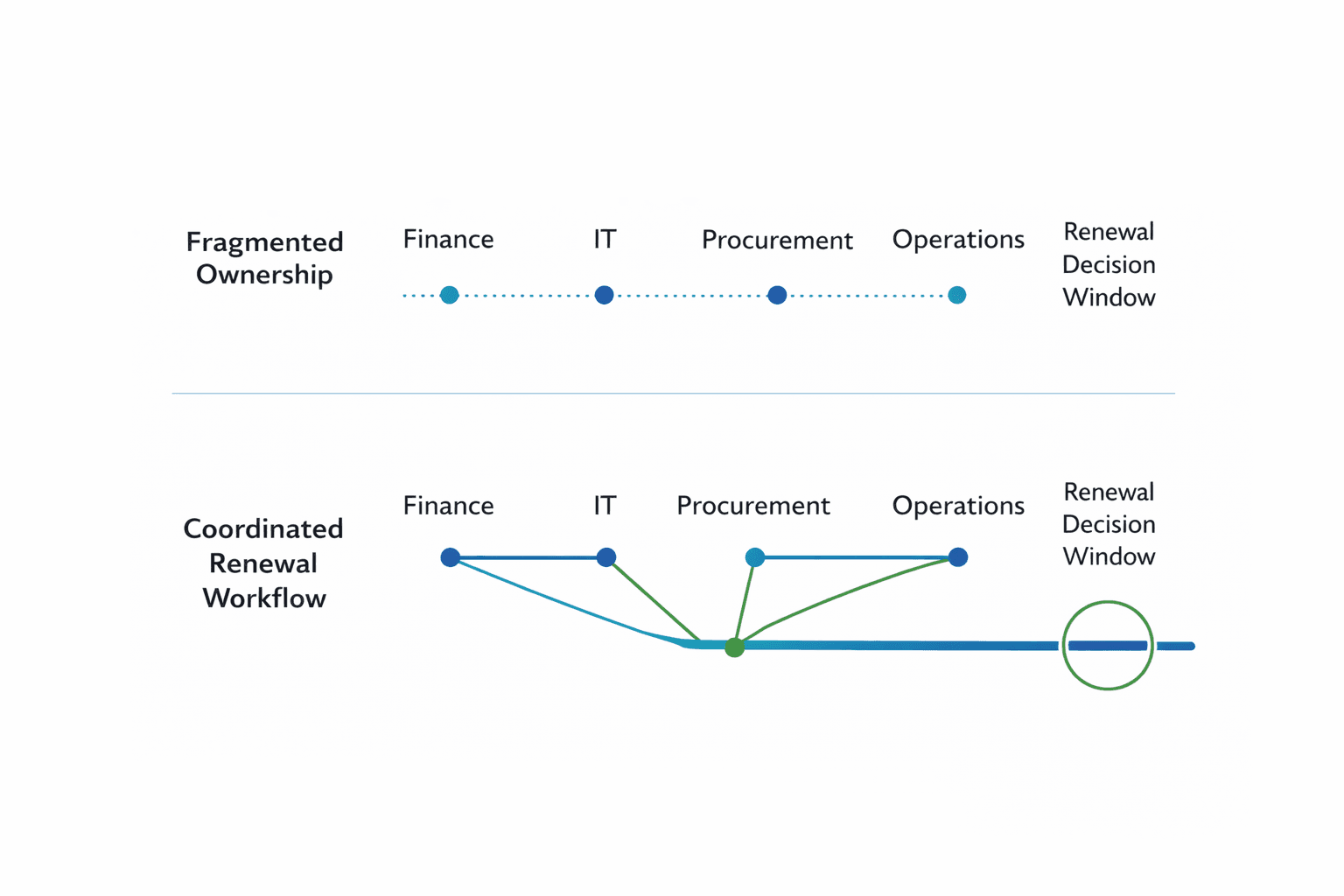
Finance teams rarely have access to these dashboards.
IT teams often manage technical integration but may not know which departments rely on specific features.
The business teams that actually use the software are usually the only ones who can explain whether a tool is essential, underused, or easily replaceable.
Without input from those users the renewal discussion is based mostly on assumptions.
The role of business users in renewal preparation
Business users are closest to the value of a tool.
They understand how frequently it is used, which features matter, and whether alternatives exist.
When organizations involve these users in renewal preparation, the quality of decisions improves dramatically.
A short structured questionnaire can reveal important insights.
Is the tool still essential for daily work
Which features are actually used
How many people truly need access
Are there alternative solutions in the market
This input transforms renewal preparation from guesswork into a structured evaluation.
Turning usage insight into contract leverage
Once usage insight is collected, companies gain real negotiation leverage.
If only sixty percent of licenses are used consistently, the organization can confidently request a reduction in contract size.
If certain features are rarely used, pricing tiers can be reconsidered.
If adoption is limited to a small team, the contract scope can be adjusted accordingly.
Vendors expect these conversations when customers come prepared with real data.
Without usage insights, negotiations often remain superficial.
Why this process rarely happens consistently
Despite its importance, usage tracking rarely becomes a structured process.
Teams are busy. Renewal timelines appear suddenly. Collecting feedback from different departments requires coordination.
As a result many organizations repeat the same cycle each year.
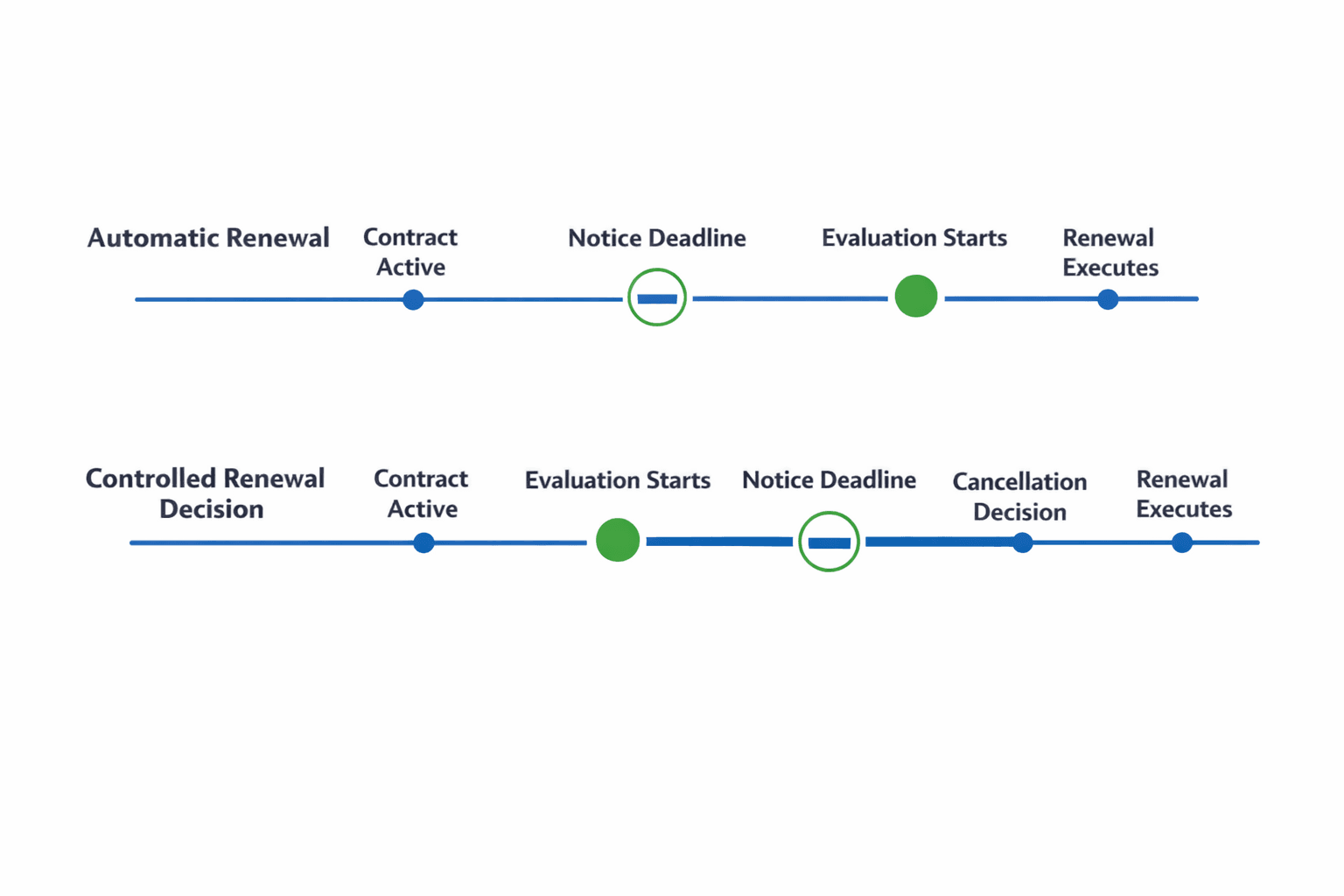
Renewal deadlines approach. Negotiations happen quickly. Contracts continue largely unchanged.
What is missing is a simple system that prompts usage validation early enough before renewals.
How Venduris helps collect usage insight
Venduris helps organizations involve business users in renewal preparation automatically.
When a renewal approaches, the platform can send a structured email to the internal owner or business team responsible for the tool.
The message asks a few simple questions.
Is the tool actively used
How many users rely on it
Has adoption changed
Are there alternative tools worth evaluating
These responses are captured and attached to the renewal record.
Finance, IT, and procurement teams can review this information alongside contract terms and pricing.
Instead of chasing feedback manually, the platform creates accountability and ensures usage insight is available when negotiations begin.
Final thoughts
SaaS renewals should not rely on assumptions.
Understanding how software is actually used is one of the most powerful ways to improve vendor negotiations and reduce unnecessary spend.
Yet the teams responsible for contracts rarely have direct visibility into usage.
By involving business users early and collecting structured feedback, organizations can right size contracts with confidence.
For companies managing dozens or hundreds of SaaS tools, this simple practice often reveals savings opportunities that would otherwise remain invisible.
Explore related renewal signals
Renew on your terms, not the vendor’s
Watch how it works