The 7 Contract Clauses Every SaaS Buyer Should Check
The clauses finance, IT, and procurement teams review carefully before signing or renewing SaaS contracts.
Updated: 2026
8 min read
Most SaaS contracts look simple but hide clauses that impact pricing, renewal flexibility, and long term control. This guide explains the seven contract clauses every SaaS buyer should review before signing or renewing a SaaS agreement.
Introduction
Most SaaS contracts look straightforward at first.
A vendor sends a proposal. Pricing seems reasonable. The product works well during the trial. The team is eager to move forward.
The contract is signed and everyone moves on.
Later, when the contract renews or the company tries to renegotiate, certain clauses suddenly become very important. Notice periods appear longer than expected. Price increases are built into the renewal. Exporting company data may involve additional fees.
These surprises rarely come from bad intent. They usually come from details buried deep inside contract language that few people review carefully.
After working with SaaS contracts for a while, certain clauses appear again and again. These clauses shape the real flexibility a company has over time.
Below are seven that experienced SaaS buyers always review closely.
A familiar situation
A mid sized company signs a marketing automation platform for a two year term.
The implementation goes well. Marketing teams adopt the tool quickly and several workflows depend on it.
As the renewal approaches, the vendor proposes a new price that is noticeably higher.
The procurement team reviews the contract and notices two things.
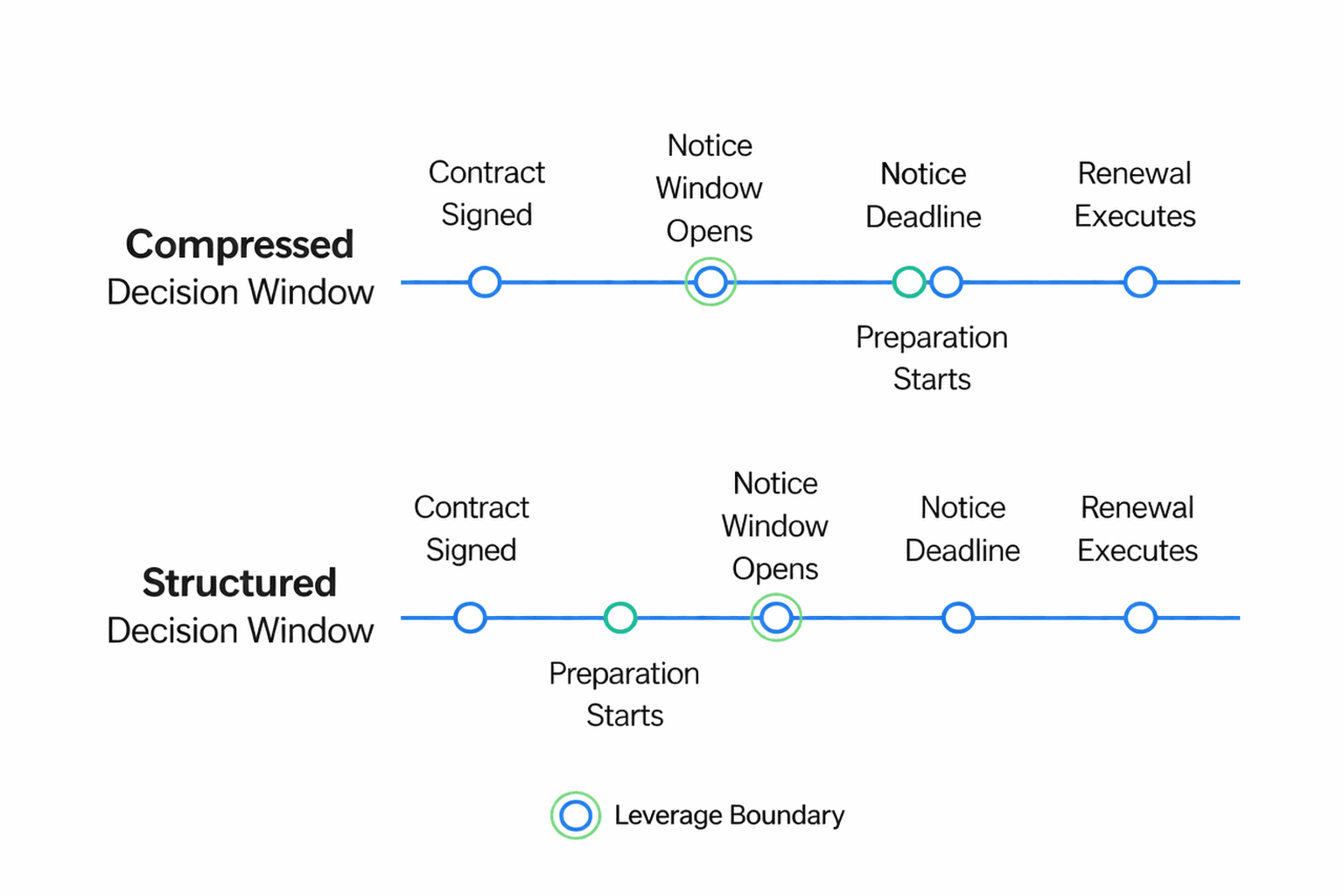
First, the agreement includes a ninety day notice period before renewal. That deadline is already close.
Second, the contract allows price adjustments at renewal without a clear cap.
At this stage the company has limited leverage. Replacing the platform quickly would disrupt several campaigns and integrations.
The contract renews with only minor concessions.
Most SaaS buyers encounter situations like this at some point.
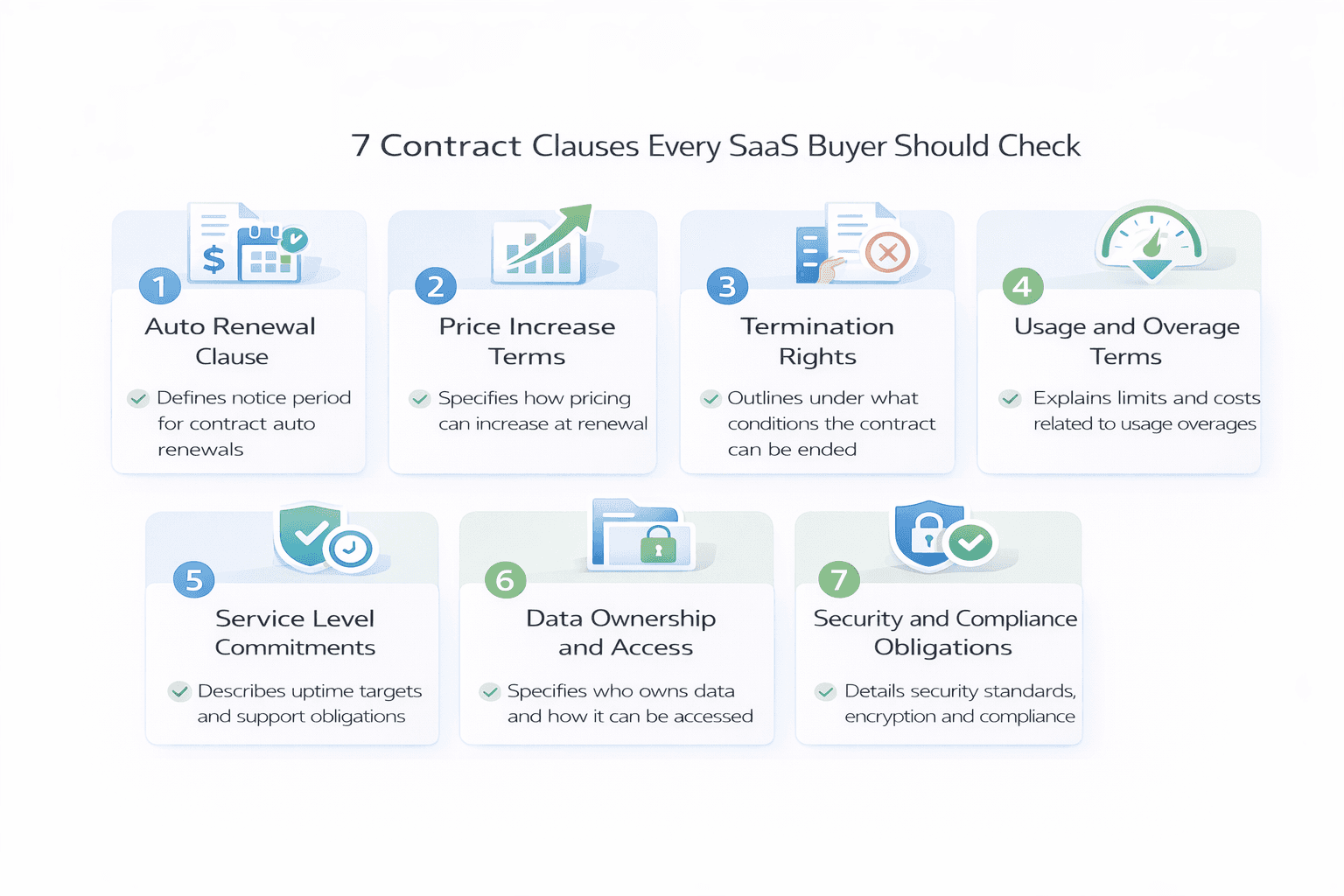
1. Auto renewal clause
This is often the most important clause in a SaaS agreement.
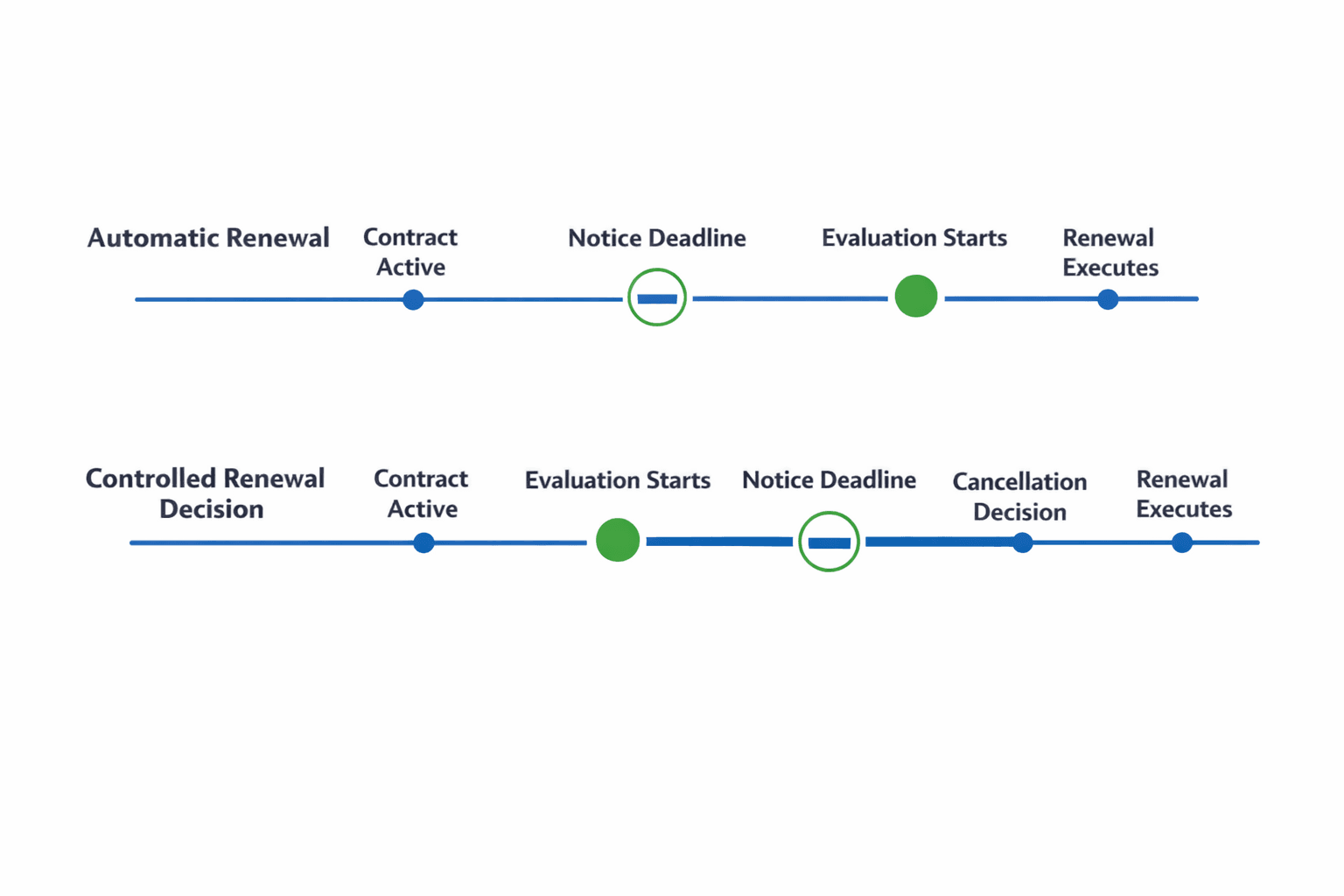
Many contracts renew automatically unless the customer provides written notice before a specific deadline. These notice periods usually range between thirty and ninety days.
Missing the notice window means the contract continues for another term.
Before signing a contract it is important to understand when this deadline occurs and who inside the organization is responsible for monitoring it.
2. Price increase terms
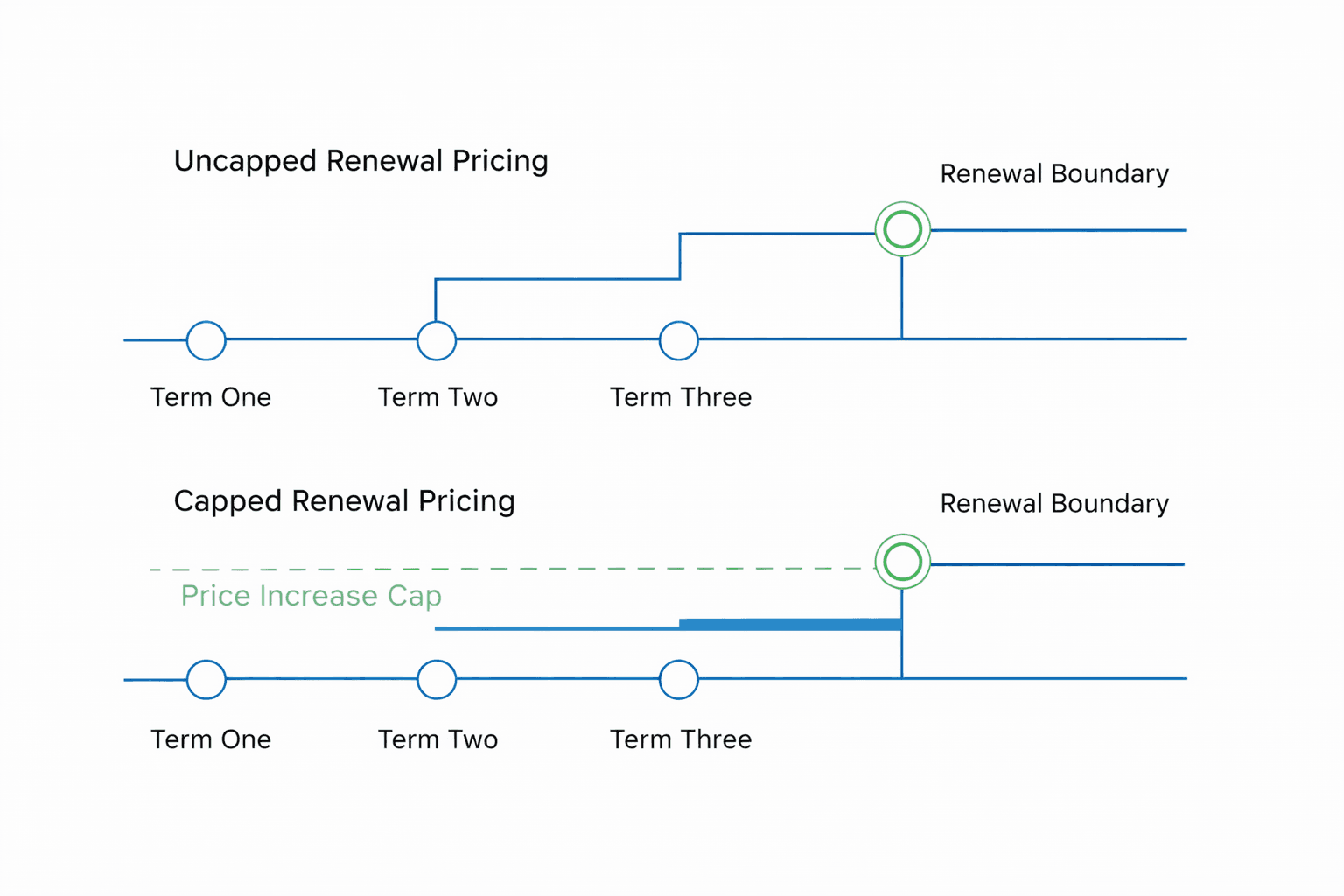
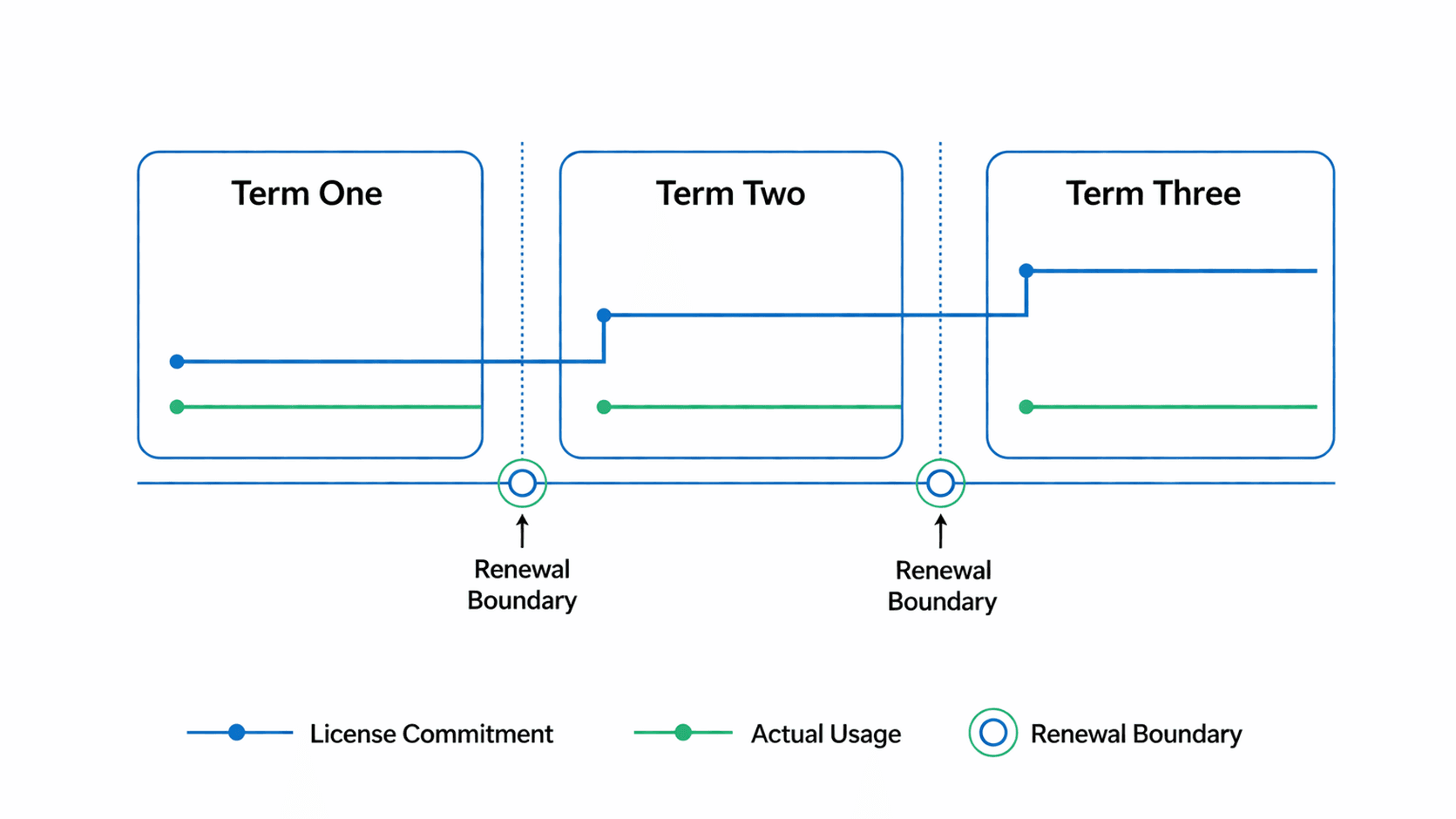
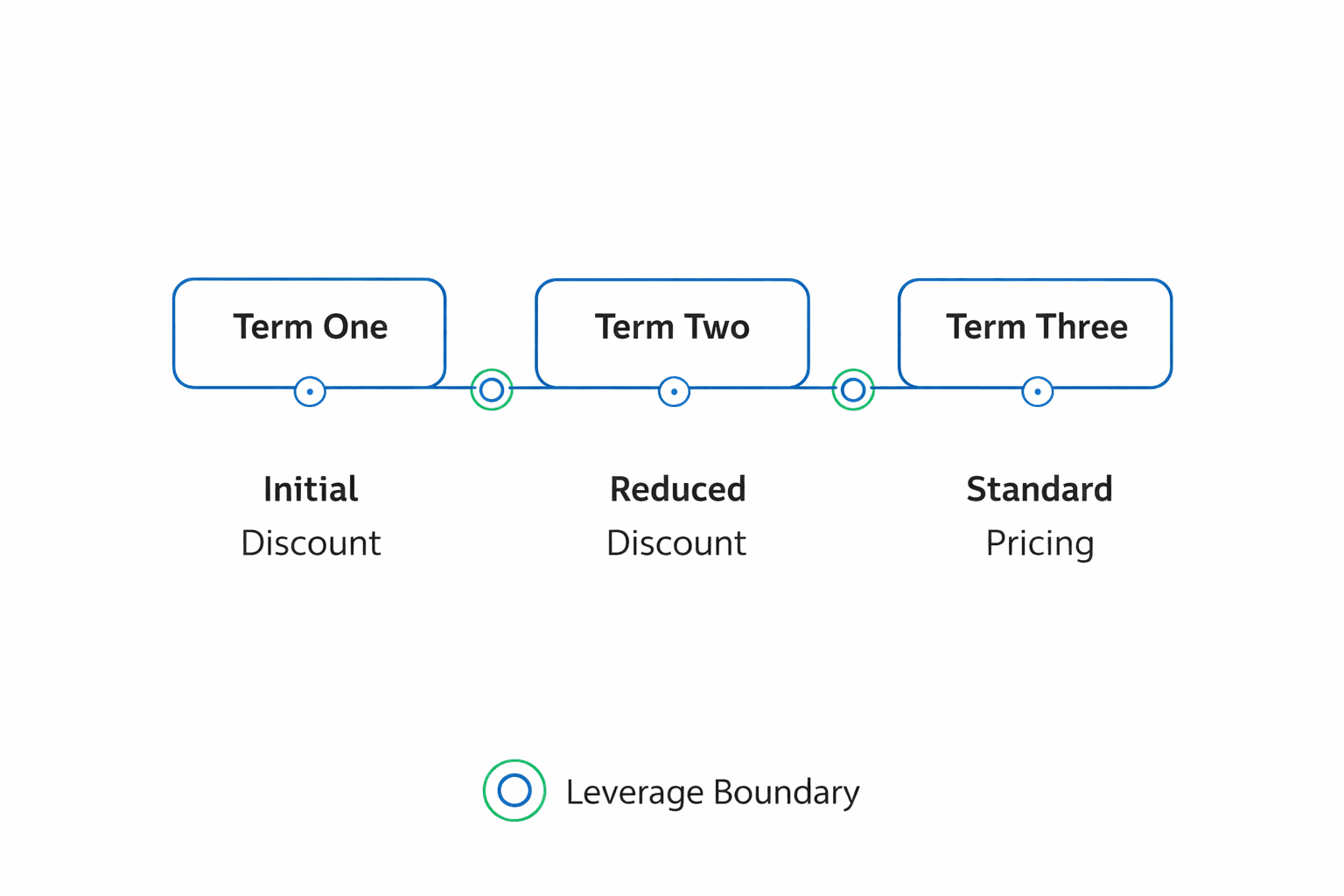
Some SaaS agreements allow vendors to increase pricing at renewal.
In certain contracts the increase is limited by a percentage cap. In others the vendor may adjust pricing according to their standard rates.
Small annual increases can accumulate quickly over several years, especially for widely adopted tools.
Buyers often try to negotiate a clear cap on renewal increases or request pricing stability for longer contract periods.
3. Termination rights
Termination clauses determine how easily a company can exit a contract.
Some agreements allow termination only at the end of the contract term. Others include more flexible options such as termination for convenience or termination after a minimum commitment period.
Understanding these conditions helps companies evaluate how difficult it would be to replace a vendor if priorities change.
4. Usage and overage terms
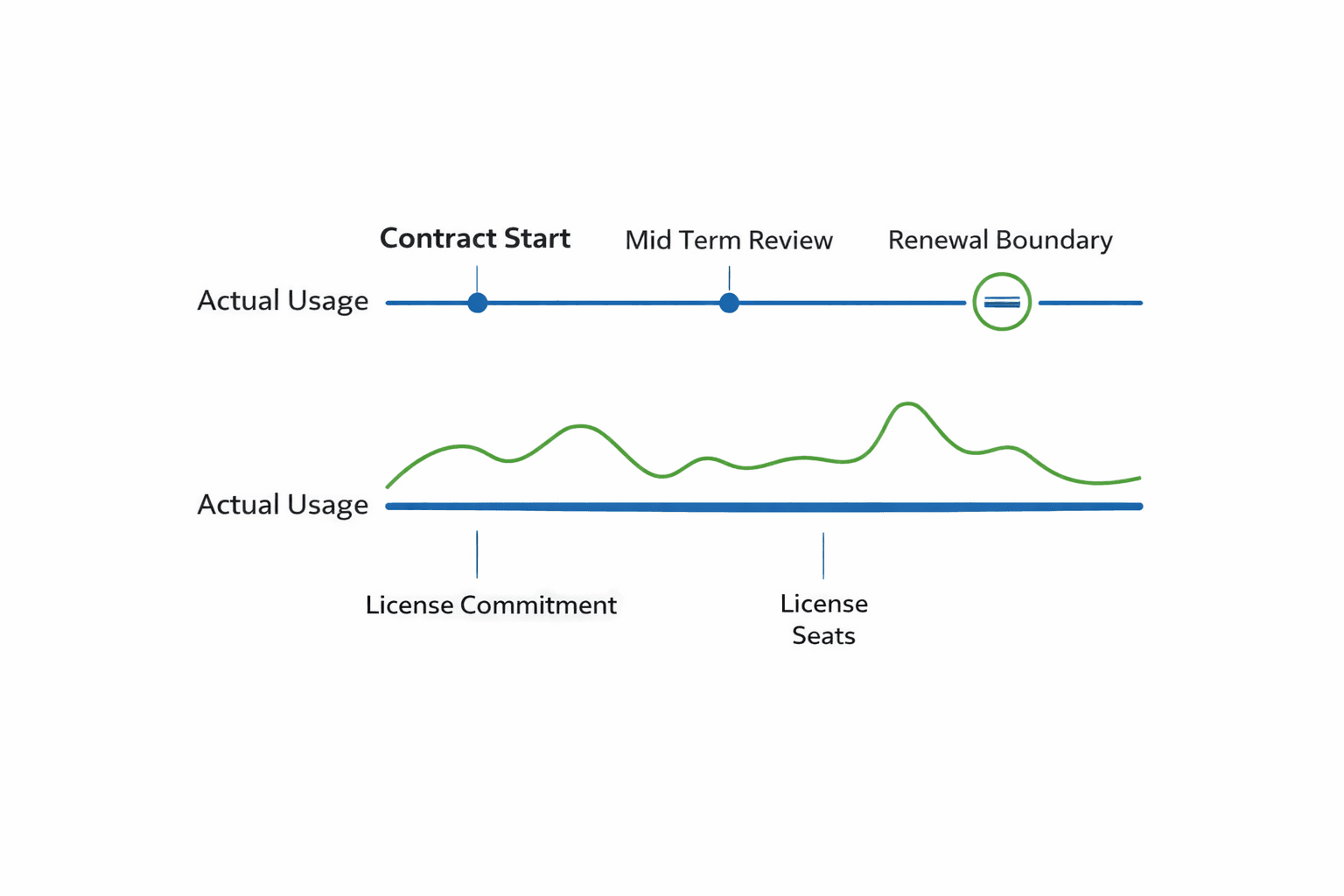
Many SaaS products include usage limits tied to licenses, API calls, storage, or other metrics.
Contracts often define how overages are calculated and what pricing applies once thresholds are exceeded.
If these metrics are unclear, costs can grow unexpectedly as adoption increases.
Carefully reviewing usage definitions helps teams anticipate how pricing evolves as the product scales.
5. Service level commitments
Service level agreements define reliability expectations.
These clauses usually describe uptime targets, response times for support, and how incidents are handled.
Equally important is how the vendor compensates customers if these targets are not met. Some contracts include service credits while others provide very limited remedies.
Understanding these commitments helps organizations evaluate operational risk.
6. Data ownership and access
SaaS platforms store large amounts of company data.
Contracts should clearly define that the customer retains ownership of this data and can export it if the contract ends.
Some agreements include limitations on how data can be retrieved or charge fees for large exports.
Reviewing these clauses ensures the company remains in control of its information.
7. Security and compliance obligations
For many organizations security obligations are critical.
Contracts often include commitments related to data protection, encryption standards, and compliance frameworks such as GDPR or SOC 2.
These clauses also define how vendors must respond to security incidents and how quickly customers are notified.
Ensuring these commitments align with internal security policies is an essential step in vendor evaluation.
Why experienced buyers review contracts differently
Teams that negotiate SaaS agreements frequently develop a habit.
Instead of focusing only on product features and pricing, they review contract structure early in the discussion.
This helps them identify areas where flexibility might be needed later.
A slightly lower price rarely compensates for a contract that becomes difficult to renegotiate or exit.
How Venduris helps
Venduris helps organizations understand the real structure of their SaaS contracts.
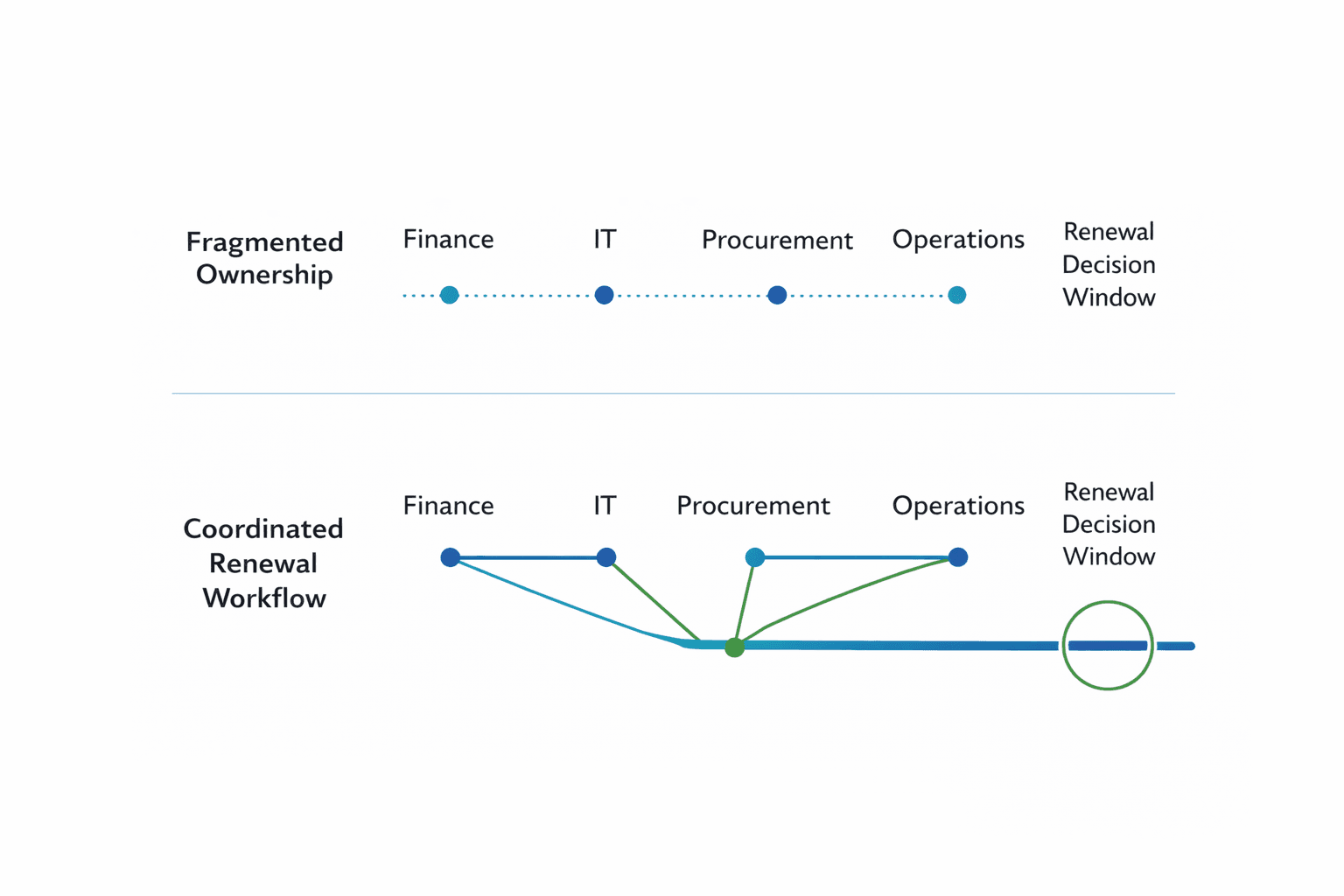
The platform extracts key clauses such as renewal timelines, notice periods, pricing terms, and termination rights. Finance, IT, and procurement teams gain a clear view of contract obligations across the SaaS portfolio.
Instead of reviewing contract language manually every time, teams can quickly identify risks and prepare negotiations earlier.
This visibility makes it easier to avoid surprises when contracts renew.
Final thoughts
SaaS contracts often appear simple at first glance.
Yet small clauses buried in the agreement can shape the entire relationship with a vendor over time.
By reviewing these terms carefully before signing or renewing a contract, organizations can protect flexibility, control costs, and maintain stronger negotiating positions.
For companies managing dozens or hundreds of SaaS tools, this level of visibility quickly becomes essential.
Explore related renewal signals
Renew on your terms, not the vendor’s
Watch how it works