The SaaS Renewal Negotiation Playbook
The SaaS Renewal Negotiation Playbook
Updated: 2026
6 min read
A practical playbook for preparing and executing SaaS renewal negotiations. Learn how experienced teams approach vendors, structure discussions, and secure better contract outcomes.
Introduction
SaaS renewal negotiations often start from the wrong position.
A vendor sends a renewal quote. The company reviews the proposal. Procurement asks for a discount.
The vendor reduces the price slightly, and the renewal is signed.
From the outside it looks like a negotiation happened.
In reality the outcome was largely determined before the first call even started.
A familiar situation
A finance team reviews a SaaS contract renewing next month.
The vendor proposes a small price increase.
Procurement pushes back and requests a discount.
After a few emails the vendor offers a ten percent reduction.
Everyone feels satisfied.
But what the company rarely realizes is that the vendor had already planned that discount.
The real negotiation never actually took place.
Why SaaS negotiations often fail
Most SaaS negotiations fail because companies enter them too late.
When renewal deadlines are approaching, buyers have limited leverage.
Switching vendors becomes unrealistic. Internal stakeholders want continuity. Vendors know this.
At that point, the negotiation revolves around small concessions rather than structural improvements.
What experienced teams do differently
Organizations that consistently achieve better SaaS contract outcomes prepare their negotiation months in advance.
They analyze how the software is used, understand alternative solutions in the market, and align internally on negotiation goals.
This preparation changes the dynamic with vendors.
Instead of reacting to proposals, the company sets the agenda.
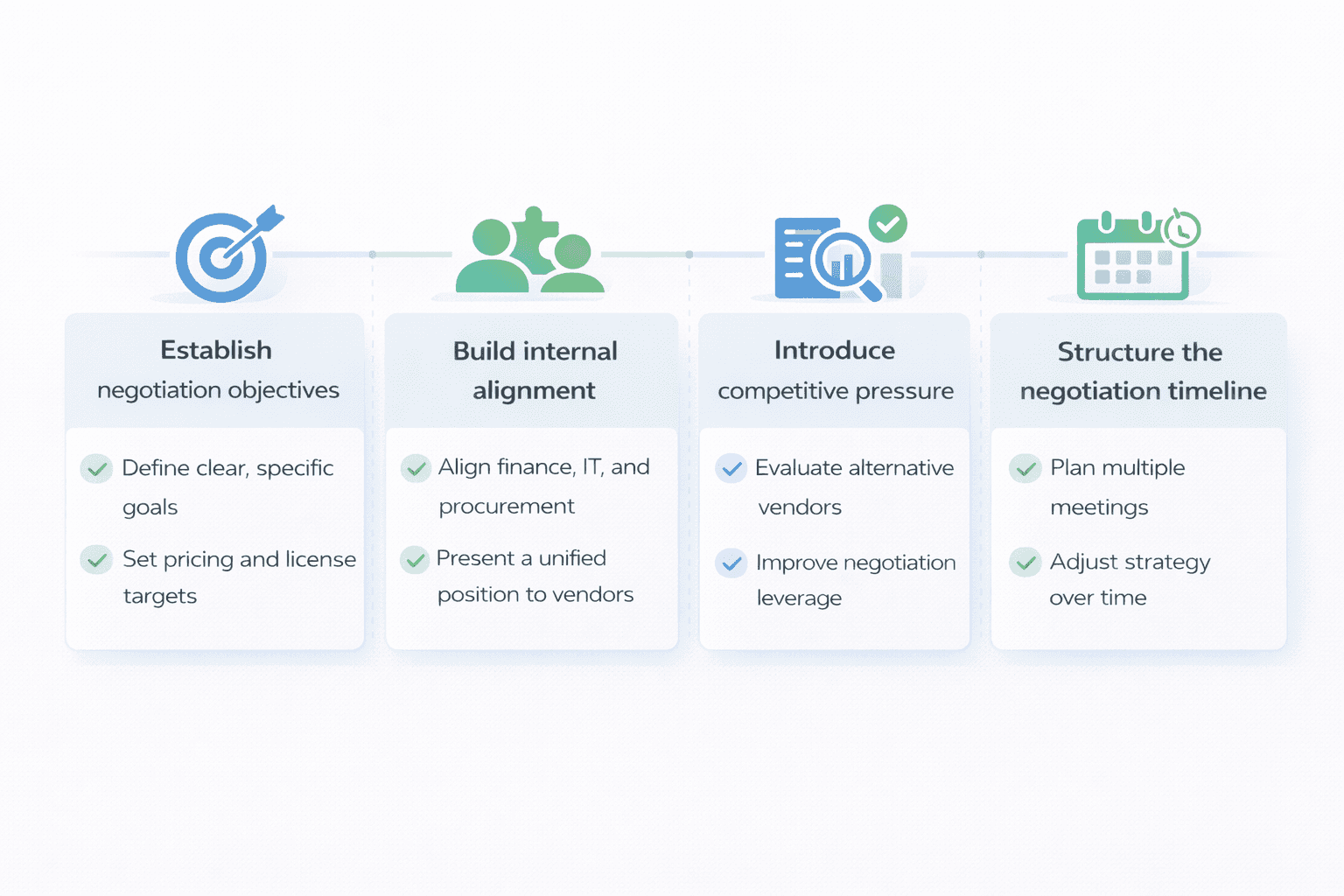
The four phases of SaaS renewal negotiation
1. Establish negotiation objectives
Before engaging the vendor, teams define clear goals.
These can include pricing adjustments, license optimization, contract flexibility, or improved protection clauses.
Without defined objectives, negotiations drift toward whatever the vendor proposes.
2. Build internal alignment
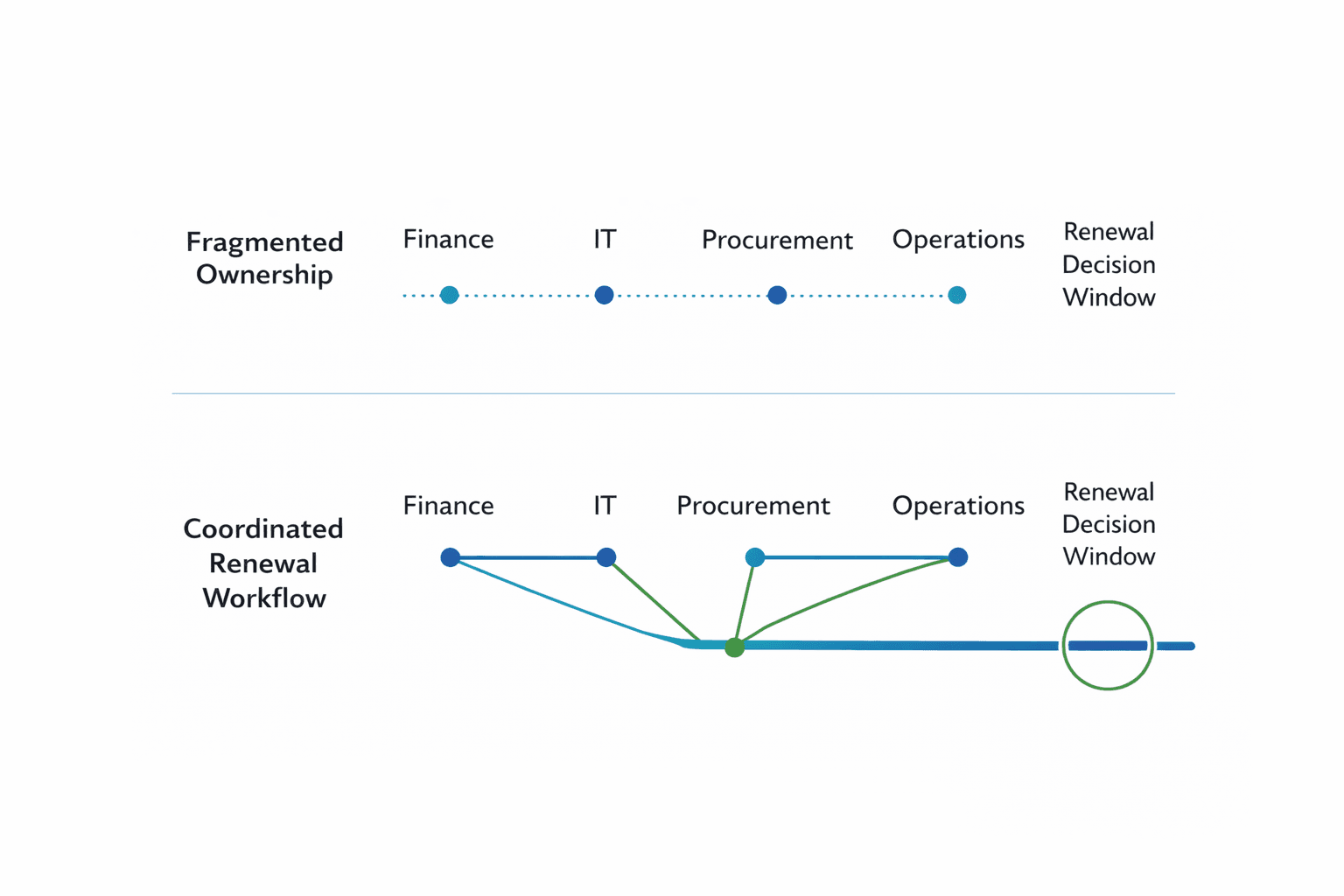
Finance, IT, and procurement must share the same position before discussions begin.
If stakeholders disagree during vendor calls, negotiation leverage disappears immediately.
Internal alignment is often the most overlooked step.
3. Introduce competitive pressure
Vendors become far more flexible when they believe alternatives exist.
Even if the company intends to stay with the current vendor, evaluating competitors strengthens negotiation leverage.
The goal is not necessarily switching vendors.
The goal is creating options.
4. Structure the negotiation timeline
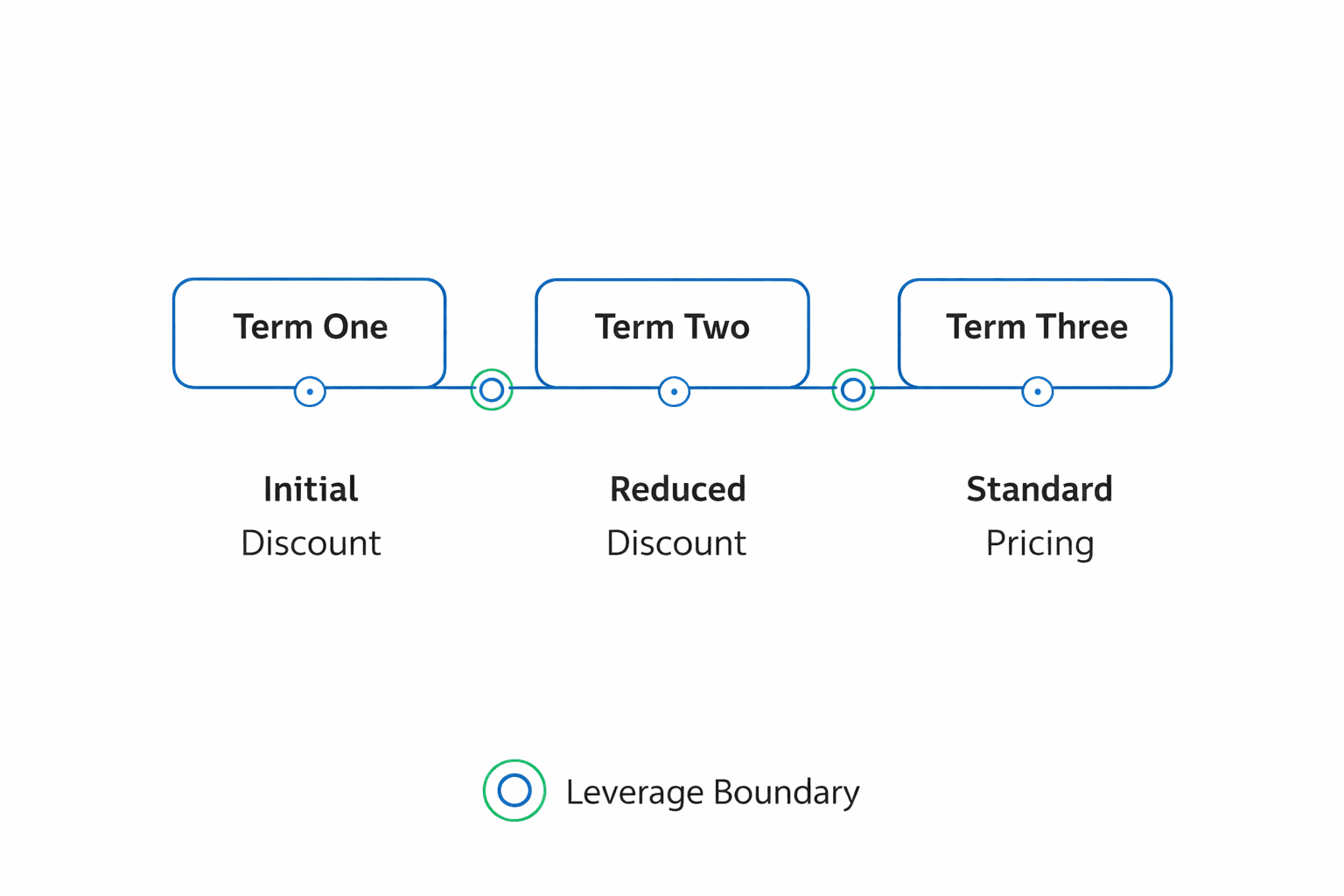
Negotiations should unfold across several conversations rather than one final meeting.
Initial discussions explore renewal structure. Later discussions focus on pricing and terms.
Spacing these discussions over time creates room for concessions and strategy adjustments.
Where most companies lose leverage
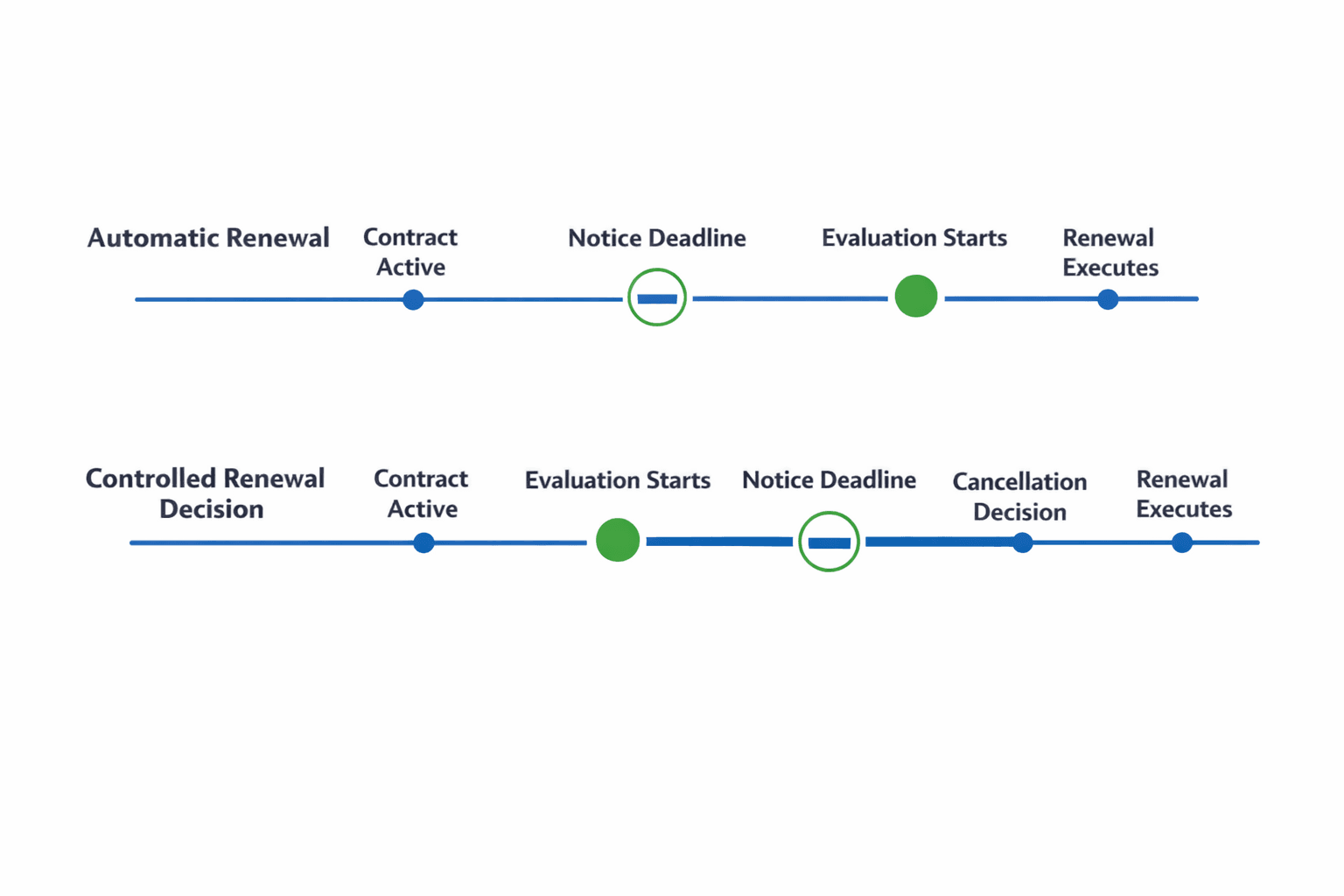
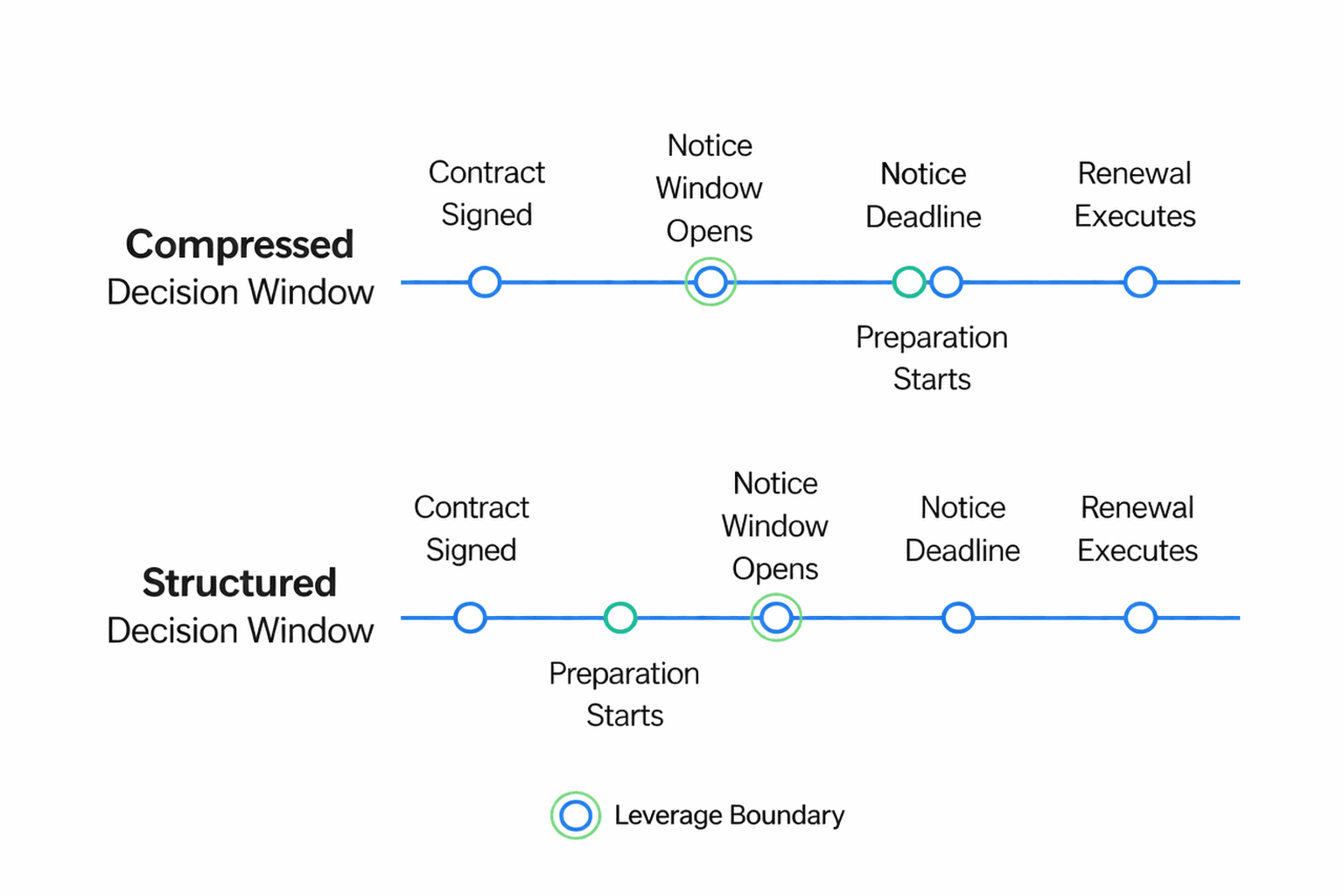
The biggest loss of leverage occurs when negotiations begin after notice deadlines.
At that point the vendor knows the contract will renew regardless of the outcome.
Negotiations still happen, but they occur within a much narrower range.
Starting months earlier keeps the negotiation balanced.
How Venduris supports negotiation preparation
Venduris surfaces upcoming renewals well before notice deadlines and organizes the preparation process across teams.
Finance, IT, and procurement can review contracts, collect usage insights, and structure negotiation objectives long before vendor conversations begin.
Instead of reacting to renewal quotes, teams enter negotiations with a clear strategy.
Final thoughts
SaaS negotiation outcomes are rarely determined during the final call with the vendor.
They are determined by the preparation that happens beforehand.
Companies that approach renewals strategically gain a simple but powerful advantage.
They negotiate from a position of strength.
Explore related renewal signals
Renew on your terms, not the vendor’s
Watch how it works