The SaaS Renewal Preparation Checklist
What finance, IT, and procurement should review 180 days before SaaS renewals.
Updated: 2026
8 min read
Learn how to prepare SaaS contract renewals 180 days in advance. This checklist helps finance, IT, and procurement teams avoid auto-renew traps and negotiate better vendor agreements.
Introduction
Most SaaS contracts do not create problems when they are signed. The problems usually appear much later, when the contract renews.
If you have worked in finance, IT, or procurement for a while, you have probably seen the same situation more than once. A vendor reaches out to confirm renewal pricing. The contract expires in a few weeks. Nobody inside the company remembers the notice deadline. The tool is widely used, so cancelling it is not realistic. The renewal goes through with minimal discussion.
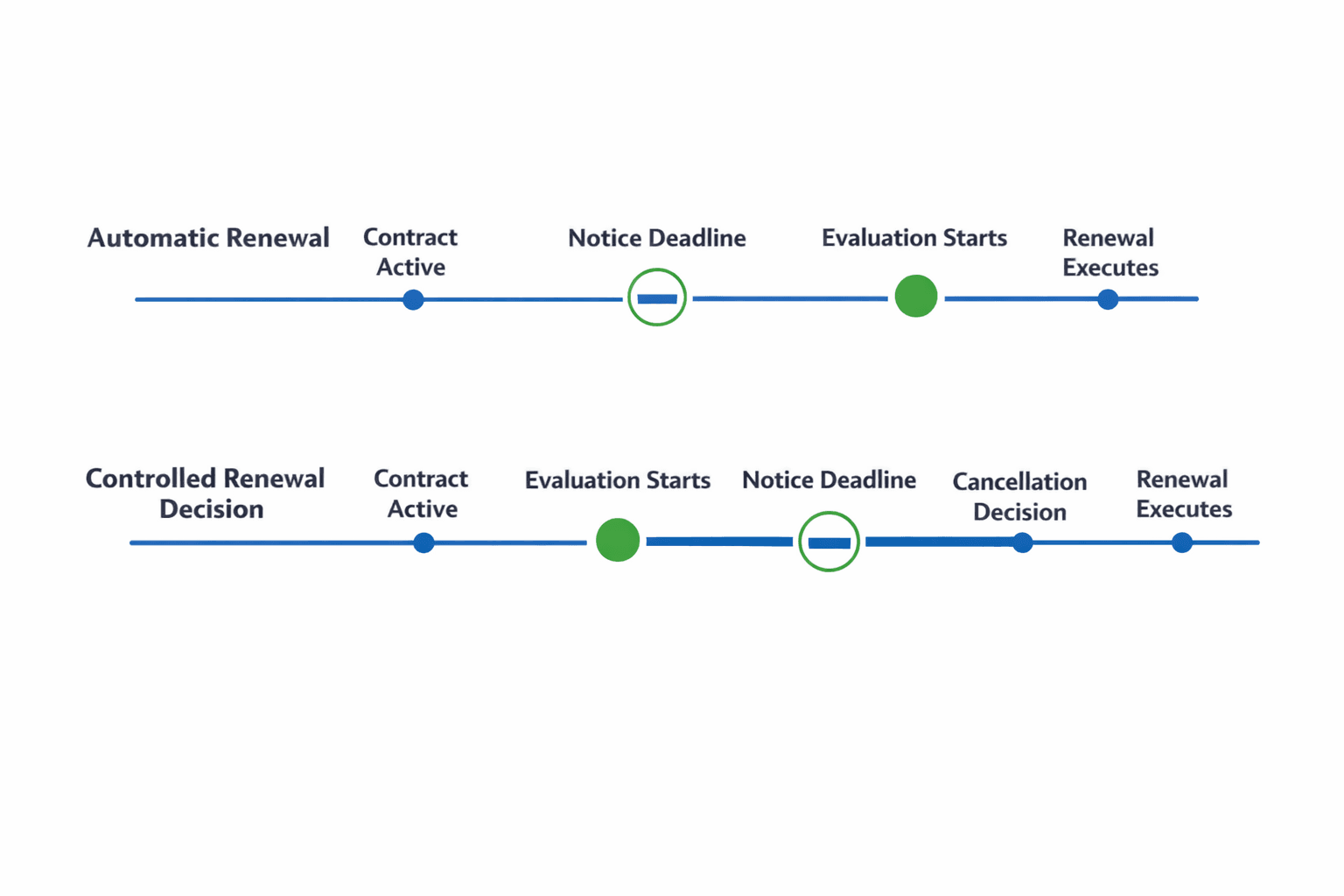
This situation is extremely common. SaaS contracts often renew automatically unless the customer cancels before a specific notice deadline. When teams discover renewals too late, the opportunity to renegotiate or review alternatives is already gone.
Preparing SaaS renewals early changes that dynamic. When companies review contracts months before the renewal date, they gain time to analyze usage, align internal stakeholders, and negotiate from a position of strength.
The checklist below outlines a practical way to approach SaaS renewals.
A familiar situation
Imagine a company with around two hundred employees. Over the past few years the team adopted dozens of SaaS tools. Marketing uses several analytics platforms. Engineering relies on developer tools. Sales operates on a CRM and a handful of integrations.
One morning the finance team receives a renewal notice from a vendor. The annual contract value is significant. The renewal date is less than forty five days away.
The team quickly discovers a few uncomfortable facts. The contract contains an auto renew clause. The notice period required sixty days. The tool is used across several departments. Nobody has reviewed pricing in two years.
At this stage the vendor has the advantage. Switching tools would be difficult in such a short timeframe. The contract renews and the price increases quietly.
This scenario is not unusual. It is the result of discovering renewals too late.
Why SaaS renewals are difficult to manage
SaaS renewals rarely fail because teams are careless. They fail because the information required to manage them is scattered.
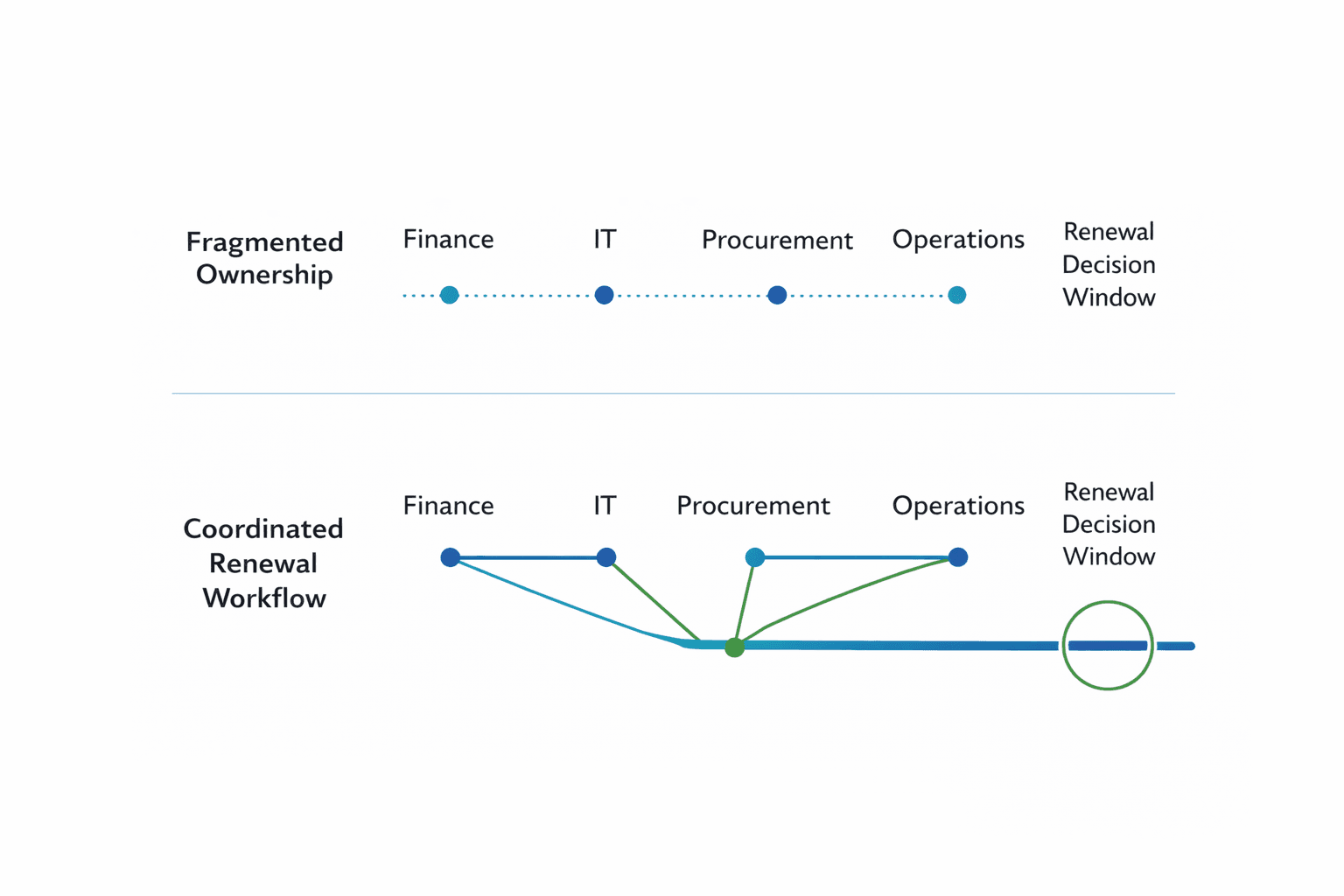
Contracts may be stored in shared drives or email threads. Finance sees invoices but not contract clauses. IT manages the tools but may not know the commercial terms. Procurement negotiates contracts but is not always tracking renewal timelines.
Auto renew clauses also make timing critical. Many SaaS agreements require cancellation notices thirty to ninety days before renewal. When teams only become aware of a contract close to the renewal date, the window for meaningful negotiation has already passed.
Managing renewals effectively requires visibility well before the deadline.
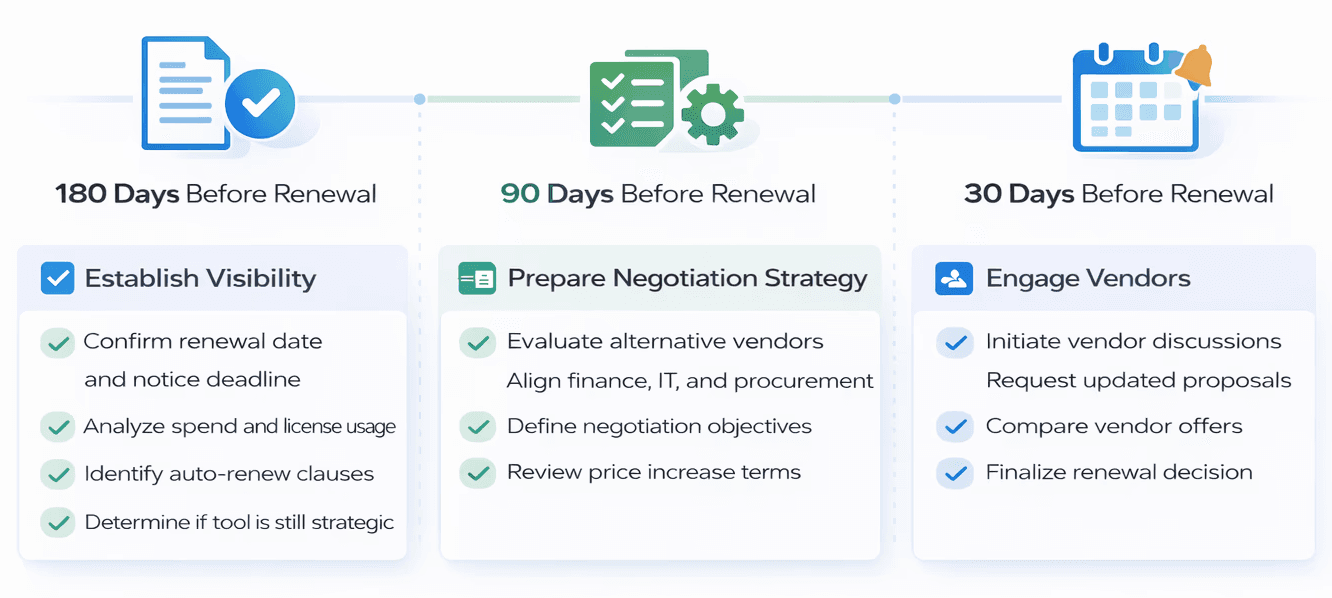
A simple timeline for preparing renewals
Teams that handle SaaS renewals well usually follow a simple timeline.
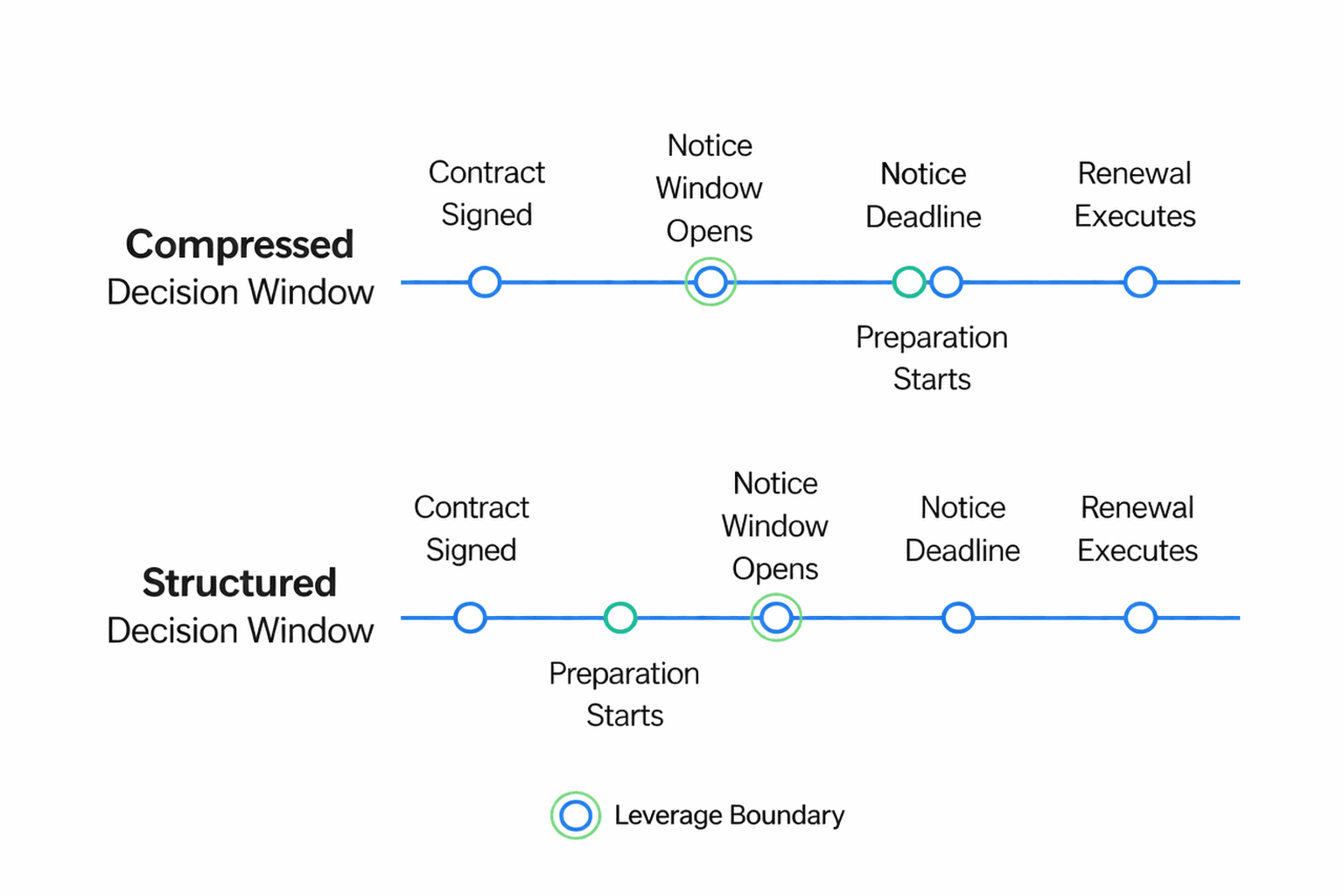
Six months before the renewal date the goal is visibility. Contracts are identified and reviewed.
Three months before renewal the focus shifts to preparation. Stakeholders align on strategy and negotiation objectives.
In the final weeks teams engage vendors and finalize the renewal decision.
Starting early allows the company to approach the conversation with more information and more options.
Six months before renewal
The first step is simply understanding what is coming.
At this stage teams should identify contracts that will renew within the next six months and evaluate their importance.
Typical questions to review include:
• What is the exact renewal date and notice deadline
• Does the contract contain an auto renew clause
• What is the current annual spend for this vendor
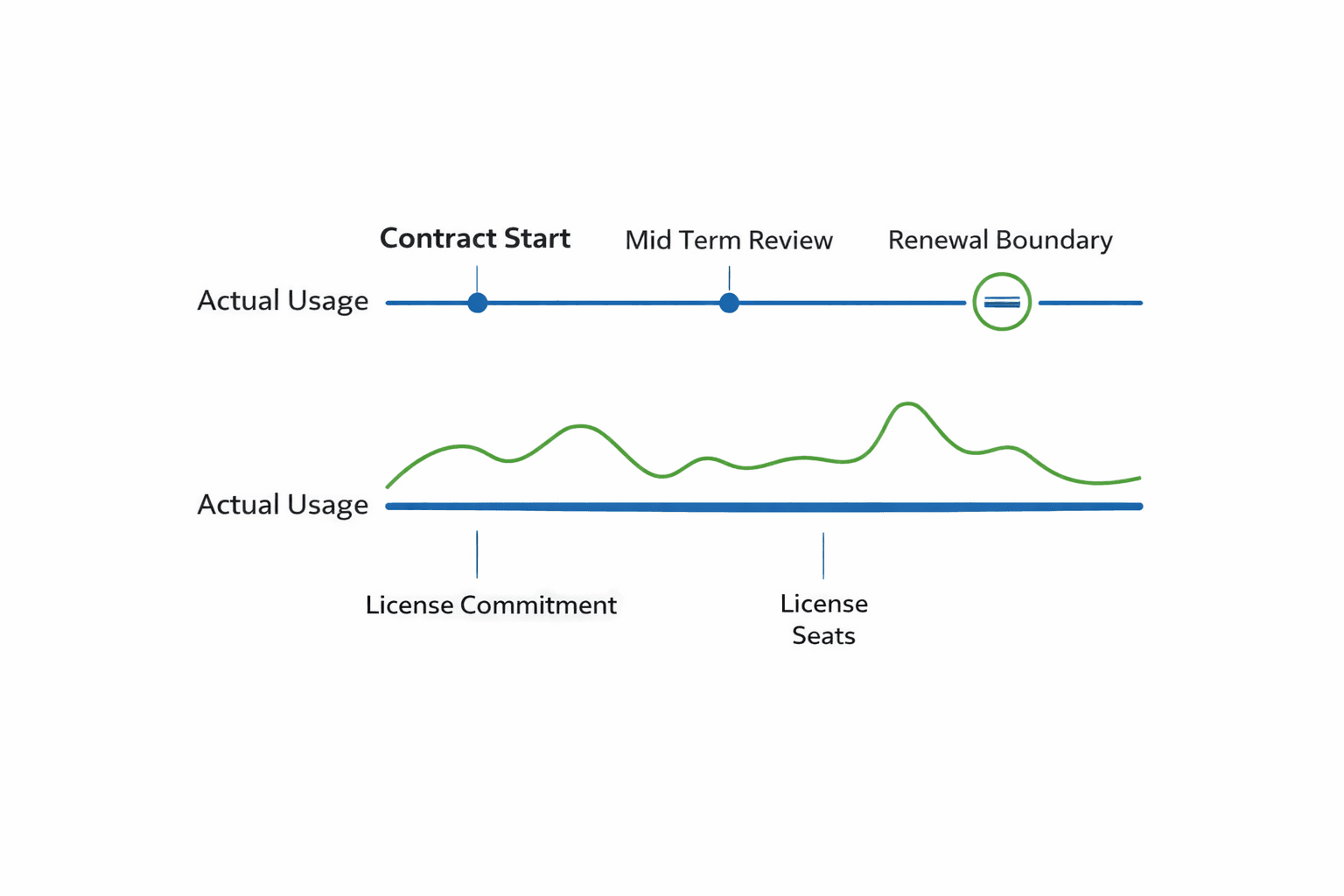
• How many users actively rely on the tool
• Who inside the organization owns the relationship with the vendor
• Is the tool still considered strategic
The goal here is not negotiation yet. The goal is awareness.
When companies know which contracts are approaching renewal, they can start prioritizing which vendors deserve attention.
Three months before renewal
Three months before the renewal date is when preparation begins.
Teams should now have enough visibility to evaluate their options.
At this stage companies often review usage data and gather feedback from internal users. If the tool is heavily used and delivering value, the focus may be on improving contract terms or reducing pricing.
If adoption is weaker, the company may begin evaluating alternatives.
Some useful questions during this phase include:
• Are there competing vendors worth evaluating
• How satisfied are internal users with the product
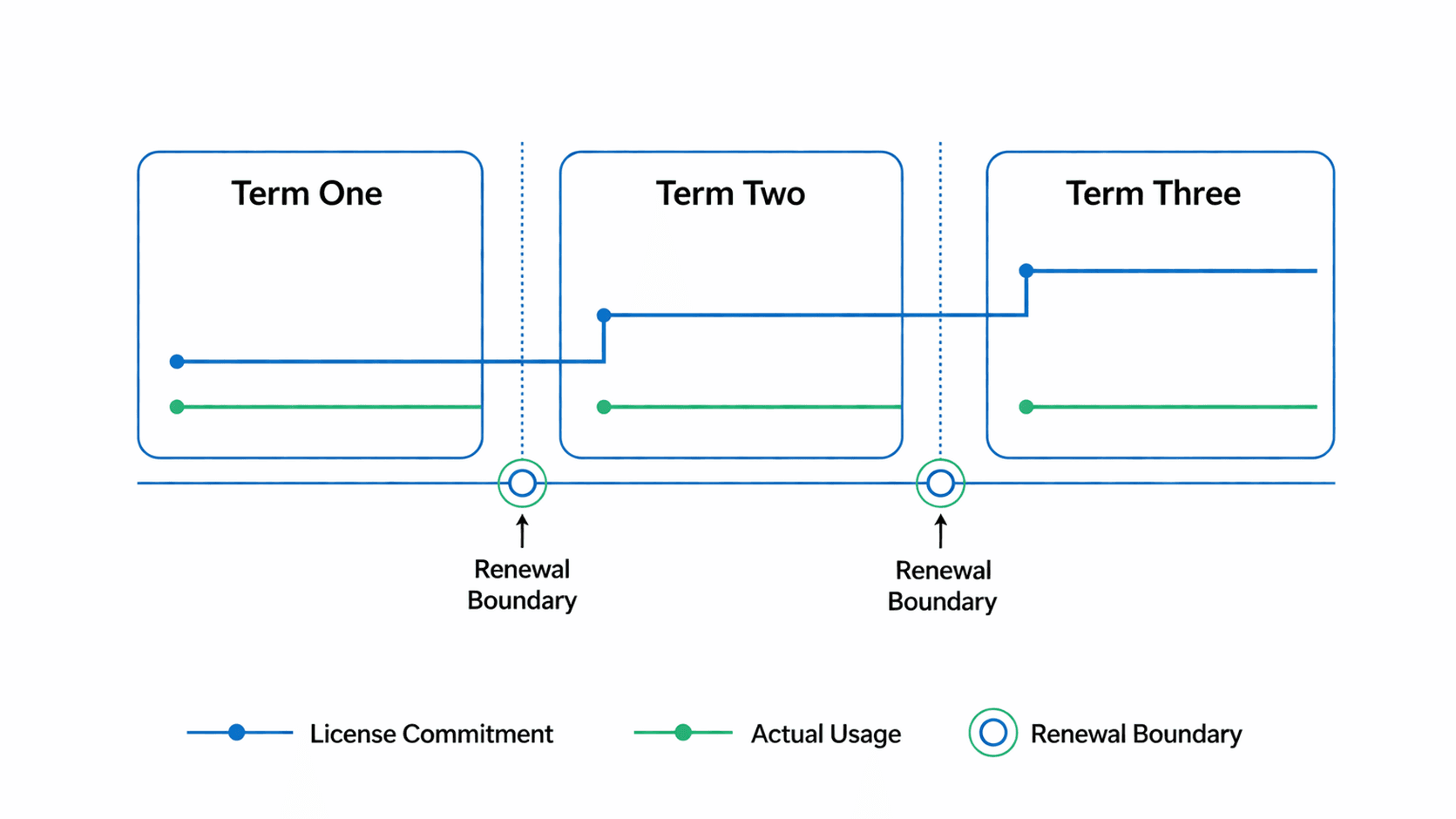
• Is the current pricing aligned with usage and value
• What negotiation objectives should the company pursue
By the time vendors are contacted, the internal position should already be clear.
One month before renewal
In the final stage the vendor conversation begins.
This is when companies request updated proposals, discuss contract terms, and make the final renewal decision.
Preparation earlier in the process makes this stage far easier. Teams already understand the product's value, the available alternatives, and their negotiation priorities.
Instead of reacting to vendor pricing, the company can drive the conversation.
Common mistakes teams make
Several patterns appear again and again in SaaS renewals.
One of the most common is discovering contracts too late. When renewal deadlines appear suddenly, teams have little time to analyze the situation.
Another frequent issue is negotiating without alternatives. Vendors are far more flexible when they know the customer has options.
Finally, renewals often lack clear ownership. When finance, IT, and procurement are not aligned, vendors receive mixed signals and negotiations become less effective.
Avoiding these mistakes requires a simple but consistent process.
How modern teams manage renewals
Organizations that manage SaaS spend effectively treat renewals as a continuous workflow.
Instead of waiting for vendors to reach out, they maintain visibility over upcoming renewals months in advance. Finance, IT, and procurement share the same view of the contract portfolio and can coordinate decisions earlier.
This approach allows companies to identify renewal risks early, prepare negotiation strategies, and avoid unwanted contract extensions.
How Venduris helps
Venduris was designed to support this exact process.
The platform extracts contract information, tracks renewal timelines, and creates renewal workflows months before deadlines approach. Finance, IT, and procurement teams can review upcoming renewals together and identify risks such as auto renew clauses or missing notice windows.
With this visibility, companies gain time to evaluate vendors and prepare negotiations before leverage is lost.
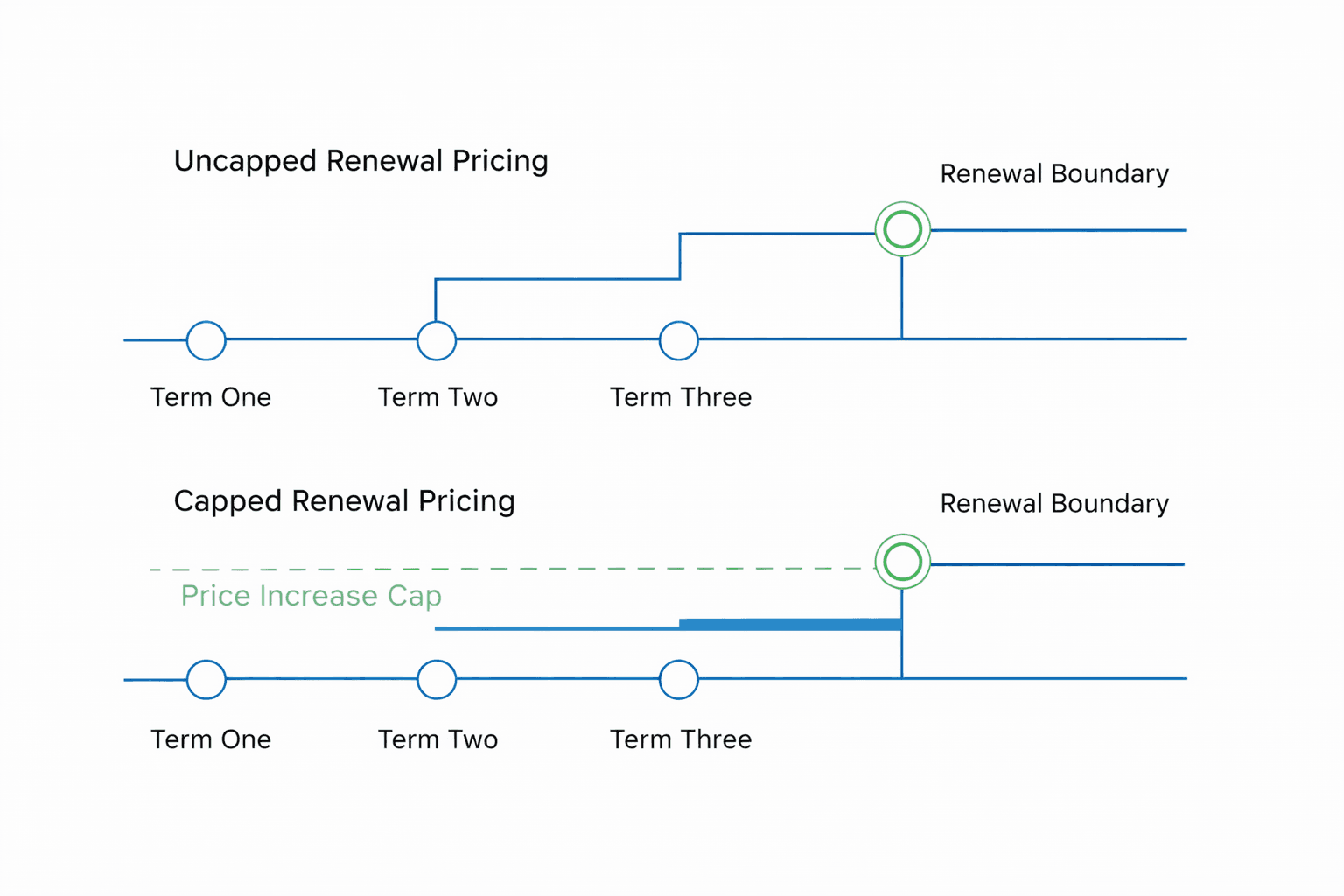
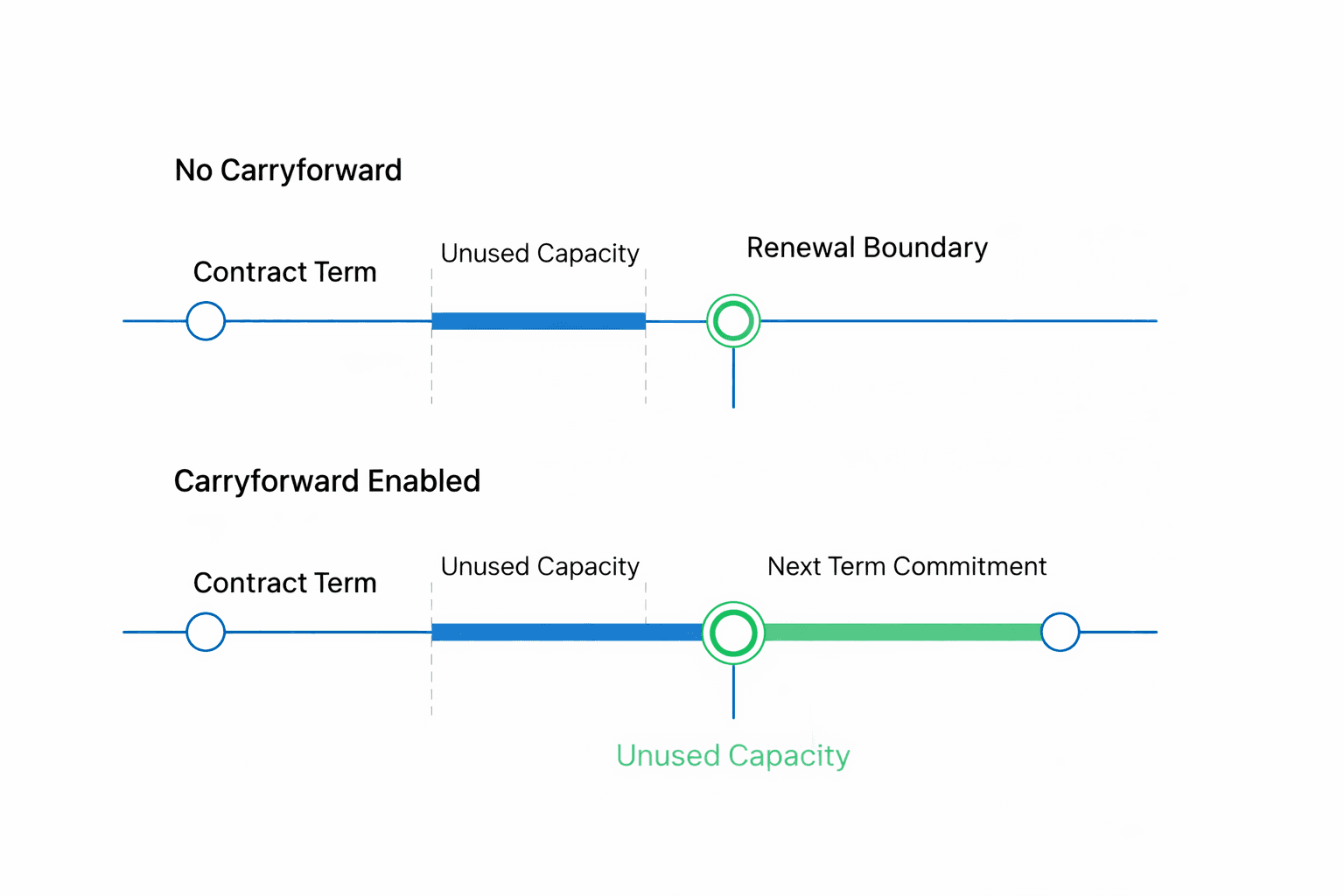
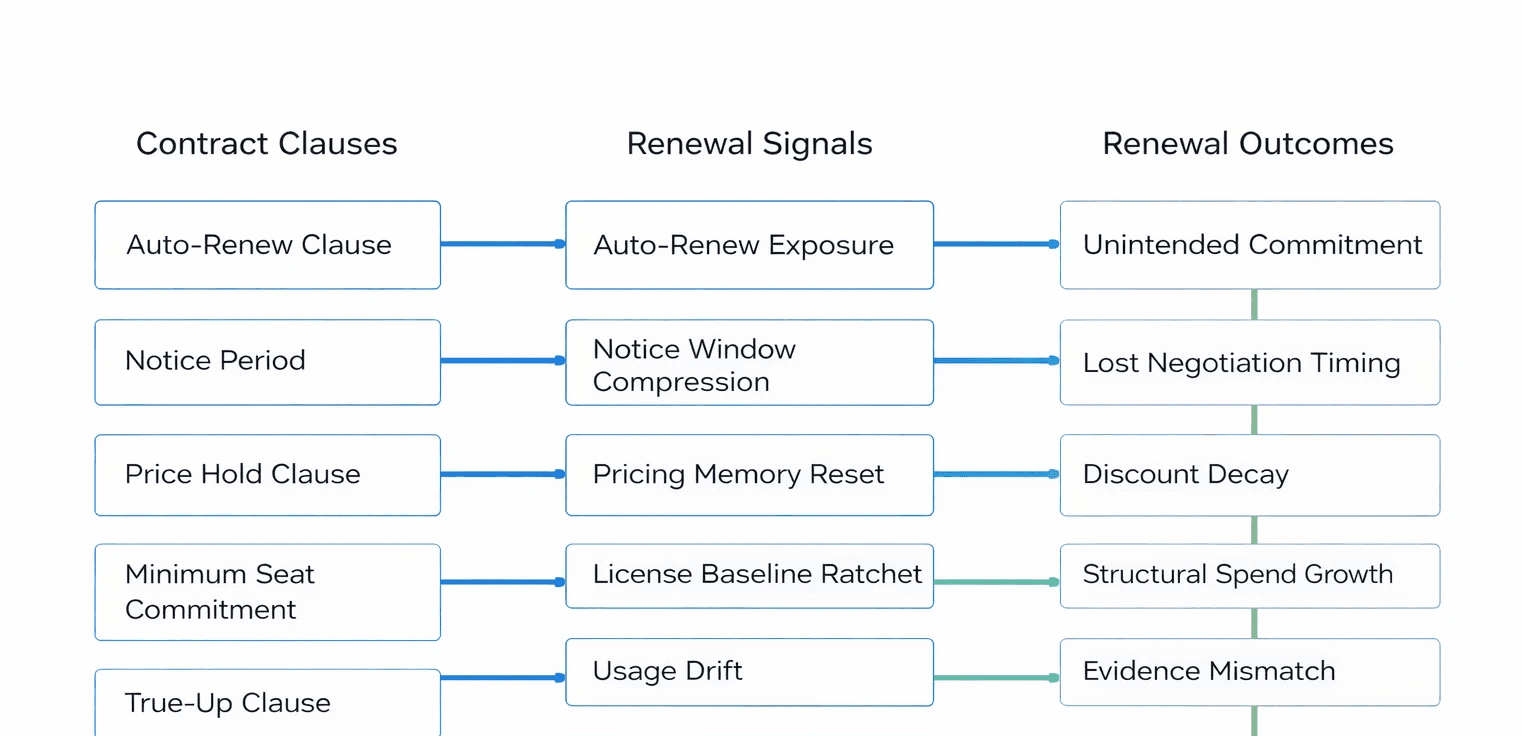
Explore related renewal signals
Renew on your terms, not the vendor’s
Watch how it works