The SaaS Renewal Timeline Every Company Should Follow
What finance, IT, and procurement teams should review 180, 90, and 30 days before SaaS contracts renew.
Updated: 2026
6 min read
SaaS renewals often arrive too late for meaningful negotiation. This guide explains the renewal timeline experienced teams follow to review contracts, evaluate alternatives, and negotiate from a position of strength.
Introduction
Most SaaS contracts are negotiated carefully the first time.
Teams compare vendors, evaluate pricing, and review the contract before signing. Once the software is deployed and running smoothly, attention shifts to other priorities.
Then the contract renews.
Often the renewal happens quietly. The vendor sends a notice or invoice, the deadline is already close, and the organization has little time to evaluate alternatives. At that point the negotiation becomes reactive rather than strategic.
Experienced SaaS buyers approach renewals very differently. They treat renewals as a process that begins months before the contract expiration date.
A simple timeline helps organizations regain control over these decisions.
A situation many companies experience
A company signs a two year contract for a project management platform used across several departments.
The tool becomes part of daily operations. Teams integrate it with other systems and build workflows around it.
As the renewal approaches, the vendor proposes updated pricing. The increase is noticeable but not outrageous.
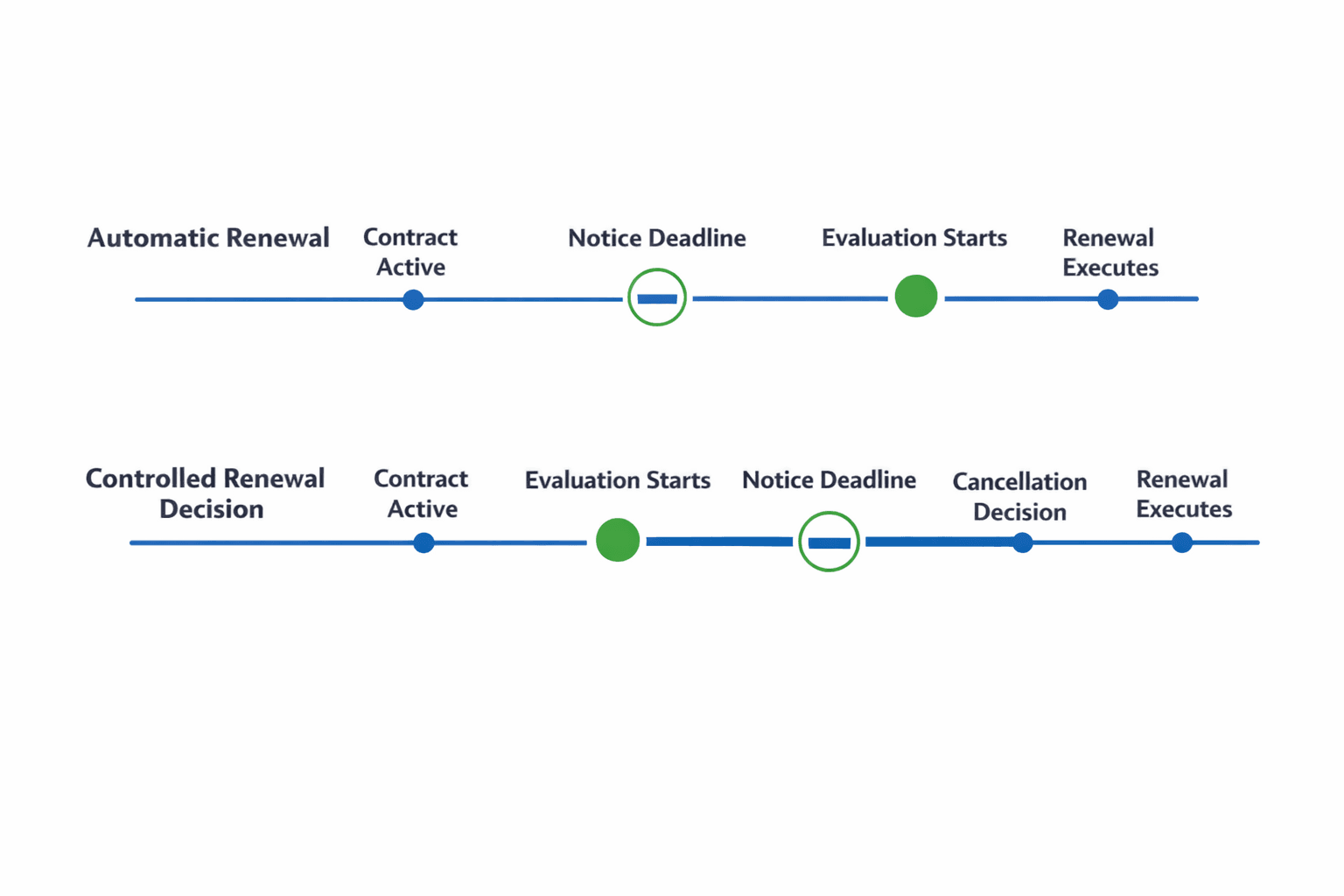
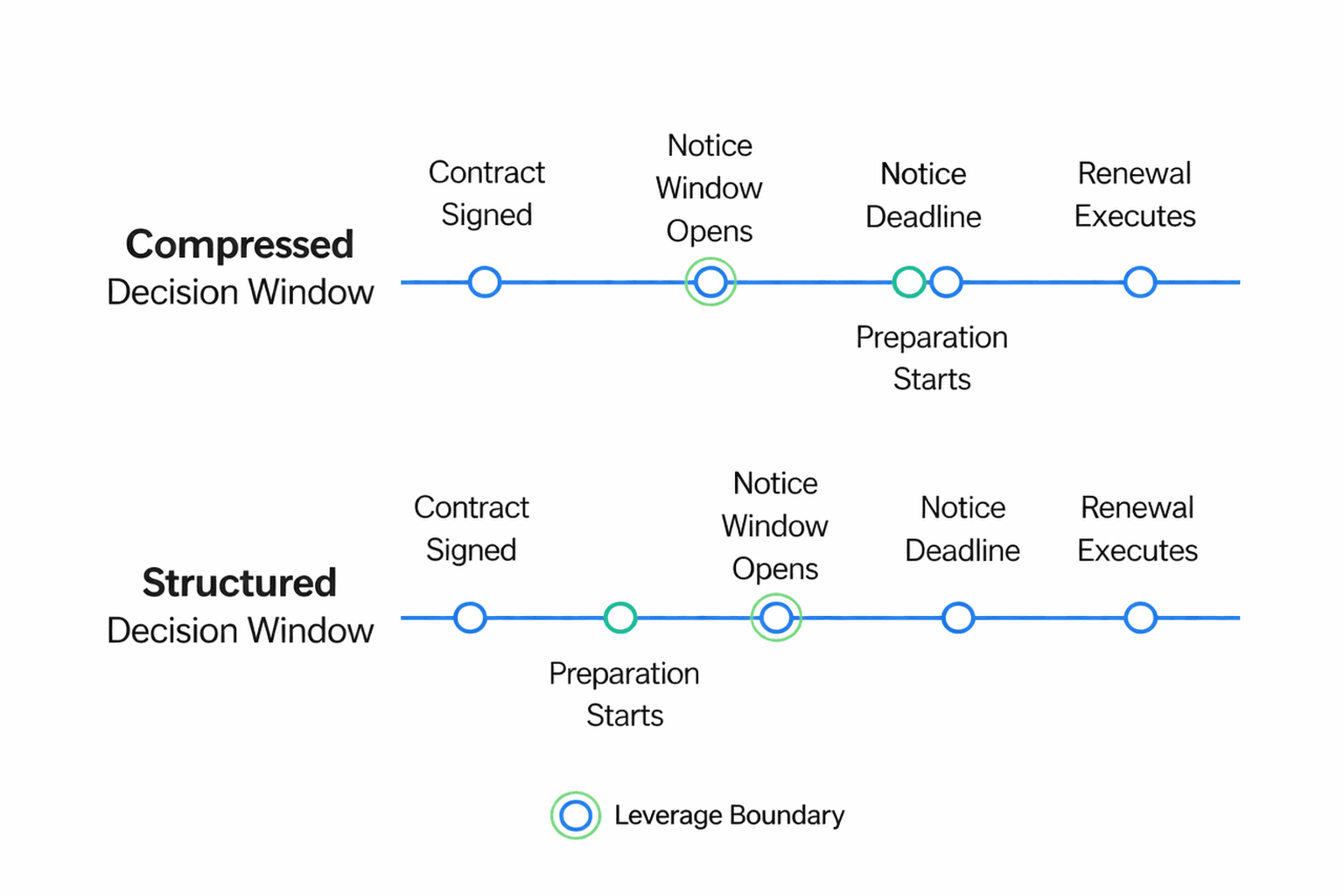
When procurement reviews the contract they realize something important. The notice deadline passed two weeks earlier.
The contract now renews automatically.
Replacing the tool quickly would disrupt multiple teams, so the company renews with limited negotiation leverage.
Situations like this are common when renewals are discovered too late.
Why timing changes negotiation power
The difference between a strong renewal negotiation and a weak one is usually preparation time.
When a company starts reviewing a contract six months before renewal, several options are available. Teams can review actual usage, evaluate competing vendors, and define clear negotiation objectives.
When the review starts only a few weeks before renewal, most of those options disappear.
Migration risks become too high. Internal teams expect continuity. Vendors understand this dynamic well.
Owning the timeline changes the entire conversation.
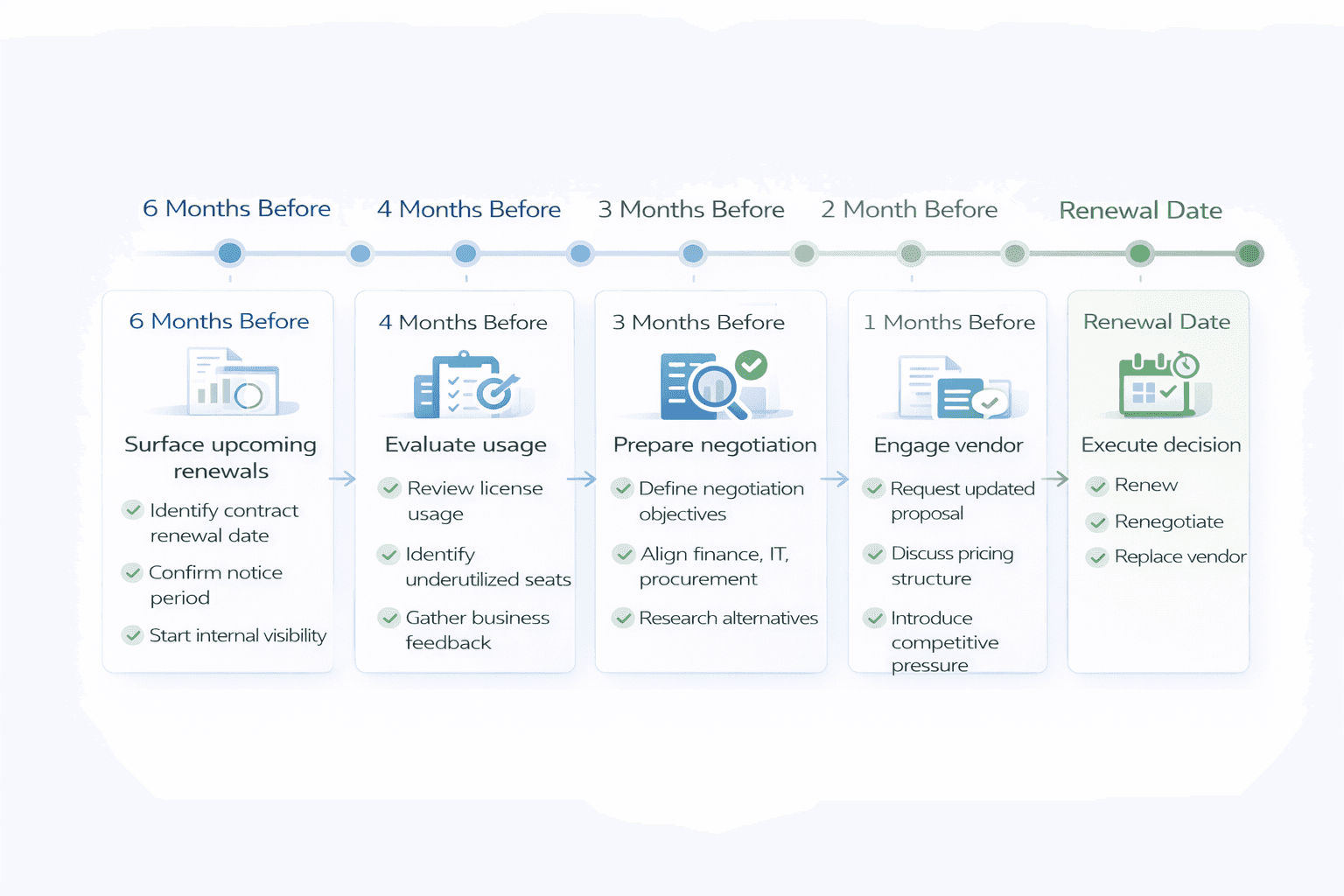
Six months before renewal
Six months before a renewal date the goal is visibility.
At this stage teams identify which contracts will renew in the next six months and assess their importance. Finance gains early awareness of upcoming spend commitments. IT can evaluate how widely the tool is used. Procurement can review contract terms and notice deadlines.
Typical questions at this stage include:
Which contracts will renew soon
What are the notice deadlines
How much does each vendor cost annually
Who internally owns the relationship with the vendor
Whether the tool is still considered strategic
The goal is not negotiation yet. The goal is awareness and prioritization.
Three months before renewal
Three months before renewal the focus shifts toward preparation.
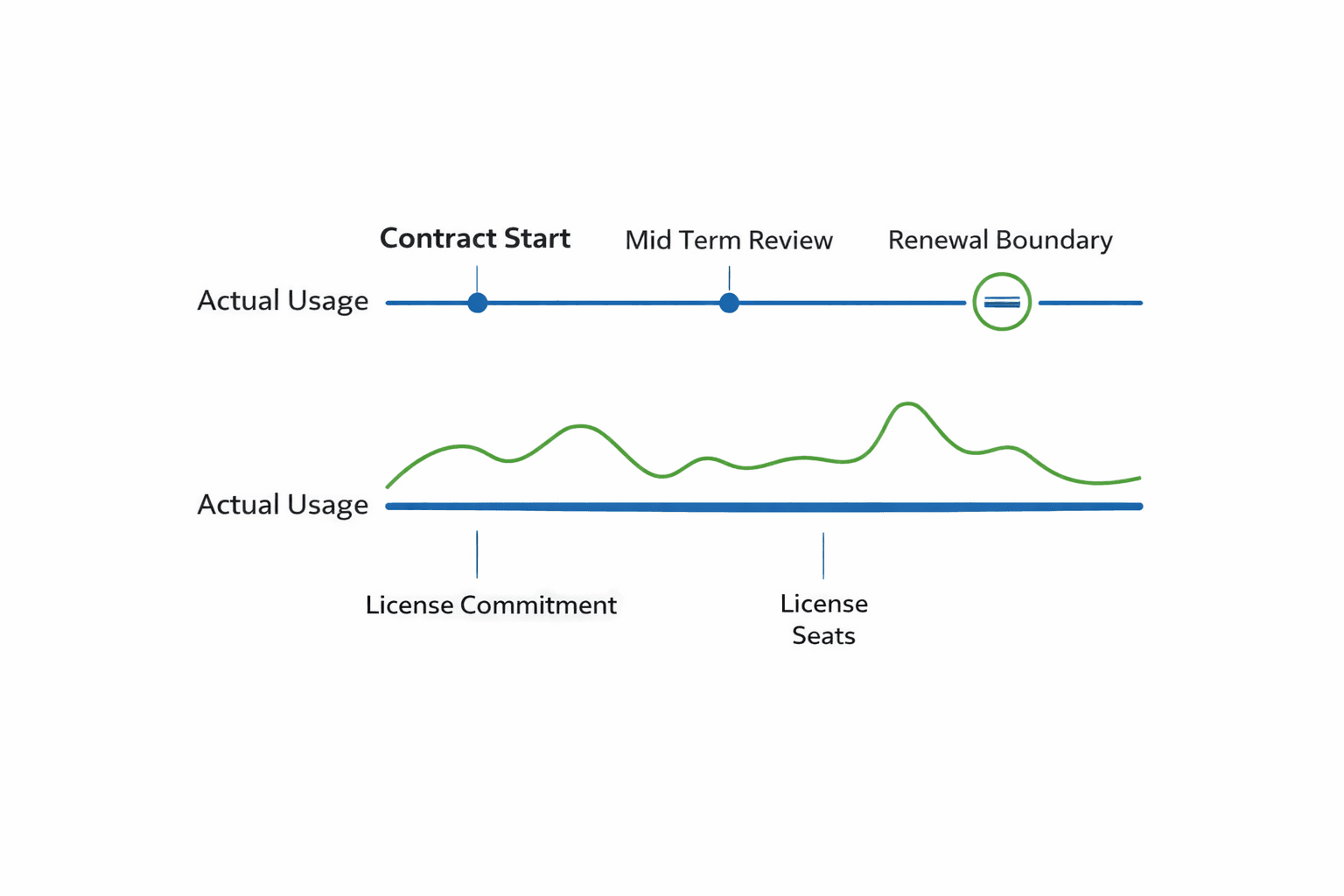
Teams now evaluate whether the tool still delivers value relative to its cost. Usage patterns are reviewed and internal stakeholders share feedback.
If the product is heavily used and considered essential, the company may prepare a negotiation strategy aimed at improving pricing or contract terms.
If the tool has weaker adoption, the team may explore alternative vendors.
Starting this evaluation early gives the organization flexibility.
One month before renewal
One month before renewal is when the vendor conversation typically begins.
At this stage the company should already have a clear position. Internal teams understand how the product is used and whether alternatives exist.
Negotiations focus on pricing, contract structure, and renewal conditions. Because preparation started earlier, the company enters this discussion with much stronger leverage.
Instead of reacting to vendor proposals, the organization can shape the outcome.
What experienced companies do differently
Organizations that manage SaaS portfolios effectively rarely wait for vendors to initiate renewal conversations.
Instead they maintain a structured view of their contract portfolio and upcoming deadlines.
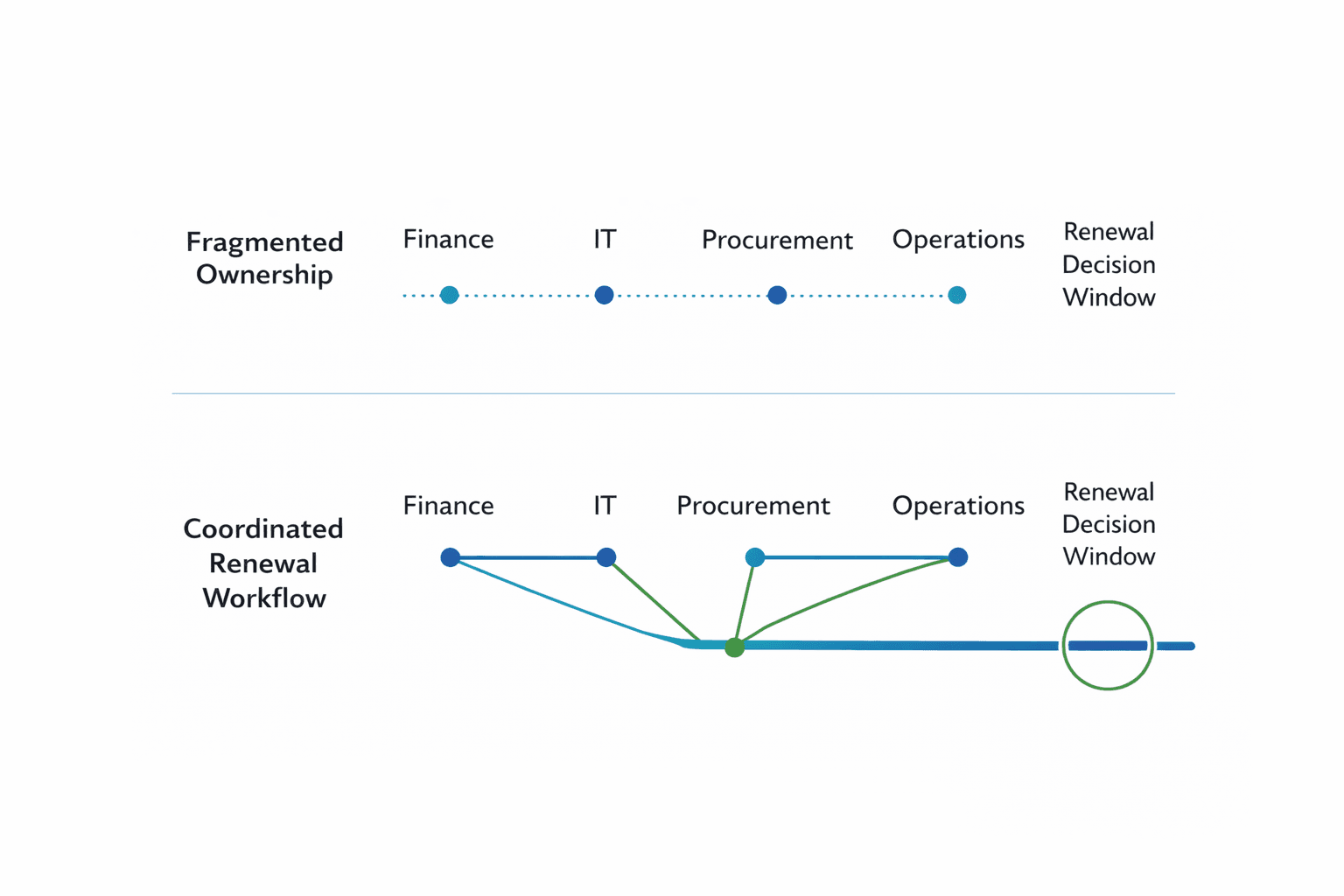
Finance, IT, and procurement share the same visibility over renewals. When contracts approach expiration, teams already know which vendors require attention.
This proactive approach prevents unwanted auto renewals and creates better negotiation outcomes.
How Venduris helps
Venduris was designed to support this renewal workflow.
The platform extracts contract data and tracks renewal timelines automatically. Renewal workflows are created months before deadlines so teams can review contracts early.
Finance, IT, and procurement teams share the same view of upcoming renewals, including notice periods and pricing commitments.
Instead of discovering renewals at the last moment, organizations gain the time required to prepare negotiations and evaluate alternatives.
Final thoughts
SaaS renewals often appear routine, but they represent one of the most significant opportunities to control software spend.
When renewals are discovered too late, organizations lose flexibility and negotiating power.
A structured timeline changes that dynamic. By reviewing contracts months before deadlines, companies regain control over renewal decisions and vendor relationships.
For organizations managing dozens or hundreds of SaaS tools, this level of visibility quickly becomes essential.
Explore related renewal signals
Renew on your terms, not the vendor’s
Watch how it works